Hurl: 'Everything will be done' to ensure rural GAA clubs can not only survive but also thrive
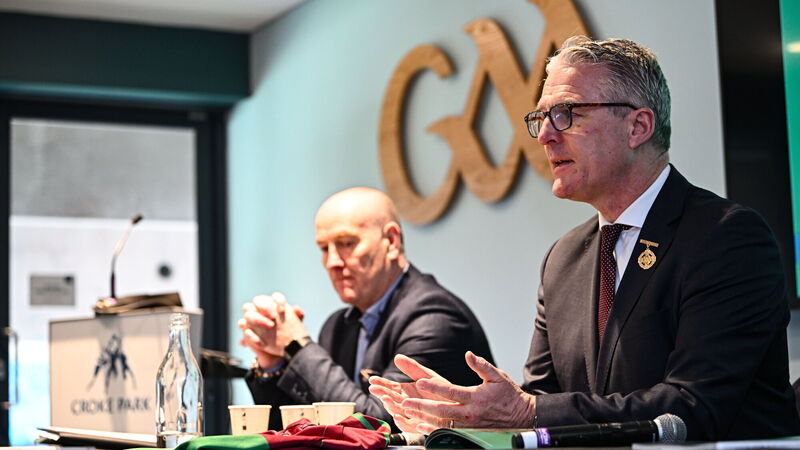
Uachtarán Chumann Lúthchleas Gael Jarlath Burns, right, and GAA National Demographics Committee chairperson Benny Hurl. Pic: Seb Daly/Sportsfile
The creation of new clubs, the possible redefinition of the club and a review of club catchment and parish rules are among the objectives of the GAA’s national demographics committee.
At a launch in Croke Park on Thursday, details of the GAA’s plans to address the stark reality of rural depopulation and urban overpopulation were announced.
Establishing new clubs in areas where the existing ones are challenged by the large swathes of people moving to the areas and enshrining existing ones in rural Ireland where they struggle for numbers are key goals.
As things stand, the ability to field an adult team in a championship is the definition of a club but that is set to be amended so that rural clubs can be represented by smaller-sized teams in new competitions.
Other actions set to be taken include the potential to expand the parent rule, encouraging stronger to weaker transfers while restricting others and dual eligibility.
The construction of new facilities will be essential and the GAA stressed that Government aid will be required to ensure old communities are preserved and new ones created. In attendance was Fine Gael TD for Longford-Westmeath Micheál Carrigy.
Pilot initiatives are to take place in Kerry and Kildare to “address critical demographic challenges impacting the GAA in both rural and urban contexts”.
The project proposes “targeted interventions in both counties, focusing on increased participation, improving integration, influencing planning policies, and creating sustainable club structures”.
Rurally, the focus in Kerry will be in the Iveragh Peninsula and similar regions. It was revealed at the launch a mere 83 junior infants enrolled in the 13 primary schools in South Kerry this past September (no child enrolled in Valentia).
In Kildare, 14 clubs in areas of declining population have been targeted.
Urban-wise, Tralee and Killarney have been identified in Kerry while Naas, Celbridge and Maynooth will be honed in on in Kildare.
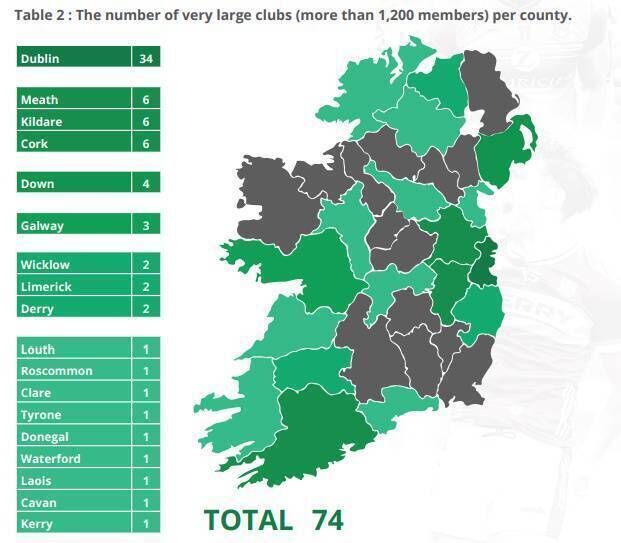
At the launch, it was revealed every county in Ireland has fewer zero to five-year-olds. In Cork, an inventory highlighted there are 21,687 youth male players and 19,271 female with 8,000 full male members and 4,591 full female.
GAA president Jarlath Burns also stressed that “population and clubs are no longer aligned” on the island.
Mentioning the massive population shift to the east of the country, he said: “It’s a double-edged demographic challenge. Rural decline on one side and urban overload on the other side. So, where we have the resources, we don't have the facilities.
And where we have the resources, we don't have the people. And where we have the people, we don't have the resources.”
He continued: “Margaret Thatcher said once there is no such thing as community, just individuals who want the better themselves. And if she said that, it must be wrong. It is certainly wrong in this country.
“We are a social species. There are 1,610 clubs in Ireland, and many of these will not survive the decade. We watched and we sat back while villages lost their bank, then the bus stop, then the yard station, then the school, then the post office, then the shop.
“And now all that is left in these dwindling communities is the GAA club. But even those are not sustainable to the end of the decade, as the report says. Without people, we cannot sustain our clubs.”
In his address, national demographics committee chairman Benny Hurl call on the units of the GAA to put “self-interest” aside and get behind moves to assist the organisation in reflecting the demographic trends in Ireland.
He commended Midleton chairman and former Cork hurling star John Fenton’s comments on RTÉ earlier this week that a new club should be established between Midleton and Carrigtwohill to address the considerable increase in population in the area.
Hurl concluded: “Let the message go out today, that rural Ireland is not dying, we will not let it die, and we will do everything to ensure that all of our clubs survive, thrive, and the association grows.”
Two motions concerning smaller-side teams will be debated at Congress at the end of February.
CONNECT WITH US TODAY



Be the first to know the latest news and updates