THE KIERAN SHANNON INTERVIEW: Living the GAA dream
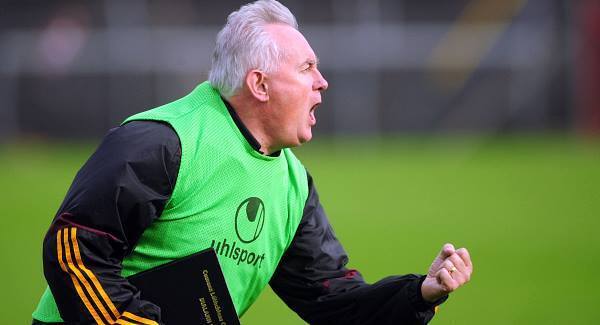
Perhaps Christy Cooney represents the living embodiment of the GAA ethos — going from the top seat in the national organisation back to coaching at his club with minimum of fuss his day next week, a man called David Stern will step down from one of the biggest jobs in US sports administration.

THE KIERAN SHANNON INTERVIEW: Living the GAA dream

What the commissioner of the NBA will do in retirement, we do not know.

He might serve on a few boards. Be some kind of consultant. Or maybe he’ll just kick the feet up in some hammock that views the Pacific.

What is safe to say is that he won’t be back where it all started, managing his local club team, like another sharp-suited grey-haired man has since he stepped down from one of the biggest jobs in the administration of Irish sport.

Tomorrow lunchtime, Christy Cooney will stand on the line in the Limerick Gaelic Grounds, wet gear and boots and bainisteoir bib all on, leathered notepad in hand. Only a couple of years on from presenting All-Ireland trophies to victorious team captains in Croke Park, the former president of the GAA is only two hours of hurling away from witnessing his own team captain, Bill Cooper, receive an All-Ireland intermediate title from his successor Liam O’Neill.

Cooney didn’t take on this job though to get back to Broadway. Managing a club team, especially one at intermediate level, is what you do off Broadway.

It’s realising it creeps into your time far more than you imagined when you agreed to take on the thing.

Like the three or four hours on a Monday after every game, taking and making calls from selectors and friends and the odd player. Then taking or making other calls to arrange a match. Or someone is injured and you’re trying to get him into some specialist.

It’s later that evening watching the DVD, taking your own stats, finding out if it’s your foul count or your hooking and blocking or puckouts you and team coach Peter Coady and Con Spillane really need to work on at training the next day.

It’s figuring out that the pre-match routine needs tweaking and deciding the team should all go on the bus and arrive at the match venue together, like they did for the county semi-final win over Inniscarra.

It’s being the one to tell some lad he’s the one fella on the whole panel not pulling his weight so he has to be let go.

It’s walking on the beach almost every day and invariably finding yourself picking a team.

It’s sometimes glazing over your beloved Ann’s head as you think of something that would help the team.

“Oh, sorry, dear.”

It’s telling the lad who has been starting on the team for more than a decade that some 17-year-old has got the nod ahead of him for next Sunday’s championship game.

He doesn’t like that bit of the job. But he loves the job. Because it’s really not a job and it’s not one he was expecting either.

He was always going to help out the club in some way. “It’s a bit like inter-county players. They’re club players first, they’re only loaned to the county. I was a Youghal club officer before I ever did anything else in the GAA. So if there were things I’d learned and could contribute to the club when I came back, why not give something back?

“But did I ever envisage this?”

He smiles, a glint in his eyes, like a friend letting you in that he’s won the Lotto.

“No!”

This isn’t the first time this has happened, that when he’s given back to Youghal, Youghal has given more back to him. He’ll never forget when he was narrowly beaten by Nickey Brennan for the GAA presidency at Congress 2005. “You wake up on the Sunday, saying, ‘Do I have to get out of bed this morning?’”

Whether it was Cork’s avoidance to hold a board meeting on Rule 42 that cost him, he didn’t know but what he soon remembered was that he was still chairman of the club.

He had only been home a few months after five years in Limerick as a FÁS regional director when the lads approached him to take the chair. At the time it seemed as if he was doing the club the favour but, as it turned out, it was the other way round. There was a complex — two new fields, a gym, a hall, a bar — to finish, a challenge to throw himself into. Within a few years that same facility stood, just as he again stood for the presidency and this time, won.

After his presidency he was ready to serve the club again. He initially thought it would be by helping draft a club strategy and vision for the next few years.

Then 15 months ago club chairman Ger Motherway rang about something else. The senior team in the club.

They’d been knocking on the door the previous four or so years, trying to get out of intermediate, reaching a county final and another couple of semi-finals. Their management team had stepped down. Would he take over the team?

Cooney had to remind himself that he’d managed the club team before for a few years, just before he became vice-chairman of the county board in 1991. A lot had changed since then. But he sat down with a pen and a paper. He was now retired from FÁS, having turned 60. He was serving alright on the board of VHI and also of GOAL as a volunteer. He’d set up a little business with his daughter Edel, called Simplee, specialising in seasonings and even though she was well able to take most of that on, he was still doing some things with that. He had a good bit on. But he’d still take on the club team too if the right people would come in with him.

Thankfully for him and Youghal, Con Spillane and Peter Coady did.

Spillane had been a warrior for the club as a player. Coady had coached top teams and top players at UCC. A big thing for Cooney was that they were both from the club. That had been a big thing for Cooney during his presidency — a club should be coached by one of its own.

“I was also initially very conscious being a former president that I had to be careful on the sideline. If I was to abuse a referee or official, it would be sending the wrong signal altogether. And I haven’t. I tend to stay in the one spot and remain calm. I’ve tried to learn from what I’ve seen of the best managers.”

He and the selectors decided to go with a youth policy, bringing in seven or eight minors to bring a greater vibrancy to a team whose nucleus had been on the go for some time. They also coaxed back a couple of older players, the way Jack O’Connor could more than once.

Yet it wasn’t all plain sailing. They lost their first league game to Cloyne on St Patrick’s Day. They also lost in the first round of the championship to Valley Rovers in Carrigtwohill. But they regrouped. They beat their old bogey team Ballincollig in the backdoor. They escaped with a draw against Cloyne, then beat them well enough in the replay. Ten days out from the county final Bandon beat them well in a league game.

Yet they would win that county final, beating Castlelyons. And the following week they would win the league as well, avenging that defeat to Bandon, 4-12 to 2-8. They played with a freedom and joy that day and have every day since, sweeping through Munster and then through London. They had more than 500 people from the town over in Ruislip for that game. Of all the moments on this remarkable journey, that one is right up there.

The presidency was another experience with priceless memories, not all of them pleasant. Four funerals and a wedding stand out.

Seeing Mickey Harte carry his own daughter’s coffin was heart-wrenching. A couple of months later Harte was carrying another coffin, that of PSNI officer Ronan Kerr. Cooney, on the request of the family, was another pallbearer that day.

It was a grim day but brightened up somewhat with symbolic reminders of just how everyone else other than those mindless murderers had moved on. The morning of that funeral, Cooney stopped off in Kelly’s Inn in Ballygawley and joined the company of Enda Kenny, Peter Robinson, Gerry Adams and Martin McGuinness. “It was the most unusual situation. Here you had the president of the GAA and the Taoiseach and the leader of Sinn Féin and the First Minister of the Northern Assembly all sitting down having a pot of coffee together. I thought I’d never see the day.”

He was particularly moved to give the oration at the funeral of one of the GAA’s greatest ever orators, former president Pat Fanning. Jim Stynes’ funeral also left an indelible impression upon him.

“Australia practically stopped. No one had created a better image of Ireland and the Irish in Australia more than he had. What he has done for Irish people that have emigrated there is phenomenal. To see the esteem that a person from the GAA was held in by the Australian people made you humble and it made you proud.”

A happier occasion was the recent wedding of Kieran McGeeney. That someone with such a pronounced disdain for GAA officialdom should invite someone who publicly condemned the recruitment of outside managers tells you a lot about the underestimated conviviality and tolerance of both men. It also showed just how much relations between Croke Park and the GPA grew under Cooney’s beat as president.

“Formally recognising the GPA was a significant one alright. Once there was agreement on the tangible that pay for play wasn’t on, we were able to facilitate an arrangement in the interests of our players, which was paramount.”

There’s more to go and do. He got talking to Dessie Farrell at McGeeney’s wedding and they both agreed that more of the GPA’s services need to eventually extend to club players.

He believes another success during his presidency was keeping the crowd off the pitch for All-Ireland presentations. He knows there’s still resistance to it, especially on provincial final day, but he contends that such a tradition will eventually lead to someone getting seriously injured. “I remember looking down after the 2010 [All-Ireland] hurling final and seeing Michael Wadding and his six officials able to stand in the middle of the field and watch the presentation. I remember thinking there’s something dignified about this.”

Mostly the gig though was far away from those big days and stages, and spent travelling all the byways and bypasses and boreens of the country so he could visit its clubs.

“We had a programme where Padraic [Duffy] and myself went around the clubs and the challenges that were there. It gave them the opportunity to say what are you going to do about this and that, like club fixtures in the county. And often you’d say to them, well what are you going to do about it?

“You’re a member of a club with a county board delegate; create such a heap that something is done about it by your own club and county board. Croke Park cannot save the problems of the counties. It’s a misnomer.

“It’s improving a bit. Clubs are becoming vociferous about what they require. I think the situation in Donegal [where the county championship is on hold until the county team’s involvement in the All-Ireland series is over] has raised hairs every place. Here in Youghal we played eight hurling championship games and another four in football with dual players on both. We played all the way through the summer even though Cork reached the All-Ireland final and were involved in a replay. It’s especially madness that a sub on a county team can’t even play with his club. Look, most players want to play. So let them play.”

He visited Donegal numerous times in his presidency. In the dead of night, he could make it in five-and-a-half hours back to his home in Youghal. There were many times he’d land back to his house in Copper Alley at three or so in the morning. But then one Sunday in April it was all over. He went to Mass after Congress and then? “I went home.”

He knew it would be a challenge adapting to normal life from that high-octane life. In fact he was so preemptive about that prospect, he met a psychologist where they set goals for after his presidency just before it expired. Setting up the business with Edel was one project to keep him going. And of course then there was the club. Just as Scarlett would always have Tara, Christy Cooney would always have Youghal.

As it turns out, he’s still working a bit on drafting up that strategy plan for the club. He’s also on a Cork County Board subcommittee for the redevelopment of Páirc Uí Chaoimh. But what really preoccupies his thoughts these days is this team, this group of young fellas who have given everything to him and the town they all love so well.

“I said to the players in Ruislip afterwards, ‘Look at what we had today. One embankment was covered with Youghal people. We owe something to the people who put their hands in the pockets to support us today. This is bigger than just us.’ It’s important sometimes to remind the players and ourselves of that. We are not the club. We are part of the club and the people of the town.

“A big part of being a manager is convincing the players that they’re good enough. You need to be able to say to a fella, ‘You’re a tremendous hurler, you have the chance to do something special for us because you’re a special person’. And sometimes you have to work on the tradition that’s in that player and his family and what they’ve done for this club over the years. John Grace’s father Paddy played senior hurling for us. The three Rings that play with us, their father Seanie won an intermediate county with us. We represent them.”

No matter how high or far you travel, remember your roots.

He always has.

x

More in this section

Cookie Policy Privacy Policy Brand Safety FAQ Help Contact Us Terms and Conditions

© Examiner Echo Group Limited