A rule book with bite

Describing the incident as “disgusting and shocking” and “reprehensible” that no one could be held to account for what happened he blamed the counties for failing to co-operate with the investigation.
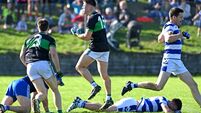
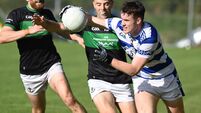
Just days after it was published Dublin footballer Jason Whelan accepted an eight-week ban imposed by the Leinster Council’s Competition Controls Committee for “inflicting injury recklessly” on a DCU opponent in an O’Byrne Cup game.
Biting has a long history in sport and few have escaped its controversies. The most infamous example occurred on June 28, 1997, when Mike Tyson twice bit Evander Holyfield’s ear during their heavyweight title fight. Tyson’s boxing licence was revoked on a permanent basis though, as is the way with that sport he returned within a year, and he was fined $3million.
More recently, Liverpool striker Luis Suárez was banned for 10 matches by the FA for biting Chelsea defender Branislav Ivanovic.
In 1994, during the second test between the All Blacks and Springboks in Wellington, Springbok prop Johan le Roux bit Sean Fitzpatrick’s ear and was banned for 18 months ending his international career.
The GAA and other sports organisations must remember it is irrelevant where a criminal assault takes place, be it on the street or beyond the touchline. No individual or sport has immunity from the criminal law. Indeed, earlier this month at Macroom District Court, Judge James McNulty told the GAA it has a duty to prevent acts of “savage violence” on playing pitches and if it failed to discharge its duty, then the courts would deal firmly with such incidents.
The judge made his remarks in sentencing a Gaelic footballer to two months in jail for punching an opponent during a Mid-Cork match.
Moreover in terms of the civil courts, there is case law in the UK and Ireland of a patron in a nightclub being bitten by another and that club being sued for damages for not upholding its duty of care to protect all those on its premises. It begs the question: Could an injured player sue not just his opponent but also the player’s coach, club or county for not adequately controlling the assailant?
Whatever about possible legal liability, there is no doubt the best way to deal with such misconduct is by way of lengthy sports-specific sanctions. To be fair, in his report Páraic Duffy condemned biting as primitive, shameful and dangerous.
Following concern expressed by its Medical Scientific and Welfare Committee last year, the GAA’s Central Council issued a directive clarifying the sanctions for biting-type misconduct.
The key to dealing with this or any kind of ill-discipline on the GAA field is three fold: Meaningful co-operation from all parties involved; a default position whereby there is an acceptance of imposed sanctions rather than one that seeks immediately to look for loopholes; and a rule book that is enforced strictly and consistently. In other words, one with real bite.
- Jack Anderson is a Professor of Law at Queen’s University Belfast. @SportslawQUB
CONNECT WITH US TODAY



Be the first to know the latest news and updates