Kerry loss puts Rising at risk
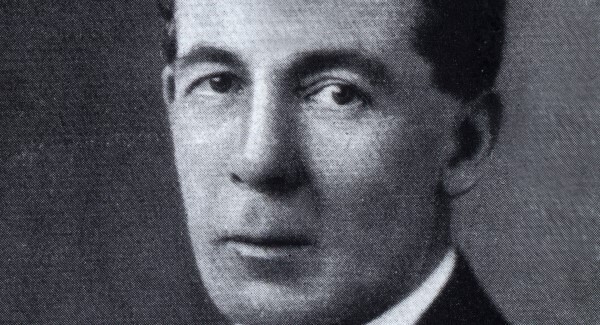
Kerry and Wexford were about to do battle on the field of play and for Stack the game provided perfect cover for a plan to smuggle arms back into the Kingdom.
Pádraig Pearse had visited Stack in Tralee that October and the two men hatched a plan to arm volunteers in the lead up to the 1916 Rising.
What the Republican leaders didn’t plan for was that Kerry would lose that All-Ireland and one of the three men sent on the mission would take the result to heart, ending up useless and drunk in the bar of Wynne’s Hotel in Dublin.
In his fascinating new 496-page book Forging a Kingdom: the GAA in Kerry 1884-1934, Dr Richard McElligott explains the elaborate plan — and how the 1916 Rising could well have been scuppered by a painter from Killarney who got too drunk, distraught after his beloved Kingdom’s loss.
“Pearse wanted Stack to collect about 20/30 rifles from the O’Rahilly’s [Michael O’Rahilly] house in south Dublin and smuggle them back to Kerry,” said Dr McElligott. “Stack sent his lieutenant in the Tralee corps of the Irish Volunteers, Annascaul’s Tadhg Kennedy, to Dublin with two other volunteers — all disguised as Kerry supporters. However, when Kerry lost one of the men was distraught and he ended up in awful state.
“Next morning he was still worse for wear as Kennedy and the other men went in two cars to the O’Rahilly’s house. Kennedy told the drunk man to stand guard as he was of no other use. When the two re-emerged from the house the drunk was gone, along with one of the cars. In the end Kennedy and the other volunteer had to put 20 or 30 rifles into one car, head for Knightsbridge [Heuston Station] and smuggle the guns down on the train all the way to Tralee. It was mad stuff. It’s amazing that the whole plan for the 1916 Rising could have been scuppered because of a drunk painter from Killarney. He turned up in Killarney none the worse for wear about a week later!”
The era chosen by Dr McElligott, 1884-1934, was a sulphurous time in Irish history, which, he says, is the reason he chose it.
“Those 50 years in Irish history, in a broader context, are absolutely crucial. The time period deals with the end of British rule and the establishment of the Irish State. It’s remarkable, however, the influence that the GAA had on that impact.”
Come the time of the War of Independence and the resultant Civil War, Kerry was divided. John Joe Sheehy and Joe Barrett, two die-hard anti-treaty men, went on to win an All-Ireland as teammates of Con Brosnan, of the Free State Army, and Garda Paul Russell.
Dr McElligott — a native of Kilflynn, six miles outside Tralee, just off the Listowel road — learned that this Kerry team of 1924 was seen as an example to the country of how things could be — but that didn’t mean the players got on.
“They hated each other off the field. The anti-treaty men would come to matches as spectators. They would then slip out of their suits, already togged off underneath, and go out and play the match. Afterwards, they would file away as quietly as possible.”
Kerry was deeply Republican at this time. The rancour often spilled onto the field of play and continued within clubs, as Dr McElligott explains. “John Joe Sheehy, due to his position with the IRA, had great influence in Kerry. The Republicans really had all the power then. As [Eamon] de Valera came to power the Blueshirts were just starting out and divisions started to open up. This led to matches being called off as they descended into mass brawls. Clubs started splitting in two, or certain clubs wouldn’t affiliate with certain divisional boards because they thought they were the opposition politically. It was chaos.”
The county had earlier dealt with a period where the GAA was almost wiped out.
“It was never preordained that Kerry were going to be good at football or hurling. In the 1890s the GAA in Kerry almost collapses. Rugby was becoming more and more popular and the GAA was dying on its feet. Then TF O’Sullivan was very influential in bringing in the ban on ‘foreign games’ in 1901 and that saves the GAA in Kerry. The county could easily have become a rugby stronghold akin to Limerick or Cork.”
Dr McElligott notes the fact that one North Kerry man, Listowel’s TF O’Sullivan, was so instrumental in introducing the ban on ‘foreign games’ while another, Ballybunion’s Tom Woulfe, was key to its removal in 1971.
So why was Kerry so strong, even in those early years of the GAA? Dr McElligott — who started work on the book in September 2008 — distilled the phenomenon down to the fact that Kerry was simply well organised.
“It was just about the people on the ground. Kerry were very lucky at the time to have people like Maurice Moynihan, Austin Stack and Listowel’s TF O’Sullivan. They were hard-working GAA organisers.”
The book documents the establishment of some of Kerry’s first clubs including Killorglin’s Laune Rangers, Dr Crokes, Tralee Mitchels and Kenmare. Hurling featured largely in Kenmare and North Kerry and theBallyduff team, also including men from other clubs in Kerry, won the county’s first All-Ireland, in hurling, in 1891.
Other notable features of the book are how the initial rules of the GAA envisaged a 21-player a-side game, with winners being decided by the highest number of goals scored. Points were only used to decide the match if no goals had been scored.
In 1889, the Kerry GAA was the first to reconfigure the scoring system of Gaelic games by making a goal equal to five points. This rule was adapted by the GAA for its national competitions in 1895, while in 1896 the rules were altered to make one goal equal to three points. In 1893, the GAA reduced the number of players to 17-a-side and Kerry’s first All-Ireland victory (in hurling) was the first major game to be played with this number of players. In 1913, the number of players was reduced again to 15-a-side, and again Kerry’s memorable victory over Louth in the seminal Croke Cup final was the first game to be played between 30 players.
Forging a Kingdom also touches on Kerry’s maiden All-Ireland victory in Gaelic football in 1905 (when they were represented by Tralee Mitchels). An epic three-match saga with Kildare not only broke all official Irish attendance records but ensured Gaelic football was, from then on, Ireland’s most popular sport.
With the first 50 years of Kerry GAA history penned is Dr McElligott leaving the door ajar for another tome on the remainder of the 20th Century? “I’d love to it, but time and money are the big considerations. I would love to continue and I think every county should work towards a book like this. They are invaluable.”