THE EWAN MacKENNA INTERVIEW: McStay plans to have final word
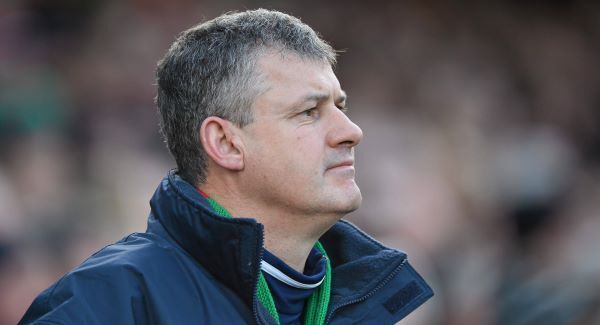
RTÉ analyst Kevin McStay brings his St Brigid’s side to Croke Park tomorrow for the All-Ireland Club final believing his players can deliver for Connacht where his own Mayo could not in 1989 — knowing if they fail he’ll hear about it from the stands for a long time to come.

THE EWAN MacKENNA INTERVIEW: McStay plans to have final word

Picture the scene. Through the security doors, down the lengthy corridor, third door on the right and there sits Kevin McStay in grand surroundings. The chair is tall, parked in the corner of a large and luxurious room that’s kitted out like a snapshot from a bygone era. The window behind him paints an unseasonal blizzard as classical music is piped in, free and flighty through the air.

“Sorry about the cold,” he says in a western accent as thick as molasses. “The boiler broke last night.”

McStay is in the officer’s mess of the Curragh camp, and perhaps that’s a good starting point. Granted, when he followed footsteps and joined the army because some other seniors in St Jarlath’s had decided it was a career that allowed plenty of time for football, a room like this was only for those barking orders at him.

Not that that was the hard part of it all, mind you, as back then the pitch was the real warzone. In fact only last Sunday night over dinner, after a trip to experience Croke Park ahead of tomorrow’s All-Ireland Club final, did a number of the younger players on the St Brigid’s panel ask him what football used to be like.

It got him thinking about what was acceptable in the ’80s.

“Condition-wise, skill-wise, they are definitely better nowadays and by a good bit. But an awful lot of improvement in the modern game is down to the hand passing, the speed and that’s the attraction. The hits are much heavier now, the tackling much more intense. But the demise of foot passing now is huge, no doubt. It’s obvious the standout players are the guys that can kick the ball because they are rare.

“But I played in eight or nine Connacht finals and none of them were good. Different times.”

It’s a snippet that’s not meant with the usual nostalgic yearning. You mention another aspect of the not-so-good old days and how if football had stayed the same many parents would have taken their children off to play other sports for safety’s sake.

“Lawlessness,” is how he describes it, recalling one Sigerson game where the corner-back came out, shook his hand and wrapped his arms around him. The line had warned McStay of as much and the only chance to play ball was to get both him and his marker booked early and hope for the best thereafter.

“Sigerson was outrageous, national league games fairly outrageous. The prevailing conditions back then allowed for off-the-ball holding, belting, elbows, jersey pulling. You could do whatever you wanted.”

But despite all that, there was something else he had to tell his Brigid’s team just under a week ago. After the semi-final win over Crossmaglen, Gareth O’Neill came into their dressing room and gave a speech about how this huge achievement was so close, right in front of their faces and they probably didn’t realise they could reach out and touch it. They may still not because it was only in later life McStay got thinking about his own near-misses so he opened up to the panel. How he wished he’d done more himself. How he wished various management teams didn’t let Mayo get ahead of themselves and made sure they knew what was hurtling down the tracks.

How he wished in his one and only final in 1989 they hadn’t looked Cork in the eye and flinched when it mattered most.

“It drives me bananas about the west of Ireland, something of a pecking order someone has ordained. ‘Take your rightful place’. Annoys me still because it’s how we felt back in the 1980s. I told our lads as much, that they can’t be the same.”

For a man that’s renowned for being as logical as meticulous, it’s strange to see him annoyed by what he can never change. His thoughtful rationale churns and froths at his natural confidence that at times it threatens to bubble and spill into arrogance. Darragh Ó Sé calls him the wedding planner because every time he sees him at a ground he’s carrying around a folder of notes. But perhaps it’s best he’s immovable because others in Kerry, including Eamon Fitzmaurice, have had plenty of loose and stinging swipes off pundits revolving around a lack of medals.

“I’ve heard it, I’d be very aware of it,” he says. “Maybe when I started off on TV it was a bit of an issue, in the back of my mind.”

If football was guilty back then, his journey into the punditry world was innocent. One day in the Athlone barracks, he talked so much football and had so much to say about the standard of analysis that a friend, Christy ‘Dickie’ Rock, cut him off mid-sentence with: “Well, why don’t you give it a go?” “Call it blind confidence, daftness, I wrote to Michael Lyster who threw the letter into the tray of [producer] Bill Lawlor.”

Three months later McStay did a pilot for The Monday Game. Soon after came a co-commentary on a Westmeath-Offaly match that was never meant for air. That was the hefty chunk of 16 years ago now.

“Straight away people mentioned those medals I didn’t have,” he repeats, as if Connacht silverware was a ration for the poor. “But I remember Martin Carney saying, ‘That is nonsense, you are giving your opinion as a well-informed analyst and it’s as credible as anyone else’. But I’ll flip the coin. On different channels I’ve seen pundits with a lot of medals and they wouldn’t fill me with confidence. But I also found out very early the ability of two competing counties to have two completely different views of an incident is just incredible. And if you call it honestly, you’ll be confronted. Fans can certainly give you an earful and that’s par for the course.”

There are tangents draped right across this story, tying then to now. In the year they reached his one All-Ireland final, he remembers on the day of the Connacht decider a ginger goalkeeper running the length of the pitch to bury a winning penalty that Peader Glennon had already lined up in the minor match. Now Shane Curran is his goalkeeper. As for the abuse, it still comes in acidic waves, usually about his TV role or, more recently, about some mystical money he is getting for managing Brigid’s.

“I shouldn’t be too precious. That’s going to happen as there are clowns that think once they pay their entrance fee, they can shout what they want. Edgy, smart-ass stuff that makes me think, ‘Why don’t you go for a walk in the woods or something’.”

Even so, he hasn’t regretted his latest venture into management. When he was approached by the Kiltoom side though, it took some time to say yes. Liam McHale grew up 200 metres down the road — his earliest memories are of “tall, tall, tall, and lived in the gym” — and he had to be on board. But once that was agreed he found a team that “were hurting bad” after losing an All-Ireland final and a semi-final derby in the previous two seasons.

“They were looking at me thinking, ‘Two mountains a week rather than one’ will be his solution,” so instead McStay insisted on just one training session and one game a week. Only in September did a jog become a sprint.

“It’s been an eye opener,” he continues. “In terms of punditry, maybe you are putting your reputation on the line but it’s easy to stay in a room, never challenge yourself. I wanted to know were we as a management team good enough and we are. And even as a pundit, I’ll revisit some of my views. For instance, now there’s another disease in football — this sledging, people getting into people’s faces, sly digs.”

He’s found that even the line isn’t a haven. Against Salthill, he had water sprayed at him as he passed the opposition bench and now believes it’s time for just a runner and medic to be pitchside with management teams in the stand. He even wrote Liam O’Neill a letter before Christmas praising his stance. “The optics of managers bullfighting on the sideline, it’s not good to see bright, educated, excellent, outstanding managers losing the run. It’s more to do with their own nervous energy than their job.”

But amidst all the worthwhile views, there’s one last question you have. Against Crossmaglen, you couldn’t help notice that McStay presided over a team that fouled out the field, stopped the quick free and blocked the runner. What about practicing what’s been preached, you say? “I’ve heard that. But when you sit down to see how we go about beating these, it was immediately obvious we’d have no chance of playing our football until we told everyone we were here to contest the game.And sure as a pundit I’d be totally in favour of a team that is reasonable and stands up for themselves. You go right to the edge but the failure of referees to implement what we have had in the rule book for 20 years is the reason we are here. So can I have equal and opposite positions simultaneously? Well I think what I’ve said and then done would be reasonable to any football man.”

Back down the corridor, third on the left, out through the security doors, and it’s hard to argue that point. In fact forget first impressions of grandeur, the lasting impression is of someone who not only talks the talk, but is walking the walk too.

More in this section

Cookie Policy Privacy Policy Brand Safety FAQ Help Contact Us Terms and Conditions

© Examiner Echo Group Limited