Public Accounts Committee to meet about racing's rights war
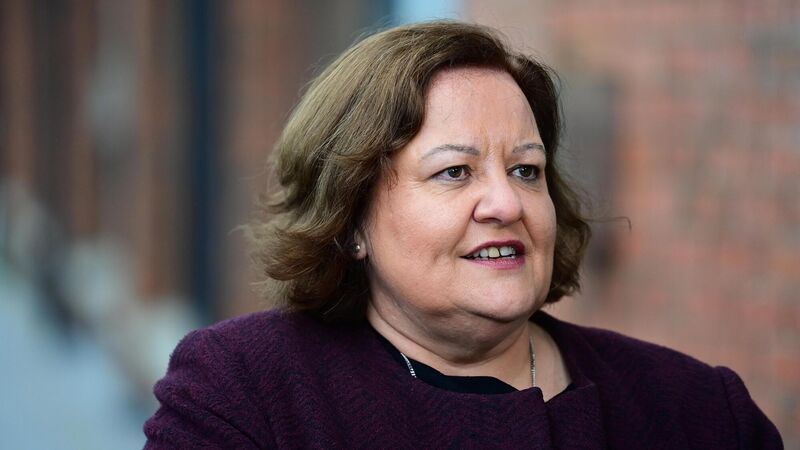
HRI CEO Suzanne Eade: 'Any attempt to paint the tender process as unfair, or the distribution model as unjust, is either lacking a basic understanding of the media rights landscape or is misrepresenting the facts." Healy Racing
The €235m controversy surrounding Horse Racing Ireland’s media rights agreement — which has been bitterly opposed by a number of Irish racecourses — has been brought before the Public Accounts Committee (PAC).
The powerful political finance group will meet on June 1 to discuss the issue, which includes a €35m payment to HRI from the deal, which was negotiated by an internal committee from within the Curragh-based governing body.
The PAC meeting will come 24 hours after HRI appears in front of an emergency hearing by the Joint Committee on Agriculture, Food and the Marine, which the revealed on Thursday.
These significant political developments come as HRI continues to refuse to reveal details about the deal and how it was struck, amid transparency and conflict of interest issues, and an alleged disproportional awarding of fees to smaller racing venues.
The matter was raised by PAC Thursday after it was written to by the United Irish Racecourses (UIR) group, which represents Thurles, Limerick, Sligo, Roscommon, and Kilbeggan. The secretary of the group is Kilbeggan Racecourse managing director Paddy Dunican.
HRI has always insisted that the process has been “open, fair, robust, and transparent” despite a statement by Suzanne Eade, CEO of HRI, who insists she cannot reveal details due to “confidentiality reasons”.
“Any attempt to paint the tender process as unfair, or the distribution model as unjust, is either lacking a basic understanding of the media rights landscape or is misrepresenting the facts,” said Eade, earlier this month.
The row between HRI and the UIR is one that shows no sign of abating — indeed over the last number of days the rift between both sides appears to have widened, given the political intervention.
The issues are complex and many, and centre around the rights contracts for streaming, betting, and broadcasting for the next five years, in a deal worth €47m per year.
HRI claim the agreement is exceptional value for money, and represents a 50% increase in value on the current contract which runs until the end of the year.
Those rights cover betting offices, streaming, and digital services, international fixed odds and Tote, and home broadcast and UK terrestrial rights, with contracts being awarded to a joint winning tender by media providers SIS and RMG.
A significant problem is the constant insistence by HRI that all details must be confidential, even though the negotiation and tendering process is now over, with contracts agreed and winning rights partners selected.
The controversial awarding by HRI of €7m per year for its own provision of essential pre-race data is something critics will argue should be provided as part of the organising body’s general remit.
The independence of the media rights negotiation process will also come under the attention of the Joint Committee on Agriculture, Food, and the Marine next Wednesday, when HRI and UIR appear before them, separately.
The tendering and selection process was managed by HRI’s Media Rights Committee which is chaired by a director of HRI (non-exec) Conor O’Neill, who also happens to be the CEO of Punchestown Racecourse, one of the tracks which will benefit most from the new package.
Indeed within one business day of the rights deal being approved by HRI, Punchestown received a racing fixture, one of three floating events on the racing calendar.
There is no suggestion of any wrongdoing by O’Neill in gaining this extra day’s racing.
HRI’s own racecourses are also covered by the deal which includes four venues it owns — Leopardstown, Navan, Fairyhouse, and Tipperary, as well as the Curragh, where it has a significant stake-holding and Cork, where it is the landlord.
Money from the rights deal is awarded to each racecourse based on a complex — but unknown betting revenue return system of payment — which like all aspects of the media rights deal is undisclosed by HRI.
Despite the objections by UIR, 21 of 26 racecourses have supported the rights arrangement with HRI.
Next Wednesday’s Joint Committee on Agriculture meeting will be heard in private session, but already indications from political sources are that a number of the members are sympathetic to the UIR cause.
The PAC meeting the following day may recommend that HRI returns to the committee to explain the situation before the summer recess, although this would be more likely to take place in the autumn.