Olympic dream moving into view for sailors
This was their first step into boating along with some makeshift rafts while a fleet of Pico sailing dinghies waited patiently for the youngsters’ initial taste of the sport of sailing.
Barely four years ago, this place was the venue for the London 2012 Olympics and now, with preparations in full swing for Rio 2016, the British venue is packed this with world champions and multiple medallists.
And as the kids marched across the slipway, they were shoulder to shoulder with the 330 sailors getting ready to race for the fourth World Cup of Sailing event this week.
The message to the 10-year-olds is clear: Some day this could be you.
Yet this regatta has a considerably smaller turnout than earlier World Cup events where up to three times as many competitors were in action, evidence that this is an Olympic year.
Now that all places for Rio 2016 have been decided, fewer disappointed hopefuls are competing, leaving just this year’s confirmed Olympic athletes using this regatta as one of their last competition opportunities before the big event begins in August.
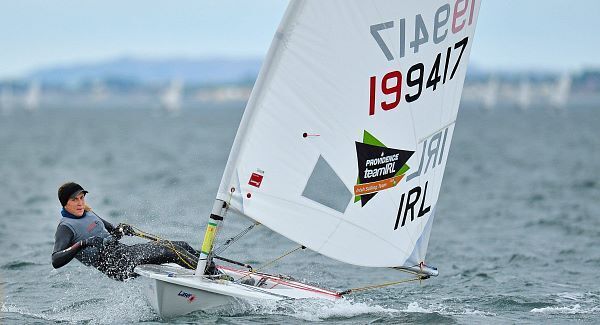
Returning to Weymouth Bay is bittersweet for the Providence Team Ireland squad. In the run-up to London 2012, the proximity to Ireland almost made this a home-venue, such are the similarities in conditions and culture.
“Weymouth has special significance for the Irish squad as this was the venue that was the focus for our academy programme,” commented James O’Callaghan, performance director with the Irish Sailing Association.
“We now have six current and former academy sailors taking part this week with more to follow on the pathway.”
This was the venue Annalise Murphy excelled in, dominating the early stages of the Laser Radial class with a string of race wins until her near rivals found their level and the infamous medal race final that saw the Rathfarnham girl plummet from gold medal contender to fourth place in a matter of minutes after a week of competition.
Winning the European title a year later on Dublin Bay was cathartic but now Weymouth is just another venue — not the 2016 Olympic regatta venue — and her training priorities have switched radically to the unique challenges of Rio.
Murphy has won the right to sail for Ireland a second time and went on to beat Aoife Hopkins in a selection trials series. Nevertheless, Hopkins is also in Weymouth and is clearly looking towards Tokyo 2020.
Weymouth also saw Peter O’Leary and David Burrows lead the Star keelboat event on the opening day before a storm over betting in the previous Beijing 2008 Olympics dominated that event. It was the Star class final appearance at the games too.
Weymouth was almost Ireland’s most successful Olympic foray with two real medal prospects that came close, just not close enough to copper-fasten the gains made by the ISA’s performance programme.
Of the six Irish sailors going to Rio, five are in action this week with the skiff crews both looking for strong performances at Weymouth.
London 2012 veterans Ryan Seaton and Matt McGovern won the World Cup of Sailing event in Palma in April and another such result would set them up well for Rio. They will sail in Kiel Week as well later this month.
Still, the reality in their class is the huge task their entire fleet faces in dislodging New Zealanders Peter Burling and Blair Tuke from their outright favourites status. Since winning Silver in London 2012, the Kiwi pair have won four successive 49er class world titles and sail professionally for their country in the America’s Cup.
On their day, the Irish crew are capable of podium results though when it comes to the uniqueness of the Olympic regatta, anything is possible.
Proven ability to deliver top 10 results — essential for reaching the medal race final in every sailing discipline — has almost been matched by mid-fleet results as well so achieving consistent form will be a priority.
The fourth boat and sixth Irish sailor for Rio won’t be in action in Weymouth. Carlow’s Finn Lynch who won the three-way Irish trial last month, defeating London 2012 veteran James Espey has been selected by the Olympic Council of Ireland at the age of 20, a record for Irish sailing as the youngest ever helm to go to the games.
He is currently on a three-week training camp in Croatia with the London 2012 Silver medallist. Medal prospects in his Laser Standard class are by previous Olympic trends dominated by sailors with around 10 years of competing at senior level.
Meanwhile, conditions in Weymouth are defying expectations and actually appear more like Rio afterall with light winds proving fickle until late afternoon when the sea breeze builds.
Rio itself will be less predictable with its range of courses both inside the sheltered Guanabara Bay and offshore where three metre swells are commonplace.
Absent too from the Brazilian venue will be the legacy of hundreds of schoolchildren enjoying the state of the art training facilities in a dedicated marine enterprise zone as concerns over the Zika virus, water-quality and social unrest dominate media headlines.
While these issues have yet to distract the athletes, the prospect of Brazillian schoolchildren rubbing shoulders with world champions and Olympic medallists like their British counterparts in four years time seem remote.
CONNECT WITH US TODAY



Be the first to know the latest news and updates