Turning green dreams into Rio reality
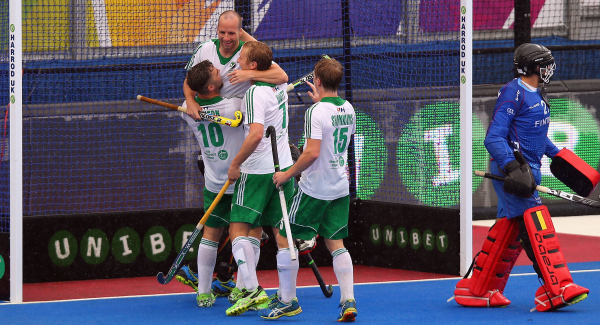
The bandwagon ground to a halt and most moved on, but for Irelandâs menâs hockey team the pain of losing the final of an Olympic qualification tournament 3-2 to Korea â the winner coming with seven seconds remaining in front of a stunned Belfield â would last much longer.
âWe didnât actually debrief the 2012 failure until early 2014, when Craig Fulton came on board as coach,â says Cork native Harte, Irelandâs goalkeeper and captain.
âIt was one of those things in the back of everyoneâs mind, but it was never talked about. Then we tackled it head on, the hoodoo of being the nearly men. Now we use it as a positive, something we can learn from, rather than continuing to see it as one of the worst moments we had experienced on a hockey pitch,â he says.
Fultonâs nickname Ned stands for ânever-ending dreamâ and the South African has since guided Ireland to the Olympic promised land and put them back on the sporting agenda for happier reasons.
A stellar 2015 which saw them beat three of the worldâs top 12 at major competitions, run all of the top three close and knock fourth-ranked Belgium out of the European championships proved enough to confirm a ticket to Rio.
That Olympic breakthrough has had a long gestation period. They will be the first Irish hockey team at a games in 108 years and the first in any field team sport since 1948.
David Passmore was in charge of Irelandâs other Olympic qualification near miss in 2008, when they lost out on goal difference to Argentina and New Zealand. But he was also double-jobbing as the Irish Hockey Associationâs high performance director and says a massive cultural shift was required.
âOne of my first jobs when I arrived in 2005 was to convince the Irish Sports Council of the potential that existed in Irish hockey,â says Passmore. âWe were ranked 24th (Ireland are now 14th), right down the pecking order, but they backed us and quadrupled our funding inside two years.
âThere was also a culture change required for the athletes, who didnât understand what high performance was at all. I equated the group at the time to a pub football team; we had to change how we viewed every aspect of our training and preparation, and that didnât sit well with a lot of people. We stopped using the word âplayersâ and replaced it with âathletesâ, to try help them realise it needed to be a 24/7 thing.â
Passmore says he sold the Irish Sports Council on a 7-10 year plan; he believes 2008 was âtoo soonâ for the group, although they flirted with an Olympic berth anyway â 2012 was the real aim though, with a qualifier on home soil in Dublin.
By then under the guidance of South African Paul Revington, a coach with a reputation for Joe Schmidt-esque attention to detail, Ireland had notched big results against the worldâs top sides in one-off games. Many of the squad were also playing club hockey in the top European leagues.
âWe used to place those guys from the big hockey-playing nations on a pedestal, but playing with and against them every day, you remembered theyâre all human â and more importantly, that we Irish werenât that far off them,â says Harte, who plays with Kampong in Hollandâs Hoofdklasse league and is rated one of the worldâs best goalkeepers.
âOn top of that, Revs (Revington) took everything we were doing to a new level. We received so much information before each training session regarding what would be covered and was expected of us. He was big on visualisation too. In the middle of tournaments he would show us highlight reels of our performances so far and thereâd always be a message in the backing music chosen. That Black Eyed Peas song I Gotta Feeling â âtonightâs gonna be a good nightâ â and Randy Bachmanâs You Ainât Seen Nothing Yet are two that spring to mind!â
Revingtonâs three-year tenure ended with that heartbreaking loss to Korea though, and more growing pains had to be endured in the aftermath. Key men David Ames and Ian Sloan joined Iain Lewers and Mark Gleghorne â brother of Ireland defender Paul â in leaving the Irish set-up to pursue their Olympic dreams with Great Britain, while the squad had to fundraise raise âŹ60,000 in less than a week just to send themselves to a major tournament in Argentina.
Revingtonâs successor Andrew Meredithâs 15-month reign was marked by below-par showings in a failed World Cup qualification attempt and at the European championships, where Ireland were almost relegated.
âIt was clear the chemistry between the coach and squad wasnât what it should be,â Harte says.
âThe desire was there, as it always is when we put on the green jersey, but we were coming up against full-time teams that were sharper and better prepared than us. Yet we still werenât that far off them,â he says. Fultonâs arrival as head coach in early 2014 â a familiar face, having assisted both Passmore and Revington â solved the puzzle, adding belief and mental fortitude to the group.
âNedâs return was crucial. A lot of the most experienced guys from 2012 had drifted away from the set-up; some lads moved abroad, others were sorting their family lives and careers out again after giving everything to the 2012 effort. Ned knew those players well enough to pull them back in,â says Passmore.
Drawing on all that experience, Ireland have become more adept at closing out big games and coming from behind to rescue results. Defeating higher-ranked Pakistan and Malaysia inside 72 hours at World League 3 in July essentially got them to Rio and showed an ability to put together the back-to-back performances against top sides that have eluded the countryâs soccer and rugby teams.
âNed has a tremendous ability to manage the emotions of players throughout a game, especially those critical moments in the final minutes,â says Passmore.
âThat was something that hadnât been managed by myself or Revs at critical moments. But to see Ireland so composed in those key matches this year was the icing on the cake.â
That trend continued with a bronze medal at a European championships containing four of the worldâs top five, a standard which must become the norm if they are to achieve their already-stated goal of a medal in Rio.