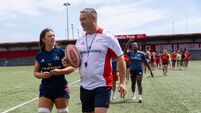
Lizzie Lee: ‘Your head is trying to talk you out of it’
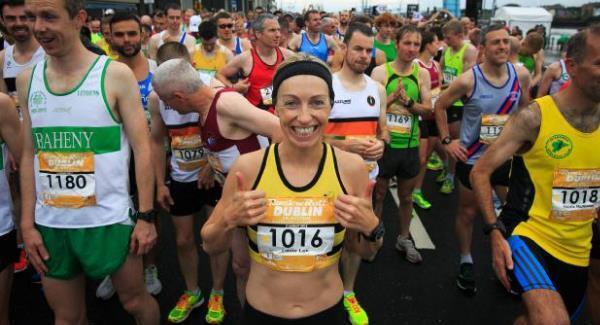
I’m pretty happy with that one! To be on a list with the likes of a Cork woman, Sonia O’Sullivan, and Catherina McKiernan and Fionnuala Britton; that’s a lovely feeling. And the girls beyond fifth are some super runners and Olympians too.
There was. I tend to do a maximum of one a year and I race sparingly. Not only that but Berlin is a very fast course and there aren’t that many fast courses throughout the year. Plus Athletics Ireland policy says that they’re promoting early qualification. So there was pressure from myself and the pressure of knowing if Berlin didn’t go well, I’d have been looking at a marathon in either January or April. It’s very much: ‘If this doesn’t go well, you’re waiting months and months and months to go again.’ It was nerve-wracking!
You cannot allow yourself to think on the start-line that you’re going to run 26 miles. You can’t. The beauty of Berlin is that it’s marked out in kilometres, so you’ve got 42 markers. I break it down into 10k chunks and the way I train on a Sunday is in five-mile loops, so in my head I break it into those loops because I’m so used to doing them. So when I got to 22 miles, I was like, ‘you’ve started the last loop here, you’re grand!’
Absolutely! When I was at the 24th mile, I pictured myself turning onto the Marina and running towards Blackrock Castle. I pictured myself with the lads and on Sunday on the last lap I’m always thinking about coffee. So I just started thinking, ‘right, you’re on the last lap and you’re going to go for coffee after this, and it’ll all be great – just get to the finish line.’ You do play little tricks to get yourself there.
It’s incredibly important because you could have all the training done but if you let in the gremlins on race day, you’re not going to finish with the time you want. It makes sense: your head is trying to talk you out of it. Cavemen long ago might have had a lion chasing them when they kept running, but you’ve no reason to keep running – other than the fact you want to do a good race. Your head is going, ‘You can stop now. Just give over because you’re hurting yourself.’ A marathon is an insult to the body so the brain is trying to talk your body out of it. So you have to talk to your subconscious, address it and tell it, ‘no, it’s not happening. I’m going to keep going until the end.’
I was lucky because there was a Belgian girl who was running the exact same pace as me and we just used each other throughout it. Towards the end, in the last two miles, I had to really grin and bear it to keep that pace. There was no excuse at that point. I had got there, I wasn’t sick, I wasn’t injured, the weather was perfect… it takes so much luck and work to get to 24 miles, that there’s no excuse for the last two. You know it’s going to be hard but you’re expecting it. In a little way, it’s comforting when it gets hard because you’re like, ‘this is what’s supposed to happen. I’m at the end of a marathon now.’
We do the big long runs on a Sunday, every Sunday. The way I think about it is that it’s like a bank. You put miles into the bank and on race-day you withdraw them, but you withdraw them at 10 times the rate you put them in. So you need to build it up because there’s no overdraft facility.
Maybe I haven’t done as many miles, so my body isn’t as old in terms of running. The other advantage is that I’m still running PBs all the time. That mentally keeps you fresh.
There are a few different theories around it. It isn’t a very well-studied area but the theory is that pregnancy and motherhood makes you faster. With the pregnancy they think that you’ve basically got increased cardiac output — it’s like going to altitude for about six months. I’ve read articles and talked to doctors and it’s generally considered that you’re able to transport oxygen more efficiently. So for endurance running in particular, that’s going to help. The other thing is I trained through my pregnancy — I was carrying two extra stone — so that makes you stronger. Then there’s a peacefulness or a calmness you get with motherhood: you don’t sweat the small things as much, because you have a person to look after!
I ran a massive PB off the way things are at the moment so things are working for me. I love being at home. I love being in Cork. I know people go to altitude or warm-weather training. I don’t like that — I like being at home. I thrive on routine and being around my friends and my family, so I don’t know if I’d go changing things dramatically.
CONNECT WITH US TODAY



Be the first to know the latest news and updates