Paul Rouse: History weighs on Cork shoulders but expectation survives
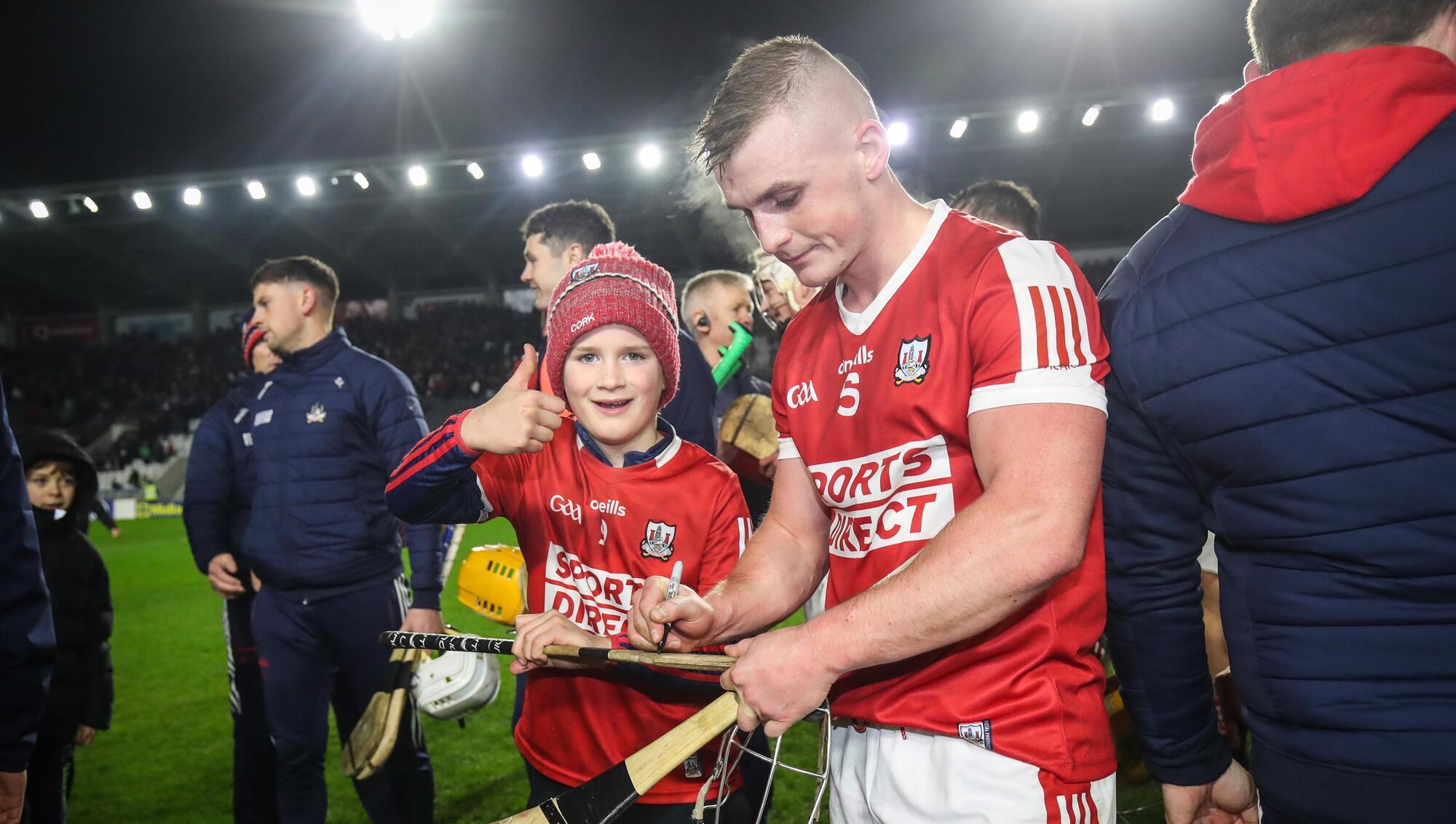
POSITIVE START: Cork’s Tommy O'Connell signs autographs after the Allianz Hurling League win over Limerick. Pic: INPHO/Evan Treacy

“The famine is over!”, proclaimed Richie Stakelum when he lifted the Munster Senior Hurling trophy in 1987 in Killarney. Tipperary had not won the Munster championship for 16 years and the pain of years of defeat was made plain by the scale of the elation that spread out before him.
When Tipperary people speak of that moment they often reference the relief it brought. After decades of success, 16 years within provincial honours had come to weigh heavily on the county’s hurlers and the people who supported them.
As John Harrington wrote: “It was a hugely cathartic day because it signaled the end of an era when the one-time princes of hurling were reduced to paupers as they went 16 years without winning a provincial title.”
This is the thing about tradition. It creates an expectation that the past will endlessly be remade in the present and on into the future: Because we won so much in the past, we should be winning now and continue winning in the coming years.
Perhaps the most important role that tradition plays in successful counties is in setting the level of expectation. This plays out in a way where a jaundiced eye is cast at near-misses or heroic losses; the bar is set at outright victory of the ultimate prize, not at being competitive.
It is the kind of expectation that can lead to short-termism, the abandonment of a project before it has had a proper chance to succeed, or just a simple irrationality that infects people and leaves them impatient or disbelieving.
You could see all of this at work in Kerry until they won the All-Ireland senior football title last July. In Kerry, anything less than winning an All-Ireland title is considered failure. And when Kerry did win the All-Ireland senior football final last year there was a huge stream of relief running through the elation.
It is important to remember that the Kerry ‘famine’ extended back just to 2014, but the fact that those years have been filled with unprecedented success for Dublin must have made it seem much, much longer.
The roars from the stands in Páirc Uí Chaoimh last Saturday evening when Cork hurlers came from a long way back to beat the defending All-Ireland champions Limerick was laced with hope and desire and a desperation to return to the top of the tree.
There has been much talk about how the Allianz Hurling League has been devalued by the changed championship structures within a condensed season. It is hard to argue against that – it feels correct.
But when the final whistle blew with the score having Cork at 2-17 and Limerick at 0-22, there was no sense of it meaning nothing or little – the opposite, in fact.
And understandably so.
How long must the current Cork ‘famine’ feel? There is no denying the place of Cork in hurling history. With 30 All-Ireland senior hurling championships won, there is an enviable record of achievement.
The resources available in Cork are greater than any other hurling county. The number of clubs, the incredible facilities around the county, the wealth in the city and – most of all – the love of hurling that is so deep across the generations combines to give Cork a wonderful platform to produce competitive teams.
But there is no escape from the fact that Cork is now in the longest period in its history without winning an All-Ireland senior hurling title.
This extended losing sequence – from the last title in 2005 to at least 2023 –surpasses the previous record of failing to win an All-Ireland between 1903 and 1919.
There have been other extended catalogues of losses in the past – notably between 1954 and 1966 – but none to compare with the current period of loss.
What also is worth noting is the extent to which Cork’s traditional pre-eminence in hurling has been lost. Since 2005, Kilkenny have streaked away and now head the Roll of Honour with 36 titles.
Tipperary three most recent titles (2010, 2016 and 2019) put it just behind Cork on 28 titles. There is now the prospect of Cork slipping to third in the Roll of Honour in the foreseeable future.
When you put beside that the fact that Cork have only won the All-Ireland minor championship once in the last 20 years, and the Under 20/21 twice in the same period tells its own tale.
It is also 20 years since a Cork school has brought back to the county the Dr Croke Cup, the trophy awarded to the winner of the All-Ireland Secondary Schools senior hurling champions.
There is another way to understand this disappointment: Since 1990, the only Cork club to win the Munster club hurling championship is Newtownshandrum who won it three times (2003, 2005, 2009). In that time, six Tipperary clubs, four Clare clubs, three Limerick clubs and three Waterford clubs have shared the Munster title between them. Many of those clubs have won the Munster championship on more than one occasion.
More than that, Cork clubs have only reached the Munster final on four other occasions across these three decades.
By contrast, back in the 1970s, Cork clubs won every Munster club championship between 1971 and 1980. These were the years when Blackrock (five championships), St Finbarr's (three championships to go with a fourth previously won in the 1960s), and Glen Rovers (five championships, also to go with a third won in the 1960s) reigned supreme.
On top of that Midleton then weighed in with two championships in the 1980s.
All of that feels a long time ago now.
There’s no point in saying anything other than this represents vast underachievement for Cork.
There is no doubting that there is nonetheless the sense of an upswing in hurling in the county. Last Saturday’s win does not mean that salvation is imminent, but it does contribute to the idea that the right path is being followed.
The challenge is to maintain course. And that is no straightforward thing to do when history sits on your shoulder.