Larry Ryan: Paul Merson opens up about his battle with society's giant problem - gambling
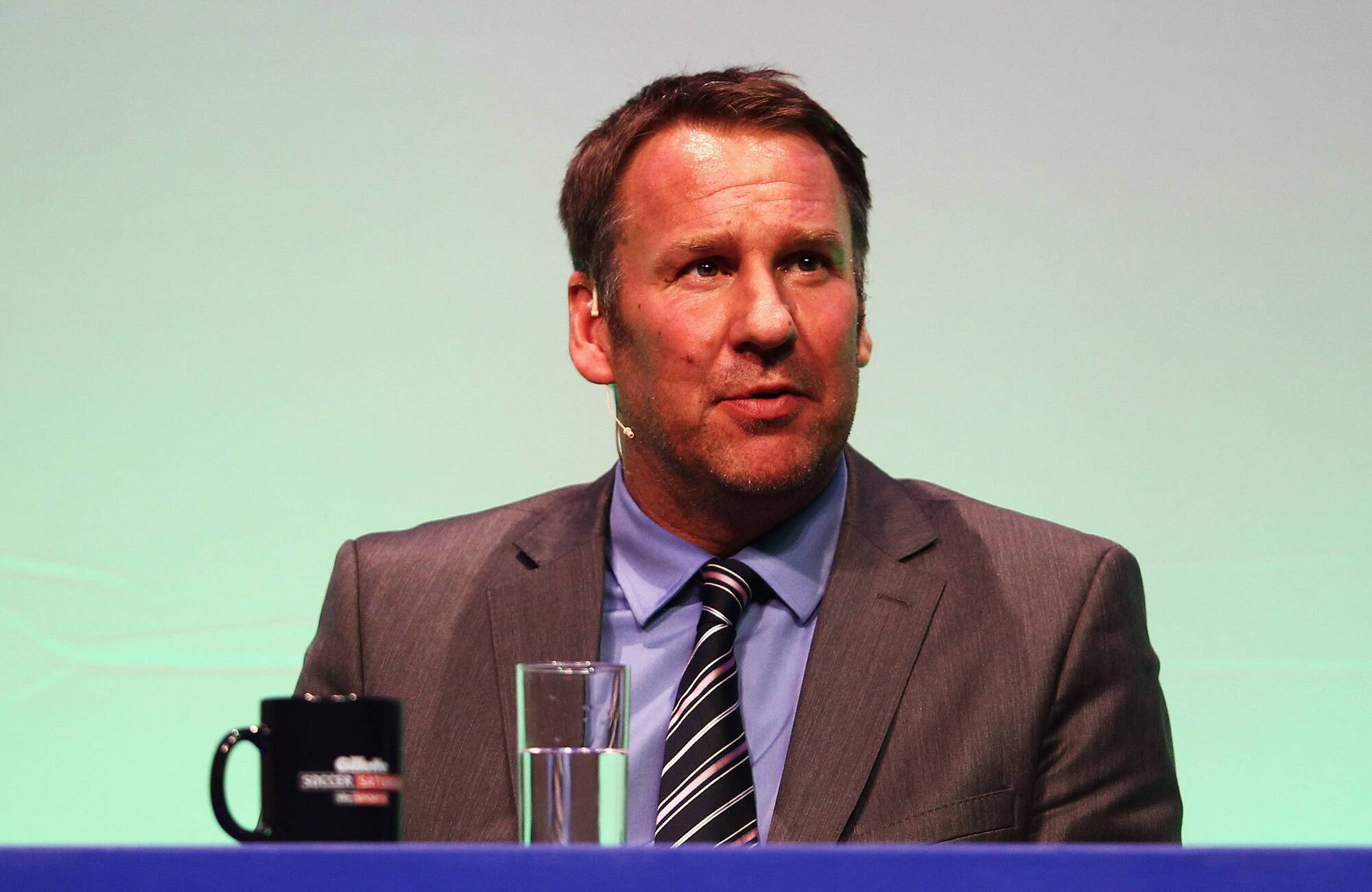
Paul Merson: Opens up about addiction in his new book. Picture: Bryn Lennon/Getty Images

“Gambling was always the sleeping giant of addictions for me.”
Even when baring his soul, Paul Merson is entertainingly fluent in the language of football.
The Merse’s new book, Hooked, is frank, sometimes funny, often horrifying.
He divides opinion as a pundit, but one of Merson’s endearing appeals is an obvious love of the game. That he’s not far removed from the kid who would “come home from school, write all the fixtures out, throw a dice for the results and work out all the tables from the First to the Fourth Division”.
He’s often mocked for how his tongue handles the globalisation of Premier League teamsheets on Soccer Saturday. But he has been diagnosed as dyslexic and says the names sometimes get muddled between his eyes and brain. He preferred when Thommo and Tiss and Charlie just laughed at him and the new crew haven’t quite adjusted. “I mess up the names now and everybody goes quiet and it makes me feel thick.”
The other great asset Merse has is the colourful simplicity of his imagery. “They’re a bag of nails, Jeff, all over the place.”
On the curse of gambling addiction, he likens himself to someone with a nut allergy going out and buying a packet of peanuts.
He describes that first trip into William Hill, at 16, as “stepping on a spaceship”. People roaring and shouting… completely absorbed in the journey.”
He lost his first Arsenal wage packet in 10 minutes, scratched his face on the way home and told his mother he’d been mugged. And the lying began.
Doubtless, he could have achieved more without the heavy baggage he carried, but Merson was among the most elegant English footballers of his generation. He always had time, often to lift his head and spot the keeper off his line.
Time, beyond even the seven million he reckons he has lost, is the biggest thing gambling addiction has stolen from him, he feels.
“I didn’t want to waste any time by spending it in the real world, time I could be on the spaceship, drinking and gambling. Now I do stuff I’ve never done in my life and I love it because real life doesn’t scare me anymore.”
This week, Tyrone All-Ireland winner Conn Kilpatrick discussed, on the Claire Byrne Live show, the gambling addiction that saw him run up debts of over €10,000.
Oisín McConville, who has been open about his own gambling addiction, and works as an addiction counselor, was stark on the scale of the issue: “Society is in real bother.”
Read More
Unlike with other addictions, Oisín points out, there is no effective warning system with this one. “You don’t see people gambling until they reach crisis point.”
Merson has battled drink and drug addiction too, but this is the giant that never sleeps soundly. He relapsed again amid the early panic of lockdown, blowing the deposit for a house.
“For my family, gambling is so hideous because they can’t see it, the signs of a relapse are not visible until the end. I was going to say ‘until it’s too late’ but it’s always too late for the compulsive gambler – a £5 yankee is the start of the road that ends with £10,000 you haven’t got riding on your last hope to pull you out of a hole.”
In the book, he itemises the stupidity of it. Ten grand on the Eurovision Song Contest, five grand on the world bowls, five grand on a Lithuanian basketball match on a Monday morning. A grand with his mate on what’s in the boxes when watching Deal or No Deal.
Yet he is most interesting on the psychology, on a strange kind of realism at the heart of the madness.
Sitting at the foot of the bed, panicking, on his wedding night, because Scotland were losing to Costa Rica.
“This may sound ridiculous but I was always a ‘realistic’ punter. I was never one of those gamblers who would bang everything on a 20/1 shot. I was always after easy money, backing the favourite, the odds-on chance that bookies hate.
“If Scotland had won, my wedding would have been free, that was always my thinking.”
But even that shred of logic is fatally undermined by a circular futility to the condition. Merson envies the pals who’d win a small bet and reward themselves with a pair of golf shoes, or maybe a new driver.
“Winning a bet to me made another, bigger bet possible. There was no end goal as such . . . just to keep betting. The process of the bet itself is the main attraction not the end result. If I won, I thought I had a bigger pot to win more. If I lost, I wanted it back so chased it. Those times I did win, within two days the bookies would have it all back and more.
The dream was a never-ending betting spree, not the jackpot.
He is thankful the internet didn’t catch up with him early in his gambling life. “Get to the last dog race and that was it. It was finished. I couldn’t get a bet on a tennis match in Australia, say, back then. Now, it would take 10 seconds on a phone app.”
And he’s convinced the signs of relapse should be a little more visible to those laying the bets.
“When you ring up to bet on a Lithuanian basketball match, the bookies aren’t worried you’ve gone mad, they’re not concerned for your well-being. They treat you as a rational human being when you’re doing irrational things, as long as it suits them.”
Once, he considered crushing his fingers one by one with a hammer to stop himself picking up that phone.
But treatment has given him some understanding and peace and hope.
“Today, I’m a million miles from having a bet, as far as I’ve ever been from having a bet, but that’s because I can see clearly.”
He’ll only ever speak for today. The giant always has one eye open, constantly nudged awake by the insidious torrent of betting advertising and chat about odds. Chat that, dangerously, appeals to that rational side.
Did they say United are evens?
That sounds reasonable. That sounds sensible. That sounds like easy money.
“And within two days I’d be betting on Lithuanian basketball again…”