Israel captures strategic castle in deepest incursion into Lebanon in 26 years
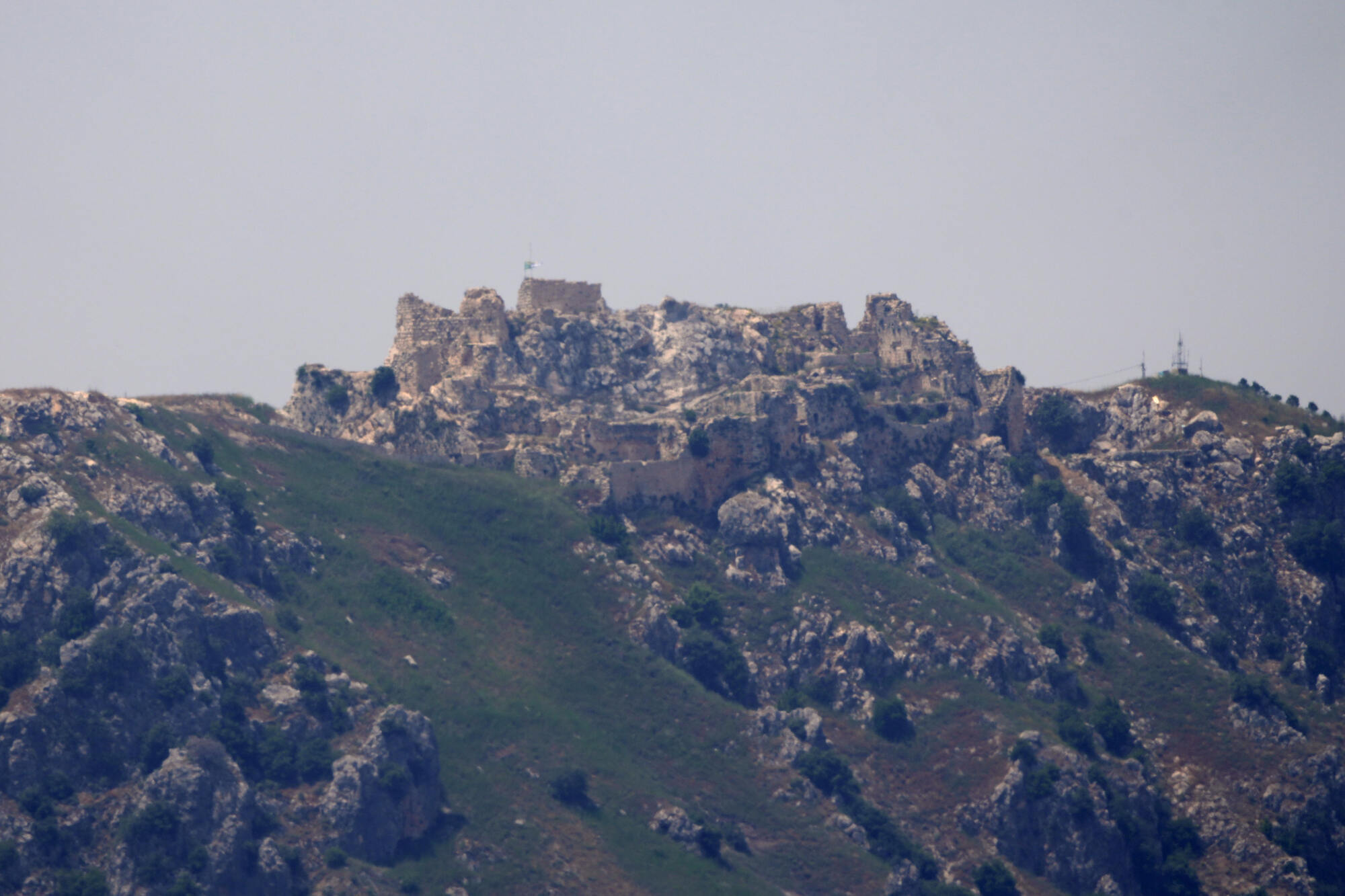
Israeli troops have captured a strategic mountain topped with a Crusader-built castle in southern Lebanon in the deepest incursion into the country in more than a quarter-of-a-century, the military has said.
The taking of Beaufort castle, near the city of Nabatiyeh, followed days of airstrikes and intense fighting in nearby villages between Israeli troops and Hezbollah militants.
The capture marked a major Israeli advance in the latest Israel-Hezbollah war, which began on March 2, when Hezbollah fired rockets into northern Israel two days after the US and Israel attacked its main backer, Iran.

Since then, Israel has launched a ground invasion, capturing dozens of Lebanese villages and towns close to the border. Hezbollah has launched thousands of missiles and drones at Israeli soldiers in southern Lebanon and northern Israel.
The Israeli push came despite a nominal ceasefire that has been in place since April 17 and just days before Lebanon and Israel hold their next round of direct talks in Washington starting on Tuesday.
Lebanese parliament speaker Nabih Berri, a key Hezbollah ally, said he could guarantee the militant group’s “full, comprehensive and immediate commitment to a ceasefire”.
“But who will force Israel to stop its aggression?” he said in a statement on his television station, NBN.

French foreign minister Jean-Noel Barrot requested an emergency meeting of the United Nations Security Council to discuss Israeli military operations in Lebanon, which he described as “unacceptable”.
“Nothing can justify the prolongation of Israeli military operations in Lebanon and its increasingly deep occupation of Lebanese territory,” Mr Barrot said on French television BFM TV.
The Israeli military’s Arabic-language spokesman, Avichay Adraee, posted photographs on X showing Israeli troops walking outside the castle, and defence minister Israel Katz wrote on X that they had raised an Israeli flag over the castle.
Israeli troops previously captured the castle in 1982 and held it until they withdrew from Lebanon in 2000.
“Twenty six years after the withdrawal from the security zone in Lebanon, the Israeli flag has returned to fly on the peaks that overlook the Galilee towns,” Mr Katz said on Sunday at a memorial ceremony for Israeli soldiers killed in its previous occupation of southern Lebanon.

Mr Katz said Israel intended to hold the castle as its troops worked to destroy thousands more homes that he said were used by Hezbollah and other military infrastructure in southern Lebanon.
The Beaufort fortress, perched high atop Lebanon’s rolling green hills and overlooking the Litani River, has been a strategic military asset for centuries.
Built as a Crusader castle around the 12th century on top of previous fortifications, it has also been used by Saladin’s Jerusalem army, Mamluks, Ottomans, the French and the Palestine Liberation Organisation (PLO).
The Crusaders named it Beaufort, which is Old French for “beautiful fortress”.
The 1982 capture of the castle from the PLO was a major victory for the Israeli military, which was then led by defence minister Ariel Sharon, who later became prime minister.
At the time, the Israeli army pushed all the way north and occupied Beirut.

In 2000, the castle was partially restored and opened to visitors.
In recent days, Israel has expanded the scope of its operations in Lebanon, sending troops across the Litani River, which previously served as a de-facto boundary, and demanding that residents leave much of southern Lebanon.
“The occupation of Beaufort is a dramatic stage and a dramatic shift in the policies we are leading,” Israeli Prime Minister Benjamin Netanyahu said on Sunday, citing the military occupation of security zones in Syria, Lebanon and Gaza along Israel’s borders.
He said Israel had killed 3,000 Hezbollah militants since the start of the war. Hezbollah has not disclosed its casualty numbers.
Israel has designated the area from the Litani up to the Zahrani River a combat zone. Some residents have already left the area due to intense strikes in recent days, but people remain.

CONNECT WITH US TODAY



Be the first to know the latest news and updates