Dr Ed Coughlan: The science that shows shootout success is far from a lottery
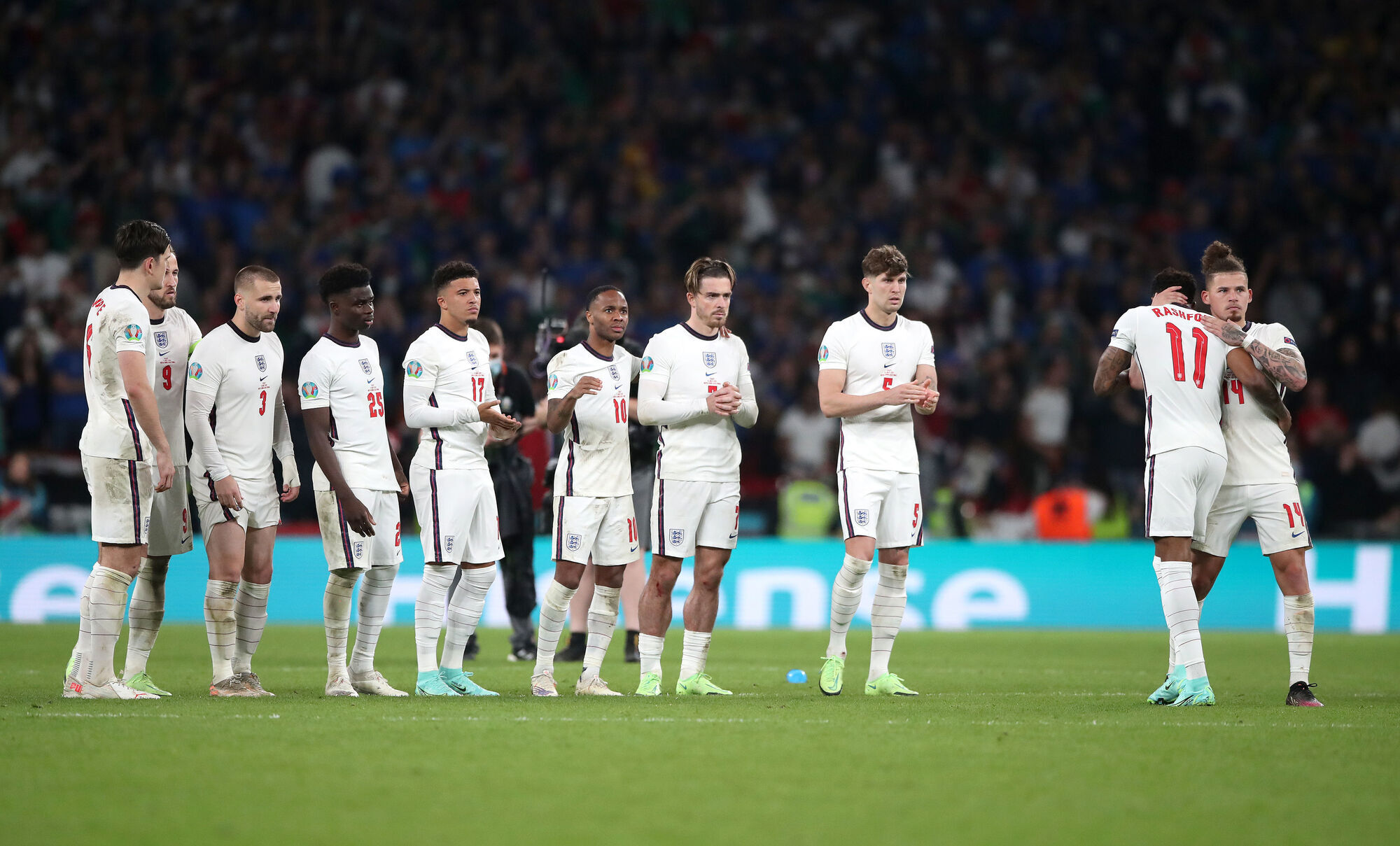
SHOW OF SUPPORT: England’s Marcus Rashford is consoled by Kalvin Phillips after missing his penalty in the Euro 2020 final shootout defeat to Italy. While it didn’t save England on Sunday, such supportive behaviour can have a positive influence on subsequent players. Picture: PA

The hottest topic this last week is the penalty shootout between England and Italy to decide the winner of Euro 2020. To many, shootouts are seen as a cruel way to finish a match, let alone a championship, but they are as fair a way as any.
There have been suggestions that a countback system should be employed as an alternative, such as goals conceded over the course of the tournament, or shots on target, as a more humane way to do things, but there will always be some teams so evenly matched that nothing can separate but five penalties each and maybe more than that.
The opinion that penalties are a lottery is not supported by sport science research. In fact, the evidence suggests that there is much a team can do to improve their prospects. Indeed, research suggests that those players who see penalties as a game of chance are more likely to have destructive thoughts during the process and experience greater feelings of anxiety than those who see it is as a skill-based task.
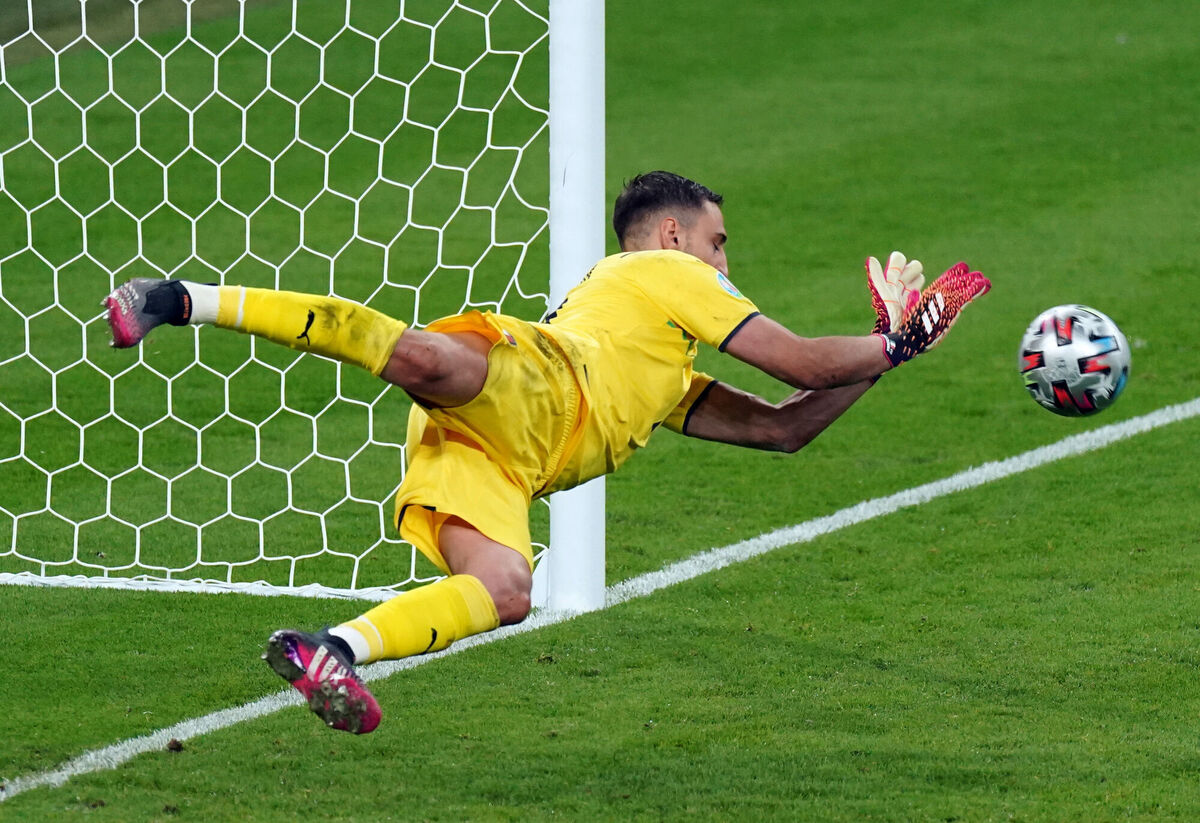
On a basic level, the act of taking a penalty is all about the skill of the player. How competent a player is to hit as small a target as possible with as much speed and accuracy on the strike all but removes luck from the situation. The common thinking that a well-struck penalty is all but impossible to save is true, even if the keeper picks the correct side, especially if the shot is hit high towards the corner of the roof of the net, like Harry Maguire’s strike against Italy’s Gianluigi Donnarumma to give England a 2-1 lead.
There are always those players who like to play roulette with the situation and as a consequence toy with the hearts and minds of their supporters by choosing a riskier approach. Stutter-steps and pauses in the run-up have been here forever, but if you happen to get the keeper to commit to a side early, you must hit the target, a thought Marcus Rashford will no doubt dwell on in the days and weeks ahead. But the evidence suggests such antics were more successful back in a time when goalkeepers were not as skilled and informed as they are nowadays. The data goalkeepers have on players’ tendencies, and vice versa, is even more reason to see penalties as a skill and not a shot in the dark.
Which makes the Panenka an even riskier option. Named after Antonin Panenka, when he intentionally, deftly chipped the ball down the middle for the final penalty to give Czechoslovakia a 5-3 win against West Germany in the 1976 Euros final in Belgrade, the first final to go to penalties. Of course, when they come off, the player looks unflappable, like Zinedine Zidane’s penalty against Italy in the 2006 World Cup final.
But when they fail, the player looks nothing short of embarrassed as the keeper gathers the ball with ease, as we saw when Sergio Aguero tried it against Chelsea’s Édouard Mendy. Ideally, the task doesn’t change if the situation changes, but because we are emotional beings, the occasion very much plays its part in the drama. Players who have been involved in high-stakes penalty shootouts report experiencing an attack on the senses. They speak about having to remove tension from their limbs.
Physiologically, energy goes towards calming their breathing down. Psychologically, huge effort is invested in quietening their thoughts in an attempt to reduce everything down to a simple kick, struck well to a point in the goal out of the goalkeeper’s reach.
As for the emotional aspect, sport science has uncovered some interesting findings.
None more so than the contagious nature of behaviour throughout the course of a shootout. It has been shown that players who openly celebrate a successful spot-kick has a positive affect on teammates.
The thinking is that when the joy and sense of achievement of scoring is celebrated, it can be infectious throughout the squad. In the same way that nervousness and anxiety is contagious, the same can be said for excitement and exuberance.
Even for those players who miss a penalty or have their shot saved, the behaviour of their team-mates has been shown to correlate strongly with further kicks. When a player turns back towards his team-mates after not scoring, strong, supportive, and upbeat behaviour has a positive influence on subsequent players.
These are the small margins that coaches who stay up to date with the research can infuse into their team’s environment. It is highly likely that every team in Euro 2020 practised penalties. But how many practised the team’s behaviour around the penalties?
How many teams discussed the way to deal with the outcome of penalties, during the shootout itself, and in the aftermath, regardless of the result?
For sport scientists like Geir Jordet from Norway, a man who has dedicated his career to unlocking the secrets of penalty shootouts to provide objective data for coaches to learn from, not working on the environment and behaviour surrounding a penalty shootout is an opportunity missed.
He has even identified effective timings for increasing success on penalties. For example, the time taken between the referee’s whistle and the player striking the ball has revealed an interesting pattern. Players who scored penalties at Euro 2020 generally took on average 2.5 seconds from the whistle to the kick, in stark contrast to those who missed, who averaged less than a second. In other words, taking your time pays dividends, the whistle is merely a notice that the player can begin their preparation, not a stimulus to react to quickly.
Jordet has also discovered that players substituted on late in extra-time and those who have had little game-time during a tournament are less likely to score, something that maybe should have impacted on Rashford and Sancho’s inclusion among England’s first five takers.
It is remiss to suggest that Rashford, Sancho, and Saka all missed. Because they didn’t — Sancho and Saka had their shots saved by a keeper who, along with England’s Jordan Pickford, was in the form of his life throughout the tournament. If we remove the goalkeeper altogether from the equation we also diminish their skills and what they can bring to the situation.
How do those young men recover from such an emotionally charged series of events? Hopefully, by leaning on the support services and the network of professionals they have at their disposal within the England set-up and their clubs when they return for pre-season in the coming weeks.
Anyone who has followed England’s progress under Gareth Southgate will know that little is left to chance and those strong enough to step up will be further strengthened by seeing this as an opportunity for growth, not shame.