Jack: Master of many trades
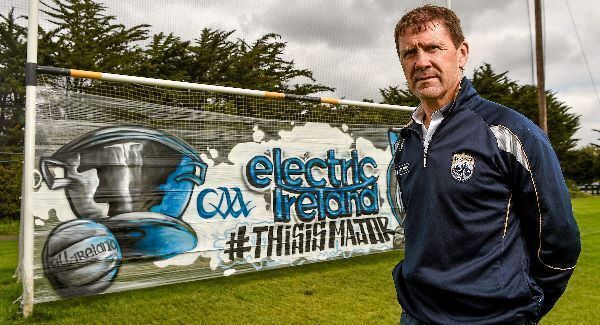
Somewhere quieter would be better, more conducive to conversation, but he’s not biting. He’s guarded, agitated, and typically irascible.
“It’s not Khrushchev and Kennedy, we’re not here to discuss the Bay of Pigs, are we?” says Jack O’Connor. And then he breaks out into a hearty laugh. “Christ, where did I pull that one from? I can’t even spell Khrushchev. I surprise myself at times.”
From the vantage point of now, three All-Ireland senior titles later, Jack O’Connor doesn’t really have to bother with how much he surprised himself a decade ago. All he knows is that after losing his first game in charge of the Kingdom, to Longford no less, in the National League, he double-checked his life insurance policy.
“If we hadn’t won that All-Ireland in 2004, I wouldn’t have lasted long. Winning gives you credibility. There was bad feeling after the way Páidi left the job, and with three nephews on the team, I had to win to get credibility and get control of that dressing room. You could be the best coach in the land, but if you’re not winning, it just won’t cut it. I’ve been reading a book by (ex-UCLA hoops coaching legend) John Wooden, who won ten NCAA championships, where he says some of his best coaching came in years they won nothing. Try saying that in Kerry, like.”
Tomorrow, a very different Jack O’Connor will drop his gear bag in a dressing room cubicle in Croke Park and prepare himself and his charges for more September scrutiny. Kerry haven’t won an All-Ireland minor title in 20 years and if Jack snaps that streak as the coach, he will be join an elite band to steer All-Irelands winners at minor, U21 and senior. His expressed choice as senior successor, Eamonn Fitzmaurice, contends his first final as coach, playing a similar brand of potent yet pragmatic football. You’d think it was part of a grand masterplan.
“I’d be trying to play a similar style of football to what Fitzy is doing with the seniors, but that’s more coincidence than planning,” accepts O’Connor. “We’d be singing from the same hymn sheet, but maybe these kinds of things should be done on a more formal basis, with more co-ordination between the different age grades, from development squad level up. We need to get our heads together on what is Kerry’s strongest style of football. Sometimes these things happen by accident more than design. Donegal’s minors and senior are playing exactly the same system and same style of football, and you’d have to admire that. It’s a lesson we need to learn in Kerry.”
Few can dispute O’Connor’s significant influence on football in the Kingdom since 2004 — and before it, if his college and U21’s successes are considered. That his role in some over-arching strategy has never been discussed or defined in the county is interesting in itself; there is no director of football in Kerry, but O’Connor is convinced there’s a huge opening for a director of coaching in the big secondary schools.
“Some of the schools are doing fine, but others — without naming them — are seriously under-achieving. School is a captive audience, where there’s a great sense of camaraderie. There’s massive kudos to be got out of achieving schools success. There are a number of schools in Kerry where football is not as high up the priority list as it should be. Maybe if those schools got a bit of direction and structures, that could pay huge dividends for Kerry in the future.”
Again, by coincidence more than design, Fitzmaurice teaches in (Hogan Cup winners) Pobalscoil Chorca Dhuibhne, O’Connor in Coláiste na Sceilge, (Kerry minor selector) Michéal O’Shea in IS Killorglin, and (minor trainer) Arthur Fitzgerald in St Brendan’s, Killarney. No-one is crowing yet about this batch of Kerry minors facing Declan Bonner’s Donegal tomorrow, but there’s chatter since the spring. O’Connor feels “five or six” of them have senior potential, but the synergies between the schools and the county minors has managed their workload better than ever before.
“I would have spoken to Fitzy during the year, and for the first time in a long time, we got the balance right between the schools and the minors. I spent years arguing with Kerry minor managers over the use of players, over access. When schools are in competition, they must have first call on players. It makes no sense if they are preparing for a Corn Uí Mhuirí or Hogan Cup to come into the Kerry minors and be doing the type of training that’s gearing them for three or four months down the line. That’s counter-productive, so I’d have had a very good understanding with Fitzy about that. We were lucky this year with the selectors being in key schools, but it’s a suggestion for the future: even if they aren’t teachers, get the minors selectors involved with schools in their area. For too long it was them versus us.”
Jack and Fitzmaurice would be tight, even if they’re chalk and cheese as personalities. Their football philosophies dovetail. “Eamonn has managed to get the balance right, marrying the traditions of Kerry football with modern defending — which is keeping a good structure on your backline and not leaving yourself wide open like Dublin did a few weeks ago,” nods O’Connor.
“When I had him in with me (as a selector) in 2009 and 2010, I had no doubt he was the man for the top job. I had complete trust in him. He took parts of the training, did the video stuff, you’d know by conversations with him, bouncing ideas off each other on the phone, that this fella was a serious operator. He was very stable character, and wouldn’t be fazed by the job, which is important: the Kerry senior job is not for shrinking violets, you need to be a tough cookie. Fitzy had a very bad start in the League in both his years and the easiest thing would have been to panic. But he had the nerve to look at the big picture, and take the long-term view. Not to feel he had to change tack and get early results to pacify the experts in the stand.
“There are different personalities in every team, leaders and followers, and he was most certainly a leader. He didn’t start in the 2006 final against Mayo, and it was a quare first half. Six goals, three each. We conceded a couple of awful goals, fellas thought the game was over after 15 minutes and got sloppy. I was off the head, threatening all sorts of everything at half-time but he stood up (he was a sub), and was telling everyone to steady up, we were still in a handy lead. Of course, he was right. We were still in control of the game. He had a presence, fellas would listen when he talked.
“But he has a bit of a ruthless streak in him, which was no harm. I saw him on the field one night in Tralee in a do-or-die League game against Cork in 2004. We lost that famous first game in Longford, not the start I was looking for, and the following Saturday night there was some big hits going in. Fitzy walked into Noel O’Leary that night. Noelie knew all about. Or maybe he didn’t... It was a statement. ‘We’ll do what it takes tonight to win.’”
Later that autumn Fitzmaurice punted a long free downfield in an All-Ireland final against Mayo. Colm Cooper, light and bright, fielded above his head 40 yards from goal and slalomed his way into history. He goaled with a roll, not a blast. Kerry were home free.
“Gooch is a magician,” O’Connor says, “but he’s not Lazarus. You just have to have the work done, he wouldn’t have done any contact work in training, so it’s not a runner that he plays any role this weekend. (But) he’s a factor around the dressing room and the squad. Gooch has forgotten more about football than most of us even know. I brought him into talk to the minors last week, he was fantastic. He was reinforcing some of the stuff we are telling them, but coming out of the Gooch’s mouth, they’d believe it a lot quicker. He has a very sharp brain for the game, I’ve no doubt down the line he’ll make an excellent coach. His vision ..... Gooch sees a pass without ever looking at a fella. The only one that would be remotely close to him in his era was Tyrone’s Brian McGuigan, who was a fantastic creative play-maker. Gooch would have a tremendous understanding of the game, he would be a huge help to Eamonn going into Sunday, because he has played against blanket defences before. He can advise lads on not forcing the play. Give the simple pass — he’d give a five yard hand pass as quick as he’d give a 50-yard foot pass if it was the right thing to do at that moment. Some people can’t quite understand that. It sounds easy.”
Just as things weren’t as bad as they seemed when Kerry succumbed to Cork again at U21 level last March in Tralee, there’s no-one realistically believing that it’s all moonlight and roses now that the county is in a pair of All-Ireland finals.
O’Connor is concerned, even if the county keeps producing footballers like James O’Donoghue. “Kerry is unique in that regard, there’s a great tradition here, a good club structure, so you’ll still have fellas coming through. But winning the minor and the senior would be an absolutely huge boost to football in the county. A minor success would tell everyone that there is a bunch of players coming through for the future as well.
“People tend to forget that the most recent era from 2004 to 2009, when we appeared in six senior finals in-a-row, was backboned by success at U21 level in the 90’s. We had five great teams — we lost to a great Cork team in the Munster final in 1994, but in 1995 we beat Mayo in a replay, in 1996 we beat Cavan in a final in Thurles, and the following year we beat Cork in a replay in Páirc Ui Rinn — Denis O’Dwyer was marking Nicholas Murphy and they had a great battle, David Moloney saved a last-minute penalty from Fionán Murray, it was a savage game.
“Páidi and myself were involved with the seniors, it was the same managements, and we played Meath three days later in All-Ireland semi-final and ended up losing by a point in Nenagh. Anyone from Kerry will remember the referee from Donegal, Michael McGrath, who was surrounded by 200 Kerry supporters at the end. He was giving frees that mystified everyone, mostly against Barry O’Shea at full-back, whose only crime seemed to be that he was jumping for the ball. We won the All-Ireland again in 1998, beating a very good Laois team and we reached a final in 1999 and were beaten by Westmeath. We won three All-Irelands and could have won five-in-a-row. Success isn’t everything but it gives players the habit of winning and gets them ready for senior.
“Darragh O Sé wasn’t ready for senior in 1996. A good Portmagee man, John Devane, described him like a little calf running around after a cow (Liam McHale), but he was more than ready in 1997. It was just a question of filling out. The Hassetts, Donal Daly, Fitzmaurice, Tomás Ó Sé, Mike McCarthy, Tom O’Sullivan, Diarmuid Murphy, you could rattle them off. To really get the type of run Kerry had, you need it to be backboned by two or three underage teams. We got three or four different batches to come through from those U21 set-ups.”
The Jack O’Connor of 2014 is “a bit more confident in what I’m doing”, and doesn’t feel under as much pressure these days to be the one unlocking the keys to the Kingdom. Tomorrow, though, it’s not about long-term, it’s about winning a minor All-Ireland. “Of course, you feel some responsibility for the future, it would be a big one for Kerry to win, 20 years is too long. Kilkenny win minor hurling titles frequently, and so should Kerry, especially with such a strong college structure down here. He mentions midfielder Barry O’Sullivan — “a fella you’d lean on, the type of fella who’s dug us out of a few holes” — leaving you wondering whether he has a team personality templated in his head these days?
“Maybe. Sub-consciously you want a creative player on the ‘40’ who can scatter passes, you want scavengers on the wing with an engine, brave ball-winners in the full-forward line and maybe one fella circling around who can finish.”
Brave ball-winners inside? “Maybe I’m thinking of Johnny Crowley in 2004, who wasn’t the most polished footballer in the world, but by God was he brave. That has a huge effect on the way you play your football because it basically allows you to kick the ball. If you don’t have a strong ball winner in the full-forward line, you have to pick your passes, and play a different way. In those 2004 battles with Limerick in Munster, he’d been taken off, and when we replaced him again in Killarney he was drawing kicks at water bottles and anything he could see in frustration. But in the six weeks before the (All-Ireland) final, he just started coming. It was very hard on Mike Frank (Russell) who had played every game up to then, but we saw something in Crowley.”
Again, like Fitzmaurice, O’Connor always placed a huge store in training ground form: “You have to because of the massive gaps in the Championship programme. A month is a huge amount of time — a player can come in and out of form in a couple of weeks, especially with minors. We have to be careful with these Pobal Scoil lads because they’ve a pile of football played this year and we have to tailor their training. It’s like a young colt. If you see a fella showing form you have to reward him — if you don’t do it then, when will you reward him?”
Jack’s already penned one book — it seems to be under the desk of every GAA writer in the land — but there’s another if he ever was of a mind. All-Ireland-winning anecdotes are great, but there are seasons when Gooch isn’t lifting in training and they’re not being dragged off each other in intense final trials games. What about the times when training is dreadful and the players are stinking the place out?
“Then you quickly re-evaluate, change the type of training you are doing, change location if you have to. Anything to give you that spark. Those times, you go into games with more hope than expectation. You love going into a game when training is going well, but other times it’s with a wing and a prayer.
“Look at 2009, funny enough, the smallest things can spark it. At half-time in the qualifier against Antrim in Tullamore, we were a point down after playing with the breeze on the famous day we left Tomás and Gooch off. Antrim came out and kicked the first point of the second-half, I turned to Fitzy and said ‘we’re in a tough spot here’. Antrim played a sweeper that day, and we had a spare man at the back. We just switched Mike McCarthy into that role, and he made four or five surges up the field, and it looked like it sparked everyone around him. Paul Galvin got his only inter-county goal that day. There were thousands of Kerry followers there — a few of them came to write our obituaries — but we made a stirring comeback and there seemed to be a real connection on the pitch with the genuine fans afterwards. We were a very upbeat team going back on the bus that afternoon. We found something in the last 20 minutes that day. We were on the road then. Then we heard we’d drawn Dublin in Croke Park. I knew we were ready.”