Colin Sheridan: For Mayo and its people, nothing will ever feel like this again
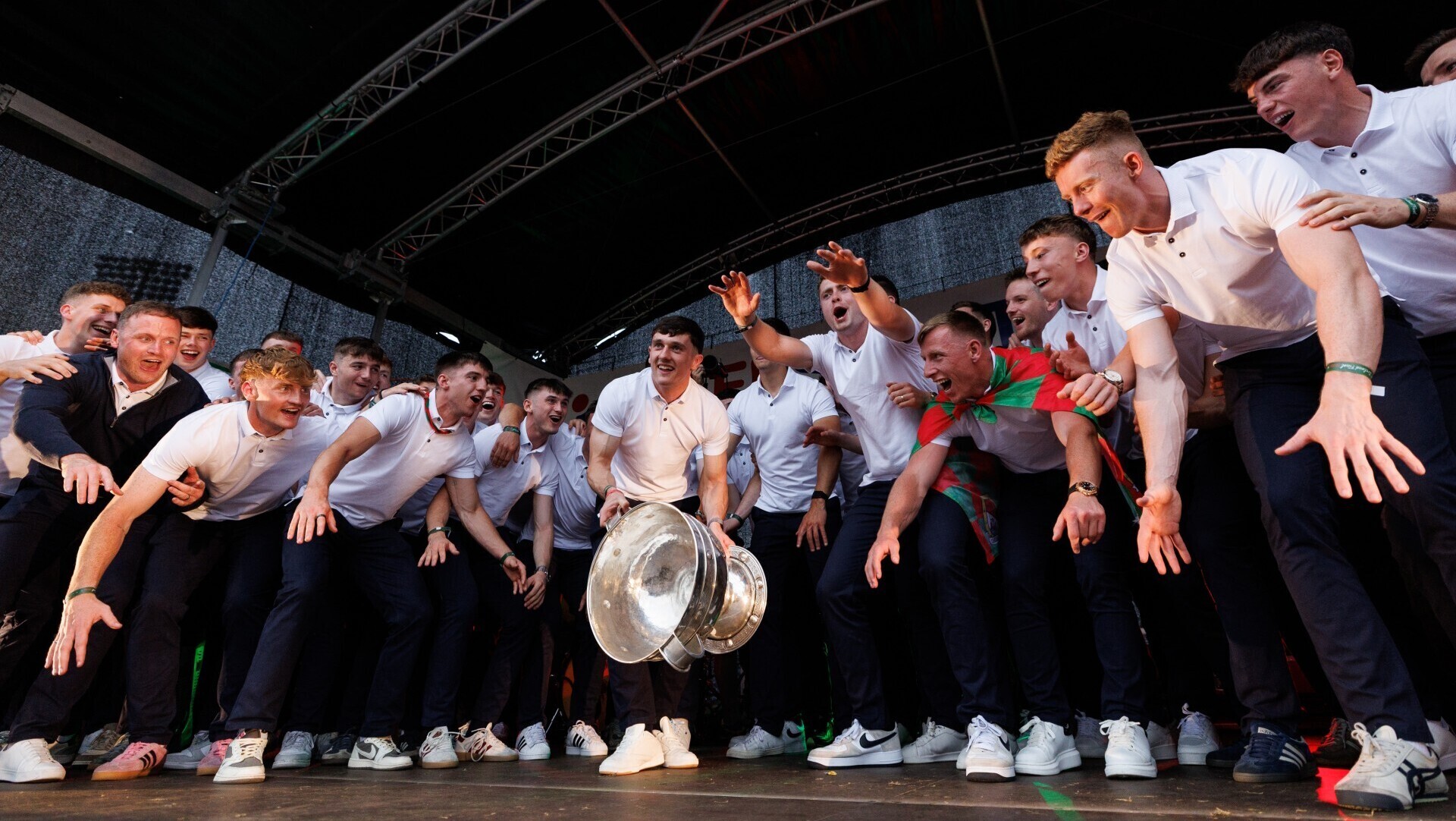
For the people of Mayo, 6pm on Sunday evening will rank amongst the greatest moments of their lives. Pic: ©INPHO/James Crombie
We mortals are but shadows and dust. Everything you love eventually leaves you. All you are left with, in the end, are the memories of moments and people and times and places. For hundreds of thousands of folk scattered across the world who hold a piece of Mayo inside their heart, 6pm on Sunday evening will rank amongst the greatest moments of their lives. It was not about sport or excellence or process. It was not about money or ambition. It was about people. A collective exhale. The embrace of strangers who suddenly felt like family. It was about connection.
Read More
Longing on a large scale, DeLillo wrote, is what makes history. And if longing alone could have won Mayo an All-Ireland before now, it would’ve happened decades ago, and it would’ve happened only once. Because you can only experience that moment once. The moment you fall in love with something, and it loves you back. Everything thereafter is great, but different. Less pure. More practical. Should Mayo win another one or ten in the next 75 years, it won’t ever again feel like this. Nothing will.
Why Mayo? Well, this win was for the navvies and the tatty hokers. For the young men who left Achill and Belmullet 75 years ago to dig tunnels in London, and pick spuds in the north of England. Men who lived in filth and squalor so they could send a few shillings back to Binghamstown and Inishbiggle. Teenagers, forever frozen in arrested development. Mentally the same age as the day they left, physically beaten by time and dirt.
This win, too, was for the young women who ended up in South Cove and Broad Street in Boston. In Bay Ridge in Brooklyn. In Cleveland. Not by choice, but necessity. The Mayo they left was the same Mayo that exists now. The accoutrements of life may have changed, but the essence of the place has not. The tatty hokers of today are the nurses and doctors and teachers and tradespeople who leave for Perth, Hong Kong, and Abu Dhabi tomorrow, uncertain whether Mayo will ever be home again.
They needn’t worry, because if Sunday and its aftermath proved anything, it is this: Mayo is not a place, but a state of mind. A consciousness that permeates the fabric of a person’s personality. Those personalities are hewn from the soil and the rocks and the ocean. Mayo has no monopoly on these things. Many other western counties suffered the same economic and social hardships we did. Many others, too, share the same wild beauty. None, though, have contrived in quite the same way as Mayo to merge the spirituality of a landscape, a conflicted zeitgeist of a people, and the poetic memory of community into the heart and soul of a Gaelic football team.
It is often overwhelming. When things come to matter so much, they too can become destructive. My own personal relationship with Gaelic football and my beloved Mayo is one reflected across the county. A familiar tale of love, devotion, betrayal, glory, and—critically—community. My father lost an All-Ireland minor final in Croke Park in 1958, aged 16. It began a relationship with Mayo football that stretched across seven decades, and continues today through his children.
As a child I watched him and others dig fallen trees from the cold, damp earth so they could whittle them into goalposts. They curated a pitch in Balla like the Bull McCabe did in , transforming it from bog to lush pasture. When it came to be my brother’s turn to wear the green and red, he did so, not to serve himself, but for a higher purpose. There were times it almost broke us all. What is true for me, I know, is true for so many more.
Sunday absolved all of that. It washed away the cynicism and the scepticism and the pernicious self-doubt. It purged the soul of the slander we have allowed to slide for decades. The perennial losers. The eternal bottlers. The high-stool talk of needy nearly-men. The manner of victory not only ensured no asterisk, but embodied the audacity of a team and a people suddenly realising their freedom was finally within their grasp. The navvies that went before them—generations of players, amongst them their fathers and grandfathers—had merely been digging the tunnel, not knowing when the light would come. On Sunday, it burst into being. And it was glorious.
The scenes that followed, I will never adequately describe. They were not hysterical or excessive. There was no rush to drunken delirium. Instead, it manifested itself first in a grand exhale. sang as if it were a cry for freedom, then came a mass expression of people seeking out other people. Sisters finding brothers, and hugging in a manner otherwise unnatural. Dads standing on stadium steps, scanning crowds for sons and daughters, as if they were disembarking a famine ship. Lifelong friends coming to terms with the fact that this imperfect ritual had reached—not an end, but a tipping point.
As we searched each other out, there were countless euphoric glances shared with equally ecstatic strangers. When some glances lingered long enough, they too became hugs. Strangers no more.
It was never just about the football. An hour before it all began, before a ball was kicked, an 11-year-old Finn Clancy, dressed in an 11-year-old’s suit, stood in front of a near-full Croke Park and waved for his late dad, Paul, who tragically passed away last month. He was surrounded by his dad’s Galway teammates and friends, his mum and sister close by, if he needed them. He didn’t. Instead, he stood and smiled and waved, perhaps too young to grasp the magnitude of his own bravery, but old enough to understand he was safe amongst a community that will forever hold him close. No 11-year-old should ever have to stand and wave for his dad. Yet, in the tragedy of it happening, his smile affirmed the thing we always hoped but can never fully believe: this is bigger than all of us.
Yes, it was never about football. From P. W. Nally, through Michael Davitt to Sally Rooney, from Mary Robinson to Paul Durkan, Mayo has long provided the country with ambassadors of social change, of artistry, and of social justice. Seán "Baller" Lavan, a doctor and Olympian from Kiltimagh, introduced the solo to Gaelic football. Two days ago, Ryan O’Donoghue used the skill to rewrite history.
“You have to have faith, Dad,” wrote Louisburgh’s Mike McCormack in , “that's what we Mayo people do, we journey in hope, true believers.”
On Sunday, faith finally became truth. On Sunday, Mayo finally passed out the moon.