Ciara Griffin: Ireland, at last, are the main event on landmark day for women's rugby
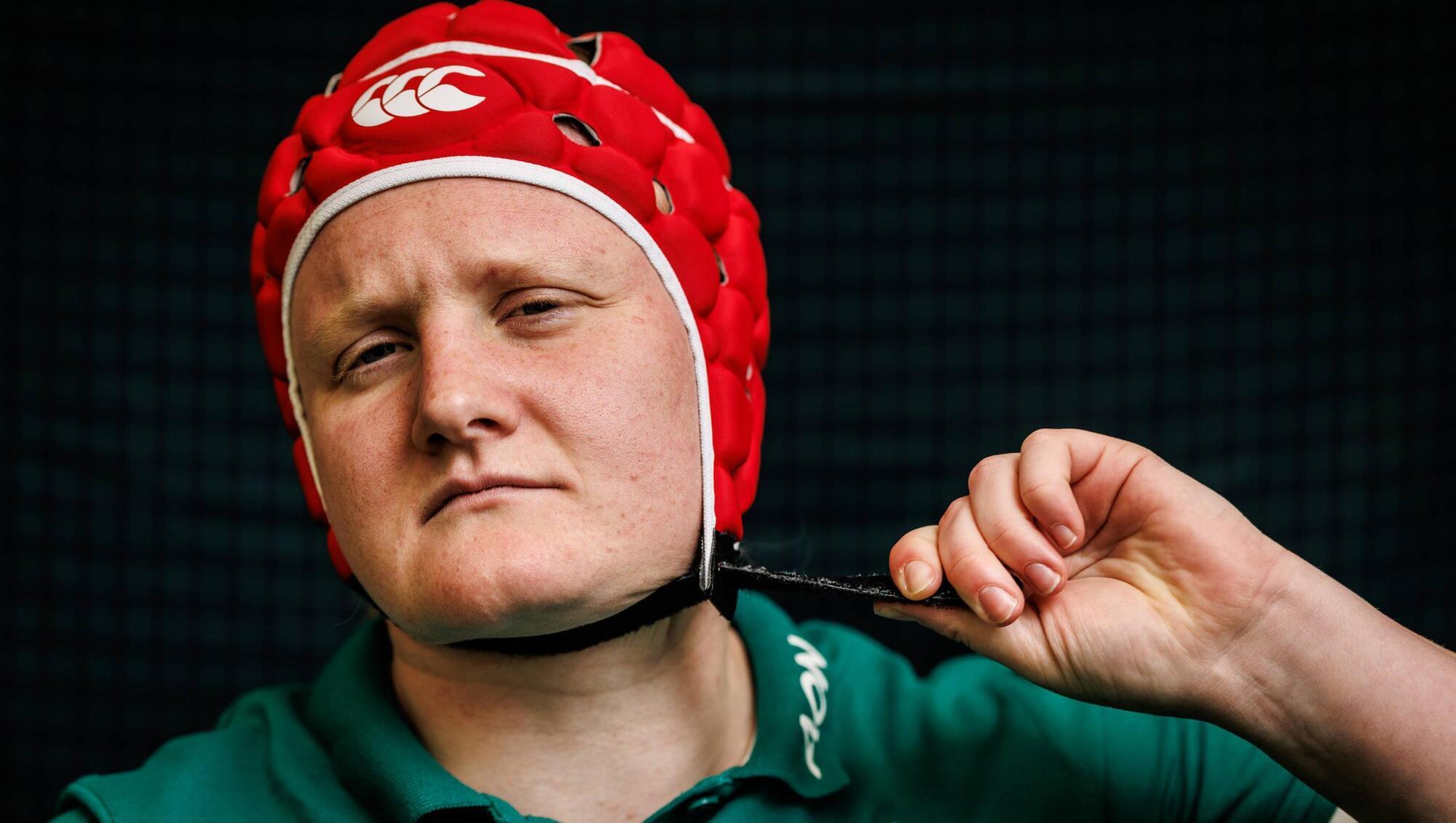
Ireland bring the curtain down on their Women’s Six Nations campaign on Sunday when they welcome Scotland to the Aviva Stadium in what promises to be a landmark occasion for the women’s game in this country.
Following a frustrating but ultimately important victory over Wales, Scott Bemand's side now have the opportunity to finish the championship on a high and complete a perfect record of three home wins from three.
While Ireland’s performances have shown glimpses of real progress, there has also been a sense that this team still has another level to reach.
Their victory over Wales highlighted both the positives and frustrations that have accompanied their campaign.
There were periods where Ireland looked sharp, dangerous and capable of playing with real attacking intent, but there were also moments where inaccuracies and missed opportunities prevented them from fully taking control of the contest.
Yet beyond the rugby itself, this fixture represents something far bigger than the result on the scoreboard. Sunday marks a historic moment for Irish women’s rugby.
For the first time ever, the Irish team will play at the Aviva Stadium as the main event. With more than 30,000 tickets already sold, the occasion is set to become the largest attendance ever for an international women’s rugby match on Irish soil.
That statistic alone highlights just how much the game has grown in recent years. The appetite to support this team is clear, and so too is the increasing recognition that women’s rugby deserves a place on the biggest stages in Irish sport.
For decades, female rugby players operated without the visibility, investment or opportunities afforded to their male counterparts. Crowds of this size would once have seemed unimaginable. Now, they are becoming reality.
Of course, it is not the first time the Irish women have taken to the Aviva Stadium pitch. Back in 2014, Ireland faced Italy following the men’s Six Nations clash between the same nations. That afternoon is often remembered as Brian O’Driscoll’s farewell game, his final international appearance on home soil. Yet for many young girls in the stands, the lasting memory was something entirely different.
I was at that game myself, and my reason for being there had little to do with watching the Irish men’s team. I was there to watch the Irish women. Following their Grand Slam triumph the previous year, they had become the team I aspired to emulate. Watching those players pull on the green jersey and compete on such a stage left a lasting impression on me. It remains one of the clearest sporting memories I have, not because of the occasion surrounding the men’s fixture, but because it showed what was possible for women in rugby.
There was something incredibly powerful about seeing female athletes representing Ireland at the highest level. For me, those players were role models. They made international rugby feel tangible and achievable. That visibility matters enormously because representation can often be the difference between a young player continuing in sport or walking away from it altogether.
That is why this weekend feels so significant. Young girls attending this match will not see themselves as an afterthought or an addition to the main event. They will see the Irish women’s team as the headline act, exactly where they deserve to be. For many, it could be the first time they experience women’s rugby in such an atmosphere. The hope is that it will inspire the next generation of players, supporters and future internationals.
It is also encouraging to see the progress being made behind the scenes in growing the game. In recent years, the creation of clearer development pathways has given young players greater opportunities to represent Ireland at both Under-18 and Under-20 level. Those structures are vital if Ireland are to continue developing talent capable of competing consistently at the highest level of the international game.
There has been increased investment in the women’s game. More girls are playing rugby at school and club level, and there is greater awareness around the importance of building long-term pathways for player development. Young athletes now have clearer routes into provincial and national setups than previous generations ever had. That progress deserves recognition.
However, there is still important work to be done. Greater alignment between the domestic game and the elite pathway remains essential. At present, clubs are often left scrambling for players due to the overlap between the Celtic Challenge competition and the All-Ireland League calendar. This creates unnecessary difficulties for clubs trying to sustain competitive squads throughout the season and can place additional strain on players managing different commitments.
For grassroots rugby to truly thrive, stronger communication and collaboration with clubs will be key. Listening to feedback from those working directly within the club game can help create a structure that not only supports current players but also develops the next generation capable of wearing the green jersey. Clubs remain the foundation of Irish rugby, and ensuring they are properly supported is crucial to the continued growth of the women’s game.
Despite those challenges, there is no doubt Irish women’s rugby is moving in the right direction. Attendances are growing, visibility is increasing, and more young girls than ever can realistically dream of playing rugby for their country. The excitement surrounding the Scotland game is proof of how far the game has come, but it should also serve as a reminder of how much potential still exists.
This occasion at the Aviva Stadium should not be viewed as a one-off celebration. Hopefully, seeing the Irish women’s rugby team playing their home matches at the Aviva Stadium will become a regular occurrence rather than something we witness once every 12 years. The demand is there, the support is there, and most importantly, the players have shown they belong on that stage.
Now all that remains is for Ireland to deliver one final performance to match the significance of the occasion.