Peter Jackson: Nobody saw this coming, perhaps not even  Borthwick
Ireland's Grand Slam bid was derailed in London on Saturday. 
Peter Jackson: Nobody saw this coming, perhaps not even  Borthwick

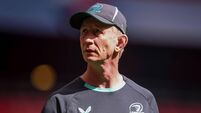
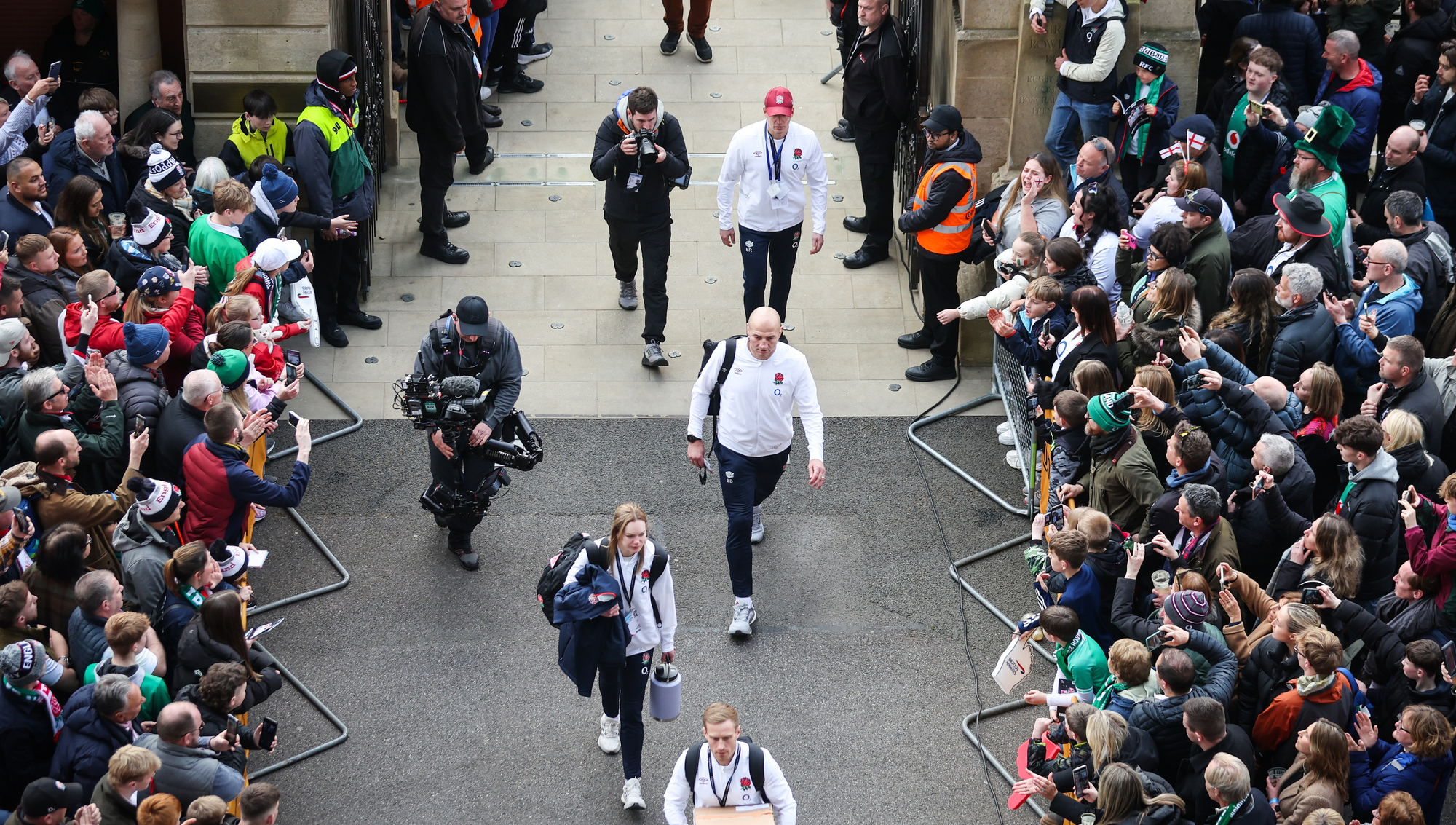
THE MAN IN THE ARENA: England head coach Steve Borthwick arrives at Twickenham.  Pic: INPHO/Andrew Fosker

Every now and then, whenever they sense their tournament becoming a bit too predictable for its good, the gods of the Six Nations decree otherwise.

And so it came to pass that those sitting on Mount Olympus conspired to restore universal belief in the competition’s seismic tendency for smashing the Richter Scale with gob-smacking results; first in Rome then, more thunderously still, in one of London’s posher suburbs.


They had been working on the one at Twickenham in conclave from the moment Andy Farrell named Ireland’s bench. He had gone for a 6-2 split of three times as many forwards as backs against France and Wales and come up smelling of roses.

Those of a nervous disposition within The Green Army might have feared that Irish sport’s most favourite Englishman since Jack Charlton was pushing his luck, that, worse still, he had dealt fate an irreverent shove between the shoulder blades.

Given what happened, it would appear that the same questions had been asked on high. What other possible explanation could there have been for Ireland losing one back, Calvin Nash, almost at the very start and another, his substitute Ciaran Frawley, in the opening minutes of the second half?

With half an hour to go and the distressed champions baling like fury to stay afloat in the teeth of an English tempest, another emergency realignment behind the scrum did nothing for their cause. Conor Murray’s entry forced Jamison Gibson-Park, the best scrum-half in this Antoine Dupont-less tournament, into hasty redeployment on the wing.

Two other incidents, either side of half-time, helped make it a field day for conspiracy theorists. Ellis Genge flying into a ruck and Tadhg Furlong flying out holding his face might have had the England loosehead in the bin for an illegal attempt to lay out the Leinster tighthead.

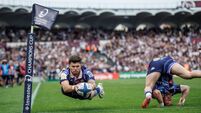
England wing Tommy Freeman put a foot in touch shortly before George Furbank’s electrifying try, prompting fans to deluge social media with a rhetorical question: ‘Is the TMO asleep?’ Because it had happened a phase too distant, the rules prevented the TMO, Ben Whitehouse from Wales, from pressing the rewind button that far back for the incriminating evidence. A more relevant question would have been to ask why the assistant referee missed it from almost under his nose.

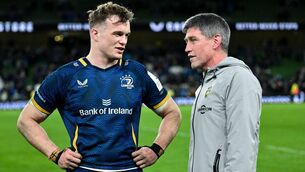
While nothing can detract from the worthiness of England’s win, such moments pointed to Irish suffering from their fate resting too often in the lap of the gods. Farrell’s half-time tunnel tiff with fellow northerner and former Saracens team-mate Steve Borthwick portrayed a head coach as rattled as his team.

Nobody saw this coming, perhaps not even the unflappable Borthwick. His England team hadn’t given anyone a clue that they had it in them to give Ireland a run for their money, let alone beat them.

Lucky in Rome where Italy outscored them on tries, England’s players spouted forth about making a bid for the title. More of the same followed the scratchiest of home wins over an alarmingly limited Wales and the sloppiest of defeats in Edinburgh by which time legions of England fans had turned a deaf ear to the parrot-fashion platitudes from the dressing room.

Still they talked themselves up, prompting one of the most articulate pundits, ex-Lions captain Sam Warburton, to laud Ireland as ‘the greatest Six Nations team of all.’ Another Lion, Jamie Heaslip, dared to suggest that little short of two Irish red cards could save the hosts.

In putting them and countless millions more in their place, the Six Nations gods have given us two things: a historic reminder that nothing can ever be taken for granted and a wondrous Test match to boot.

Ten of the best Grand Slam busters

Apr 11, 1999 at Wembley: Wales 32, England 31.

England, under Lawrence Dallaglio’s gung-ho captaincy, outplayed their neighbours, then ended up being frazzled in the London sunshine by Scott Gibbs’ famous try and Neil Jenkins’ winning conversion.

Apr 2, 2000 at Murrayfield: Scotland 19, England 13.

Duncan Hodge played the game of his life, sabotaging another English Slam and leaving them so bereft that they had to make a grovelling apology to the Princess Royal for failing to collect the Six Nations trophy.

Oct 20, 2001 at Lansdowne Road: Ireland 20, England 14.

A match postponed from the previous season because of the foot-and-mouth epidemic. England had swept all before them until Keith Wood picked them off with a line-out move worked to perfection.

Mar 19, 2011 at Lansdowne Road: Ireland 24, England 8.

Tries from Tommy Bowe and Brian O’Driscoll ensured that history repeated itself and another broken chariot disappeared down the Liffey.

Mar 16, 2013 at Millennium Stadium: Wales 30, England 3.

Sam Warburton’s finest match for Wales on a night when England managed to lose more than the Slam. The embarrassing margin of their beating meant Wales relieved them of the title as well.

Mar 14, 2015 at Millennium Stadium: Wales 23, Ireland 16.

Ireland under Paul O’Connell proving that England did not have a monopoly on losing Grand Slams.

Mar 18, 2017 at Aviva Stadium: Ireland 13, England 9.

O’Connell’s captaincy successor, Rory Best, leading a victory over his opposite number, Dylan Hartley.

Mar 8, 2020 at Murrayfield: Scotland 28, France 17.

The Scots ensuring that the favourites paid a heavy price for French prop Mohamed Haouas punching his way to a red card.

Mar 20, 2021 at Stade de France: France 32, Wales 30.

Down to 13 men for a finale of almost unbearable tension, Wales were within sixty seconds of winning a Slam at head coach Wayne Pivac’s first attempt when Brice Dulin stole it from them.

Mar 9, 2024 at Twickenham: England 23, Ireland 22.

You know what happened..

Impresa Italia make the front pages

Scotland’s genealogy department, whose success can be gauged by the fact that a majority of their squad were born elsewhere, may be interested in the intriguing case of how the Welsh great-grandson of a Second World War prisoner-of-war shot their Six Nations bid to pieces.

Carlo Fusconi, an Italian soldier captured by ‘The Desert Rats’ during the North Africa campaign in 1942, spent the rest of the war at a PoW camp in west Wales. In 1945, instead of going home, he brought his wife and daughter to join him in a new life in Pembrokeshire.

His daughter married another Italian immigrant, Luigi Callegari, and their daughter, Valeria, married a local rugby player, Adrian Varney, a back row forward with Neath. They, in turn, produced a son who has proved to be an even better player than his dad.

And that explains how Stephen Lorenzo Varney, a Welsh-speaker who began his rugby life at Crymych in Carmarthenshire, came to score the converted try which put an end to Italy’s run of 26 consecutive Six Nations’ matches in Rome without a win.

It made front page news, Italy’s papers clearing the decks as never before for the Sei Nazioni with photographs of Michele Lamaro and his jubilant players with the Massimo Cuttitta trophy in memory of their renowned Test prop who died of Covid complications three years ago.

The country’s best-selling daily, the Milan-based Corriere della Sera headline said it all: Impresa Italia: Battuta la Scozia.’

Welsh patience wearing thin

In a match where the lead changed hands seven times, Wales conceded 25 points during the last 20 minutes without reply to finish in a painful heap beneath the pulverising French pack. Lose again at home to Italy next Saturday and they will finish in an even more painful one, rock bottom of the European heap without a single win.

That has happened to Wales only once since the dawn of the professional era almost 30 years ago, in 2003. Ironically the New Zealander then at the helm, Steve Hansen, recovered from the experience to win successive World Cups with the All Blacks.

Welsh fans, not usually noted for their patience and understanding in times of trouble, have shown commendable restraint hitherto in backing Warren Gatland’s narrative of a squad hastily thrown together after the exodus post-World Cup.

If that is beginning to wear a bit thin, what’s left will probably vanish should the resurgent Italians repeat their Cardiff win of two years ago.

Farewell to record-breaker Jones

The death of the cross-code great Lewis Jones has left Cork’s very own Mick Lane on his own, the last man left standing from the Lions’ first post-war tour, to Australia and New Zealand in 1950.

Jones achieved records that will surely never be broken: capped by Wales at 18, a Test Lion at 19, a double Grand Slammer at 20, a Rugby League superstar for Leeds at 22. As if that wasn’t enough, he was also the first Lion to fly to the Southern Hemisphere instead of going by boat.

A replacement for the injured Ireland full back George Norton, Jones always claimed that it took him two days by air from London to Auckland, via Shannon, Gander, New York, Chicago, San Francisco, Honolulu ‘and various other islands.’ Jones and Lane were full back and left wing respectively in the fourth and final Test of the 1950 tour in Auckland where the All Blacks, the series already won, beat the Lions 11-8. Lane, whose nephew Michael Kiernan toured New Zealand with Ciaran Fitzgerald’s Lions in 1983, will be 98 next month, a few days before Jones would have been 93.

My team of the weekend

15 George Furbank (England) 14 Damian Penaud (France) 13 Juan Ignacio Brex (Italy) 12 Ollie Lawrence (England) 11 James Lowe (Ireland) 10 Paolo Garbisi (Italy) 9 Nolann Le Garrec (France) 1 Georges-Henri Colombe (France) 2 Jamie George (England) 3 Dan Cole (England) 4 Maro Itoje (England) 5 Tadhg Beirne (Ireland) 6 Ollie Chessum (England) 7 Josh van der Flier (Ireland) 8 Ben Earl (England)  

x

More in this section

Cookie Policy Privacy Policy Brand Safety FAQ Help Contact Us Terms and Conditions

© Examiner Echo Group Limited