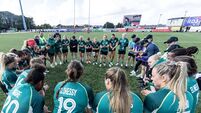
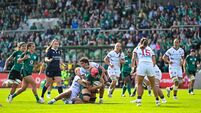
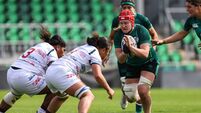
Kieran Shannon: Tide may be about to turn for Irish women's rugby as players take a stand
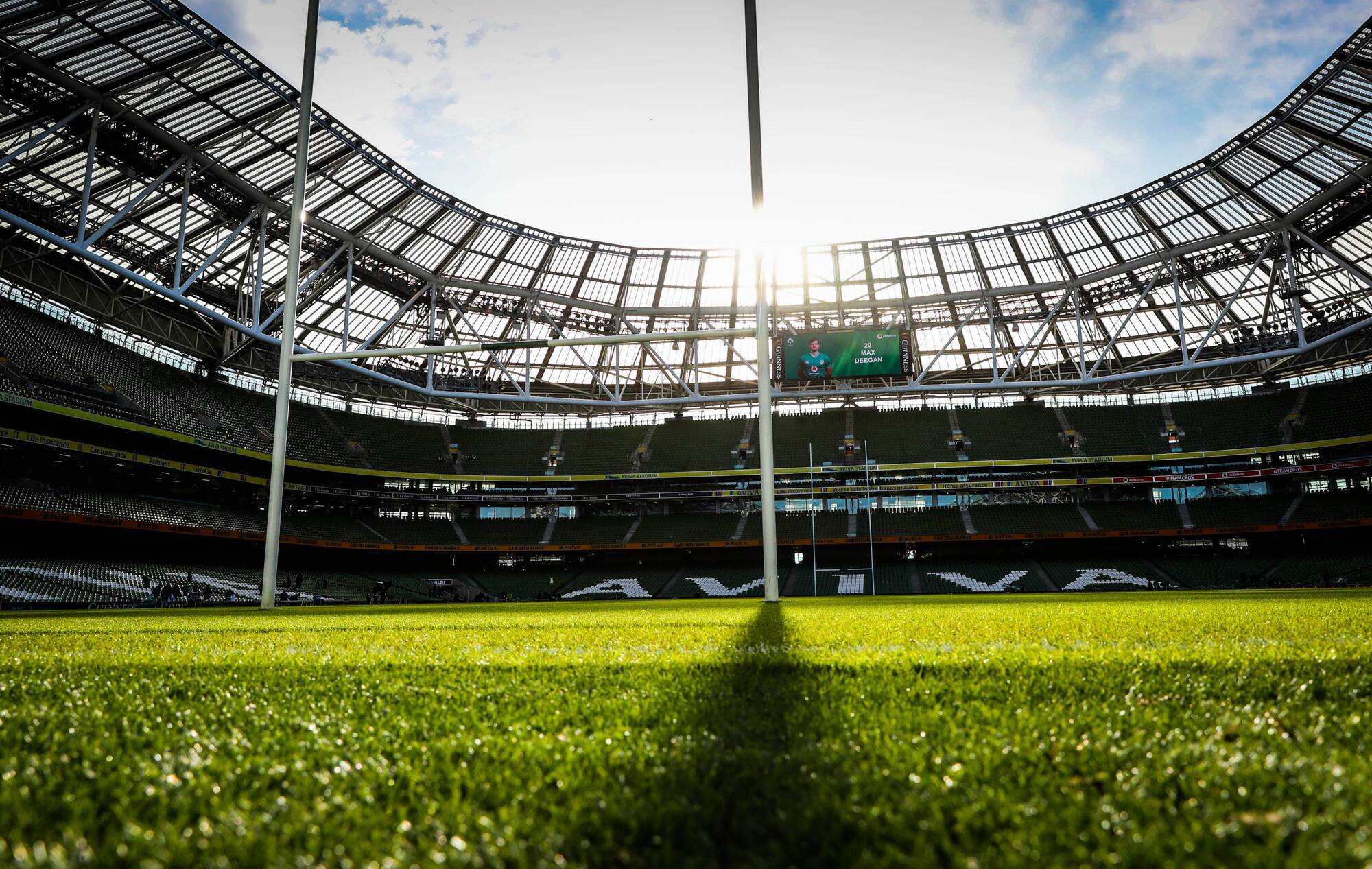
The Aviva Stadium. Picture: INPHO/Ryan Byrne

Talk about making a statement.
Rosie Foley, for one, though not one of the former players who co-signed it, would certainly approve.
Back in October this column was on to her on the fifth anniversary of Anthony’s passing, and while she was her usual sunny, cheerful self, there was something other than missing her brother that lowered her mood: The state of the national women’s team.
Previously it had been as much an inspiration to her as she had been to it. In 2014 she completed swimming the English Channel on the eve of the Irish team also landing in France for a World Cup in which they’d beat the All Blacks and reach the semi-final.
When she’d been in those icy waters she’d felt as if the team, who had won the previous year’s Grand Slam, were propelling her along, just as she’d hoped her feat would maybe spur them on too. Irish women’s rugby seemed on the crest of a wave. But seven years on the tide had turned. Gone out. Ireland wouldn’t even be going to the next World Cup in 2022.
“I’ve been on the IRFU women’s committee for a few years and have heard directly the likes of Anthony Eddy [director of women’s rugby] talk about their ambitions and how they’re working hard,” she told us. “But I haven’t seen it on the ground! It’s like in school when you say to the kids: ‘I’ve told you more than once now’ and they’ll say: ‘Oh I’m sorry, I’m sorry’ and you say: ‘Look, I’m no longer interested in your words, I want to see the actions.’
“Hand on heart, I’m heartbroken, watching the girls… They really don’t deserve what they’re getting… It’s very upsetting that we can’t do more to help them but any help is nearly fobbed off.”
She outlined what that help might look like if there was a bit more ambition and vision.
“There are companies out there who’d be quite happy [to offer the financial support] if you said: ‘We’re going to be professional for the next two years and pay [every player] €30,000 a year so they don’t have to work.’ That can be done. I don’t understand why it can’t be done.”
But for — or before — any of that were to happen, she hinted that the players themselves would need to be more forceful.
“Now is the time to put the pressure on and kick on and show some strong leadership as the women’s soccer team [in recent years] have.”
Well, yesterday they did just that in an act that echoed the stance the national women’s team took in the spring of 2017 when at a press conference that aptly took place in Liberty Hall, Louise Quinn & Co threatened to strike if the FAI continued to ignore their pleas for “equality and respect”.
Not everything changed for the soccer team after that, though a strike was averted when the FAI agreed to lay on a range of better conditions for the players; the disastrous John Delaney era still had two more years to run at that point.
But it was a watershed and now under the respected management of Vera Pauw, their profile has sprouted in the public consciousness with its players appearing in the top leagues in Europe and on the Late Late with Tubs.
The rugby players stopped short of downing tools but it’s still a massive intervention to seek the sports ministry to act as a form of watchdog on their behalf. The IRFU, in a counter-statement that misread the room as badly as Delaney and his lackies immediately did in the wake of the Liberty Hall declaration, argued that they had already commissioned several reviews, but the players made it clear they had no truck with the “well-qualified independent leads” conducting them. Their issue, or fear, is that once again any findings will not be published or transparent and adequately acted upon.
Although they stopped short of asking for heads to roll, they didn’t exactly stop short of calling names out either; it was quite pointed that they namechecked IRFU performance director David Nucifora and director of women’s rugby Anthony Eddy and how they had assumed overseeing the women’s programme immediately after the successful 2014 World Cup cycle had ended.
Since then, they noted, the “untrustworthy leadership” they had “lost all confidence in” had been at the wheel for “multiple cycles of substandard commitment from the union”.
It chimed with a sentiment that is prevalent through Irish rugby, both in the male as well as female game: That not enough indigenous personnel are overseeing the high performance of Irish rugby. It was quite telling that among the co-signatories was Lynn Cantwell, the vice-captain of the Grand Slam-winning team of 2013. Since her retirement after the 2014 World Cup, all her experience and credibility and knowledge was never tapped into by the system. But whereas here a rugby prophet doesn’t seem to be accepted or recognised in their own land, South Africa don’t care what your accent is and duly snapped her up to effectively do what Eddy is supposed to be doing here: Overseeing the women’s game.
The statement is also quite the shot at outgoing CEO Phillip Browne. Again, while his name was not mentioned, and it is indisputable how he elevated the sport in general in this country, it is implicit that the players want his successor to have greater ambitions for the women’s game. Under Browne, Irish rugby was geared to win the men’s World Cup; that it did not happen and will not happen under his beat is secondary. He clearly never gave those 62 signatories the sense he shared a similar vision or dream for the women’s game.
If it was an astonishing vote of no confidence in the IRFU, however, the letter was a nod to the increasing credibility as well as authority of Jack Chambers who is showing signs he could be one of the better sports ministers we’ve had.
But above all it was a vote of total faith in themselves, emboldened in a belief they have the support of the public as well.
Already Chambers has agreed to meet and hear them, and he’s insisting the IRFU meet and listen to him as well.
The tide might be about to turn again. Because the players are insisting it does.