Peter Jackson: Confusing calls do little for credibility of rugby
Peter Jackson: Confusing calls do little for credibility of rugby

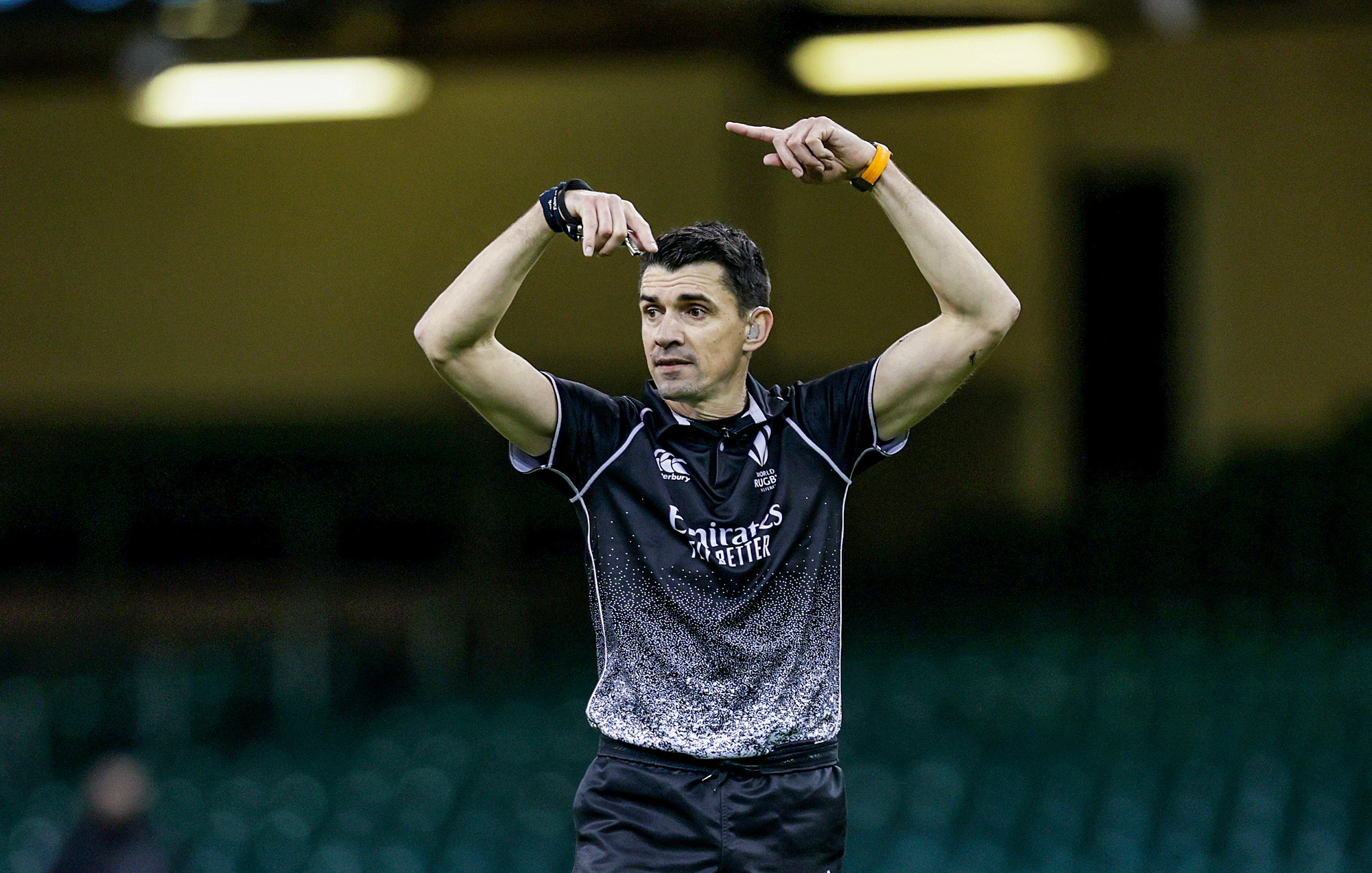
Referee Pascal Gauzere took charge of Wales' win over England at the Principality Stadium. Picture: INPHO/Laszlo Geczo

Nobody had seen as much smoke billowing out of Martin Johnson’s cauliflowered ears since England drove him into a state of near volcanic eruption at Croke Park in 2009.

Squirming in his seat in the Hogan Stand, his contorted face told its own story, of a head coach furious at the ‘stupidity’ of recurring English indiscipline. Twelve years later, on the very same Saturday, the old Lions’ captain left Cardiff’s empty rugby cathedral ‘fuming’ at the French referee.

Iain Henderson, robbed by another French referee of a perfectly good try in Rome, will understand only too well where Johnson is coming from. The Ulster lock became the first hapless victim of a day when it appeared as if forensic examination of every case had been hi-jacked by Inspector Clouseau.

Even Peter Sellers’ bumbling alter ego would have struggled to arrive at more baffling verdicts than those delivered during a French farce in two Acts, as Henderson and Johnson will testify. That the officials did so in defiance of video evidence meant that justice was not done: worse still, it was not seen to be done.

Romain Poite, the TMO in Rome, ruled that Henderson had lost control of the ball. Technology showed that he had not, a fact which seemed to escape the referee, Mathieu Raynal who had the authority to reverse the decision.

Alexandre Ruiz, the TMO in Cardiff, ruled that Louis Rees-Zammit did not knock-on and in doing so offered startling new evidence that everything the Welsh wunderkind touches turns to gold, even when the boy himself knew he had dropped a clanger. Only Ruiz and Jerome Garces, last season’s World Cup final referee, seemed to think he had done nothing of the sort.

To shrug the Henderson decision off as an irrelevance in a predictably one-sided contest is to miss the point. Why, when every technological gizmo is at their disposal, do the officials manage to get it so spectacularly wrong, not once or twice but three times in the same afternoon?

Even the most famous of all Welsh referees, Nigel Owens, admitted that neither Welsh first-half try should have been given. The first because Garces, having told Owen Farrell to warn his players “to change their behaviour,” then allowed Wales an unfair advantage by not giving England “time to line up,” the second because it was “a 100% knock-on”.

Such confusion does nothing for the credibility of a sport which can be confusing enough at the best of times to the casual viewers. Let it be made clear in conclusion that England lost for reasons which had nothing to do with the first two Welsh tries, namely their wretched failure to avoid falling foul of the referee at the break-down.

The same technical indiscipline drove Johnson nuts in Dublin in 2009, three weeks before Ireland’s Grand Slam, their first since Éamon de Valera’s last year as Taoiseach.

Then England conceded 62 penalties in four matches. They’re already up to 40 this season and counting…
All Wales needed was a bit of luck... then another bit

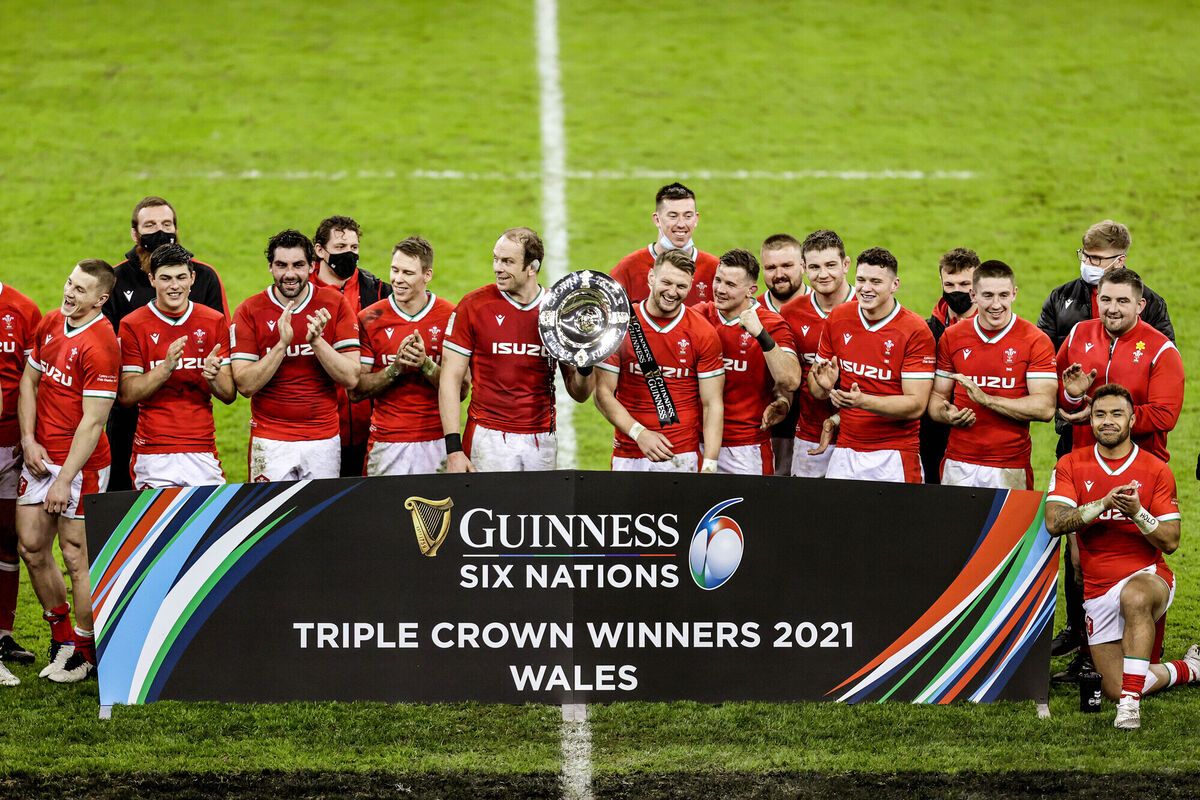
The Wales team celebrate winning the Triple Crown after victory over England in the Guinness Six Nations match at the Principality Stadium on Saturday. Wales are still on track for an unlikely Grand Slam, with two rounds of the competition to go. 	Picture: Laszlo Geczo
The Wales team celebrate winning the Triple Crown after victory over England in the Guinness Six Nations match at the Principality Stadium on Saturday. Wales are still on track for an unlikely Grand Slam, with two rounds of the competition to go. Picture: Laszlo Geczo

Wales under Wayne Pivac finished the Nations’ Cup in such a mess from back to front that all but the Cyclopean element of their fans feared the Six Nations’ would not amount to anything more uplifting than a wooden-spoon decider against Italy.

Now a slightly different Wales, under the same Wayne Pivac, are on course for a Grand Slam which, in a steeplechase context, would justify comparison to the 1967 Grand National when Foinavon picked his way through fallen horses scattered all over Aintree and ambled home alone at 100-1.

All Wales needed was a bit of luck, then a bit more and another bit. It started with a smashing rub of the green — Peter O’Mahony’s senseless early red card in Cardiff rescuing them from a losing start against Ireland. Zander Fagerson’s later red at Murrayfield proved too much of a handicap for the Scots.

England kept all 15 on the pitch somehow, a mystery in itself given that Garces pinged Maro Itoje five times and yet chose not to bin him. Level at 24-all, they saved their costliest penalties for the last quarter, allowing Wales to amass a record score which left England nursing their worst beating in the Six Nations since Ireland routed them 43-13 at Croke Park in 2007.

Italy in Rome next up for Wales ought to make France in Paris the decider for the full bag of chips, assuming that the runaway leaders will have anyone to play.

The French minister of sport, Roxanna Maracineanu, has threatened to ban France from the tournament unless they hold a ‘proper’ investigation into the Covid outbreak behind the postponement of yesterday’s match against Scotland.

To their credit, Wales have been smart enough to make the most of their luck.

Should the nuclear option come to pass and the organisers are left no option but to do as has been done in other tournaments this season, Wales will be awarded the match 28-0 – Grand Slammers without needing to kick a ball.

Nobody, least of all those Welsh fans who love their rugby, would wish such an anti-climactic scenario on any international event, let alone the Six Nations.
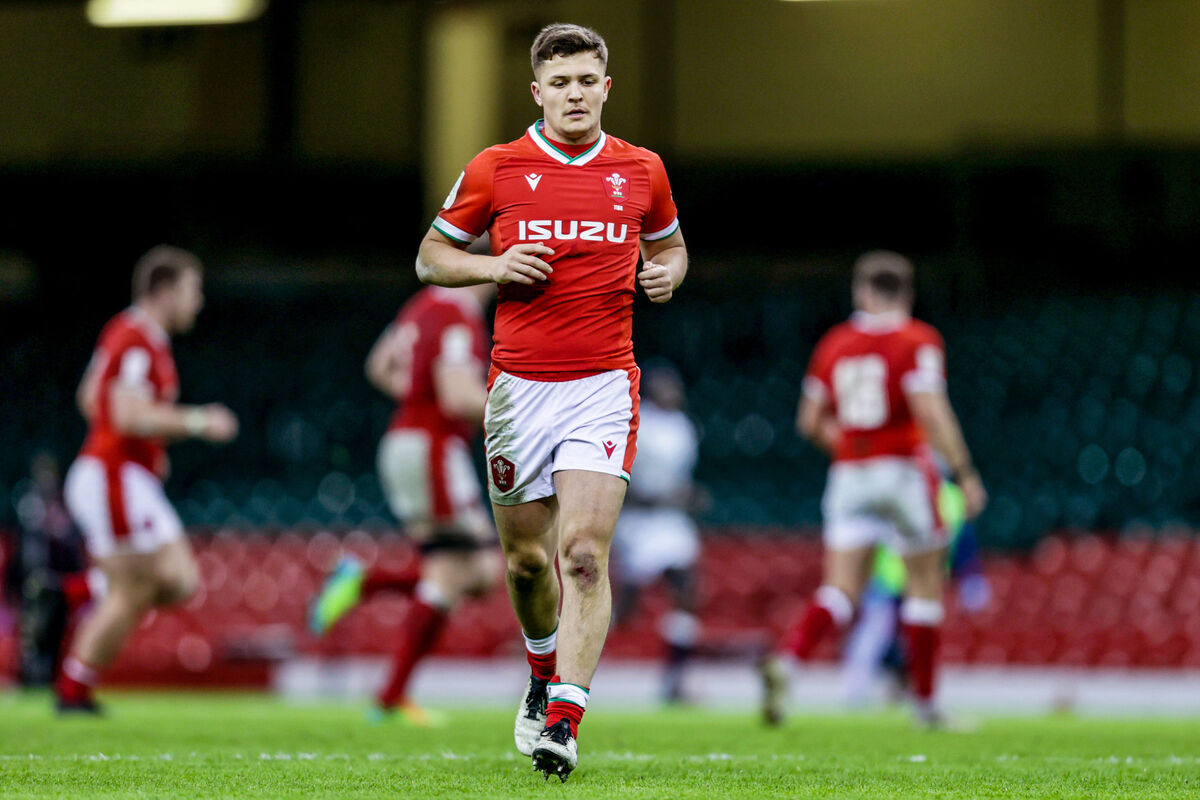
Fly half Sheedy Ireland’s loss and Wales’ gain

Callum Sheedy: Played U19 for Ireland.

The IRFU’s recruitment officers will be less than thrilled to read this morning of the fly half who got away, all the more so considering the mounting anxiety over life after Johnny Sexton. All too easy to be wise after the event, of course, but the Test novice who picked England off on Saturday used to be Irish-qualified.

Callum Sheedy, then a member of the English-based Exiles, played for Ireland at under-19 level, seven years ago in a sevens tournament in Lisbon. Born in Cardiff to an Irish father and a Welsh mother, Sheedy made the bold decision to withdraw from the Wales under-20 team the following season.

Rather than rush to commit to Wales, he thereby kept all international options open aware that, as a pupil at the renowned Millfield School in Somerset, he was in the process of qualifying for England through residence. Ironically, Eddie Jones picked him for a non-cap match against the Barbarians at Twickenham less than two years ago.

As an automatic choice in the all-dancing Bristol Bears team choreographed by Pat Lam in tandem with his former Connacht captain John Muldoon, Ireland would surely have known all about Sheedy long before Wales duly claimed him as one of their own six months ago.
Let’s end the pretence

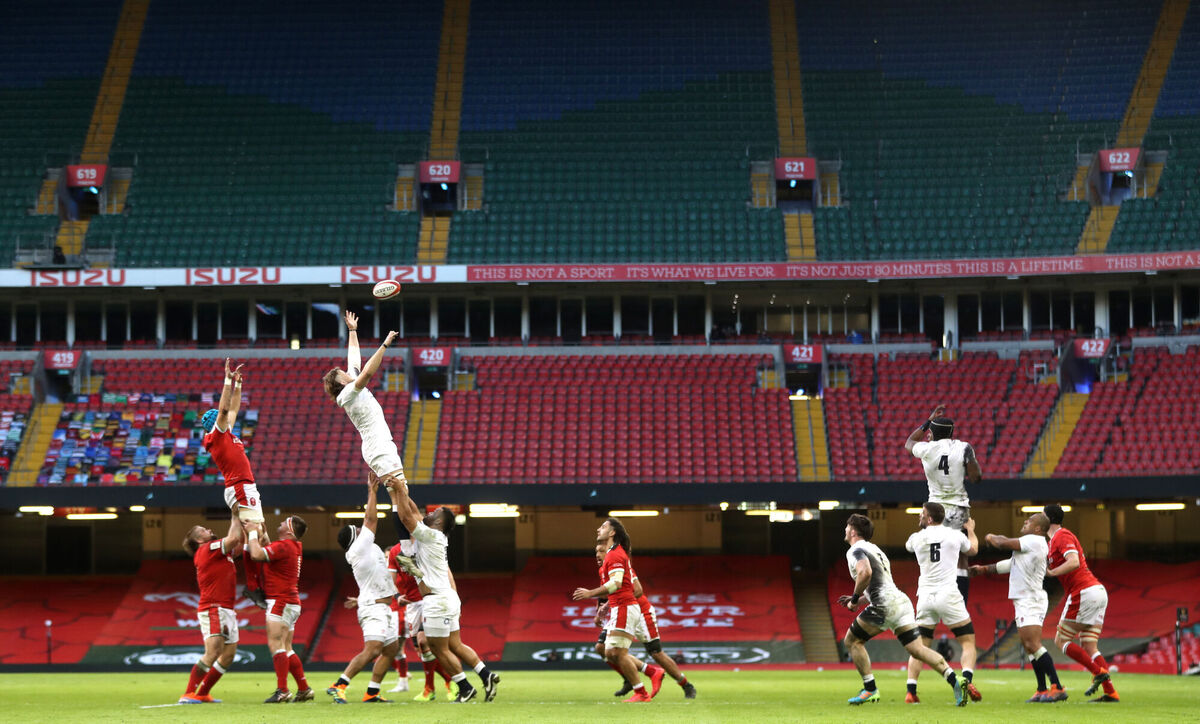
England and Wales ‘contest’ a line-out in Cardiff. 	Picture: PA
England and Wales ‘contest’ a line-out in Cardiff. Picture: PA

Why do World Rugby keep one of the oldest laws in the book when it is treated at the highest level as though it no longer exists? Nobody pays a blind bit of attention to Law 20.5 (f) which requires the scrum-half to feed the ball straight into the set-piece.

More often than not, it goes straight into the second row and the game turns a collective eye. Now it is doing the same to Law 18 (clause 22) over the other set-piece, the line-out: ‘The player throwing in the ball stands on the mark of touch with both feet outside the field of play. The thrower must not step into the field of play until the ball has been thrown.

“Sanction: Option of a line-out or scrum.’’

Saturday’s double header offered no evidence of any hooker abiding by the law, nor of anyone daring to make them fall into line. Rob Herring, Ireland’s substitute in Rome, got closest with his left foot in touch but the right one in play. The starting hooker, Ronan Kelleher, plonked both feet on the pitch with, at best, his heels on the touchline.

None of the quartet in Cardiff, Ken Owens, Elliot Dee, Jamie George, Luke Cowan-Dickie, seemed to stick by the rule. It all happens, of course, under the nose of an assistant referee. If nobody’s going to be the least bit bothered about enforcing it, why not expunge it from the law book and end the pretence?


Team of the weekend

15: Liam Williams (Wales).

14: Anthony Watson (England).

13: Garry Ringrose (Ireland).

12: Robbie Henshaw (Ireland).

11: Josh Adams (Wales).

10: Callum Sheedy (Wales).

9: Kieran Hardy (Wales).

1: Dave Kilcoyne (Ireland).

2: Ken Owens (Wales).

3: Tomas Francis (Wales).

4: Iain Henderson (Ireland).

5: Adam Beard (Wales).

6: Tadhg Beirne (Ireland).

7: Will Connors (Ireland).

8: Taulupe Faletau (Wales).

x

More in this section

Cookie Policy Privacy Policy Brand Safety FAQ Help Contact Us Terms and Conditions

© Examiner Echo Group Limited