Colin Sheridan: Rory McIlroy and Patrick Reed rules controversy a reminder of reputation's importance in sport
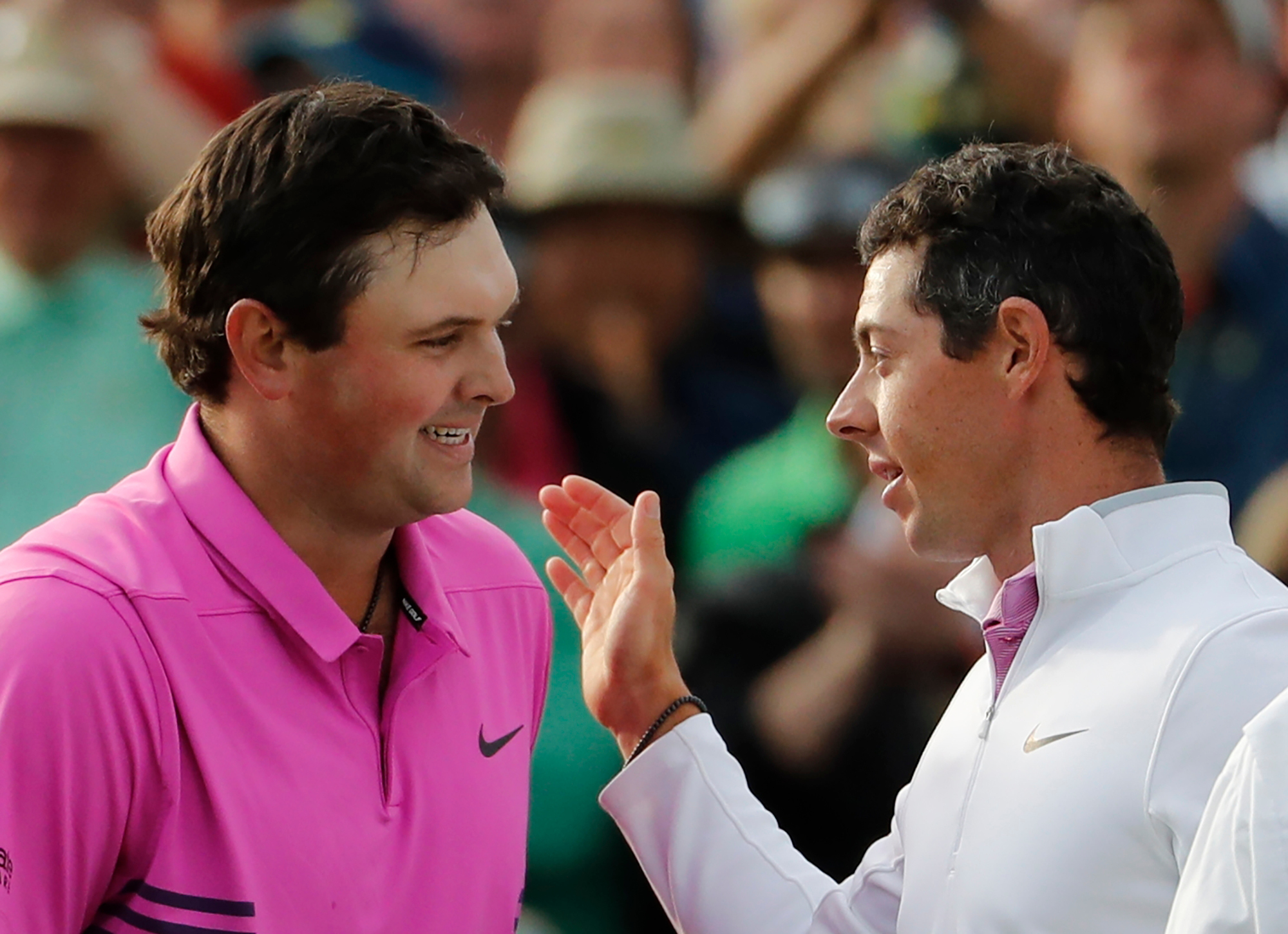
Last week, Rory McIlroy and Patrick Reed were bound by something altogether more complicated than blood; A rules scandal
Colin Sheridan: Rory McIlroy and Patrick Reed rules controversy a reminder of reputation's importance in sport

Patrick Reed and Rory McIlroy after Reed won the Masters in 2018. They’re like brothers separated at birth, writes our columnist, pitching a movie of ‘East of Eden’ meets ‘Tin Cup’ for them. Picture: David Goldman/AP

If golf’s PGA Tour was a movie directed by Paul Thomas Anderson, Rory McIlroy and Patrick Reed would be brothers, separated at birth.

One — McIlroy — would be inherently good; a flawed but relatable man, with a swing silkier than a charmeuse scarf. He’d make his grades, look after mum and dad, marry the right girl, and build a rehabilitation centre for flightless birds on the back of his winnings. The other — Reed — would be the delinquent dropout; talented but tortured, the prodigal son of a sport that puts good manners over everything else.

In the movie — likely called Drops, Lies, and Videotape — the two brothers would follow opposing paths to the same, climactic destination: The final pairing of a Masters, whereupon Reed would whisper in McIlroy’s ear at the beginning of Amen Corner, “I am your brother, Rory,” provoking an epic collapse.

It would be East of Eden meets Tin Cup.

Of course, McIlroy and Reed are not brothers, but last week they were bound by something altogether more complicated than blood; A rules scandal. At the Farmers Insurance Open at a soggy Torrey Pines, both players, at different times on different holes, chose to pick up their balls to inspect their lies in deep rough. In Reed’s case, he did so before calling over a rules official, a non-confrontational chap to whom Reed offered his reality; that, according to the marshal present, his ball “had not bounced”, and so was plugged in its pitchmark.

The marshal had in fact answered Reed “uhhh, no, I didn’t see it bounce”. A subtle difference. McIlroy chose not to call an official. Both informed their respective playing partners prior to picking up the ball, as is the expected and accepted norm. Video showed both balls had clearly bounced, meaning the likelihood of them being plugged is possible if rather unlikely. As both cases were prosecuted to death by broadcasters and the Twitterati, the key difference in such similar cases became increasingly unignorable: The reputations of the players involved. Reed has more baggage than an influencer heading for Dubai. McIlroy barely packs a toothbrush.

The tsunami of analysis that followed breathed life into a sport too often suffocated by its very self-seriousness. How Reed picked up his ball — with all the softness of a farmer pulling a calf — versus how a golf ball should be picked up in such a circumstance — as delicately as if holding a cygnet by its neck — was shown and replayed a hundred times by broadcaster CBS Sports.

The sight of an unflappable Jim Nantz seeking guidance on rulings, as if discussing the outcome of a Senate hearing, brought home not just the importance of honour in golf, but how little faith everyone has in Reed’s word. The only thing we couldn’t see was the only thing that mattered. Only Reed knows how plugged his ball was. Likewise McIlroy, who’s conscience was eased Monday when it emerged the Tour received an email from a volunteer who said that he’d accidentally stepped on McIlroy’s ball in the rough).

It is to Reed’s credit that all the noise distracted him not one bit. He had another 28 holes to play, and won the tournament by five shots.

We all understand that every sport has a line that shall not be crossed. In football, it’s OK to kick the legs off an opposing player (if you can get away with it), but utterly reprehensible to continue playing while another is laying on the ground. In cricket, it’s far more acceptable to bowl a rock 100mph at a batsman’s head than to rub a little dirt on to the surface of the ball beforehand. In golf, you can chew gum of dubious origin, but do not knowingly break the written rules. What you do when no one is looking, echoes in eternity.

For non-golfers, it can all seem a little precious, especially when taken in the context of the unwritten motto of sports: “if you ain’t cheating you ain’t trying”. Free-takers always steal yards when referees’ backs are turned. Disruptive hands in the ruck are the default of every natural-born seven, but, where golf deviates is on the philosophy of self-policing. Truthfully, Patrick Reed would receive less heat for hooking Rory McIlroy mid-swing, in full view of everybody, than for duplicitously improving his lie.

Anybody who has played golf can attest to the demoralising effect of knowing your playing partner is capable of dishonesty. The ignorance of the hacker is one thing, but playing with somebody who does the littlest thing to sow seeds of doubt in your mind will almost always negatively impact your own game, whether it’s the dubious counting of shots (“stick me down for a six...) or the mysterious reappearance of a ball in the rough, one that seemed lost and gone forever. It’s as much a ‘feel’ thing as getting up and down from a difficult spot.

Hopeless causes can, of course, be found in deep rough. Scores on a hole can sometimes be innocently miscounted, but, it’s the ambience around a moment that changes the entire dynamic of a sporting relationship. You don’t have to like the guy, but you have to trust him.

Donald Trump’s history as an alleged cheater at golf is brilliantly told in Rick Reilly’s Commander-in-Cheat. It’s quite telling, though, that even a man responsible for a reputed 30,500 lies publicly uttered in the highest public office, was still expected to be honest on the golf course. The fact he wasn’t is no surprise, but the expectation remained.

Last week’s modern take of Cain and Abel was a reminder of the importance of reputation in sport. The last time McIlroy made headlines for a ruling was when he declared a fresh lie after taking relief “too good” at last year’s PGA Championship. He then replaced his ball in a more punitive spot. “At the end of the day, golf is a game of integrity, and I never try to get away with anything out there,” he said. “I’d rather be on the wrong end of the rules rather than on the right end, because as golfers that’s just what we believe.”

Reed? Well, history suggests he doesn’t give a shit, which makes him an uncomfortable, if utterly compelling, golfer to watch.

x

More in this section

Sport

Newsletter

Latest news from the world of sport, along with the best in opinion from our outstanding team of sports writers. and reporters

Cookie Policy Privacy Policy Brand Safety FAQ Help Contact Us Terms and Conditions

© Examiner Echo Group Limited