Colin Sheridan: Augusta - Where the greats are utterly vulnerable
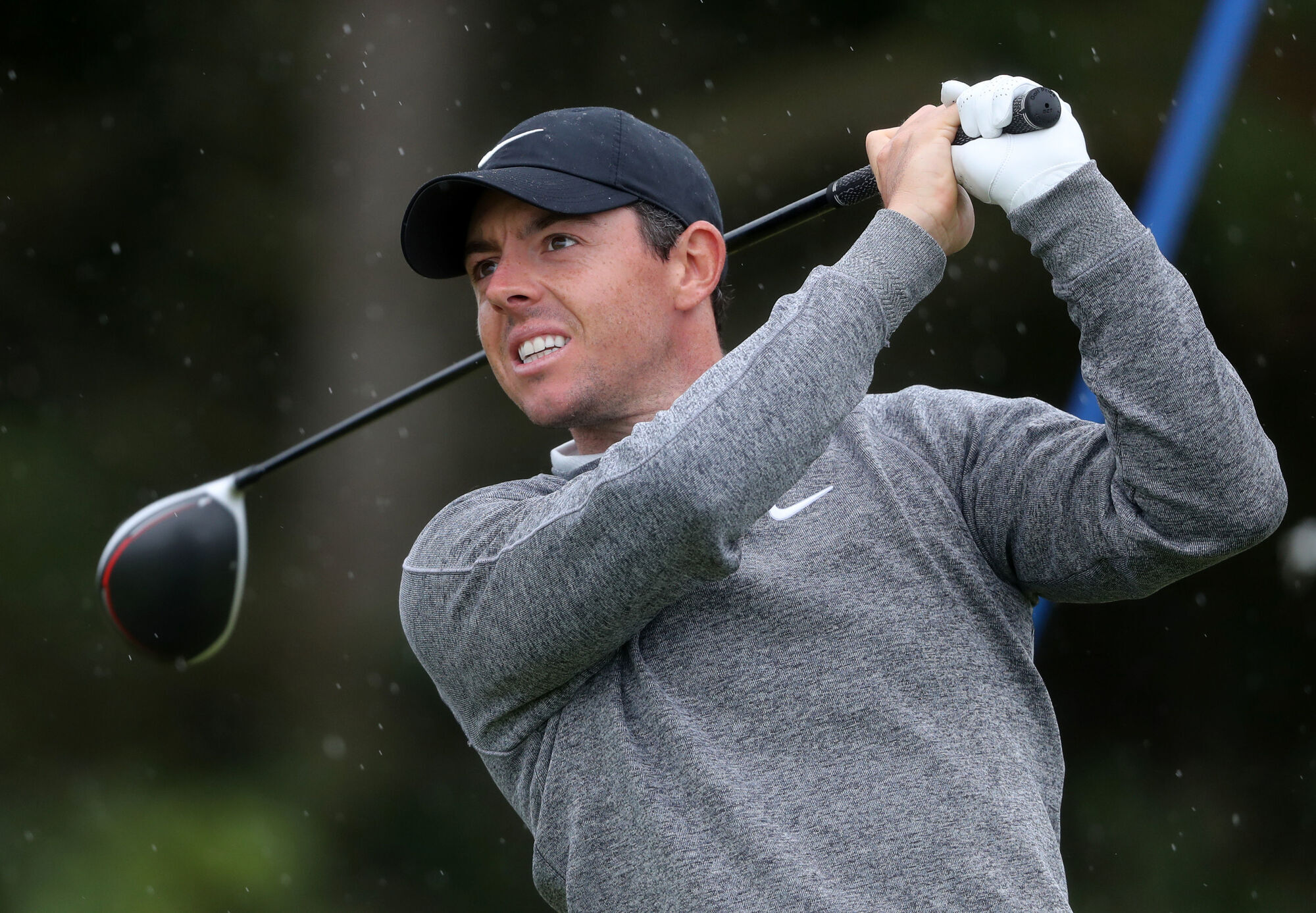
Rory McIlroy knows how unforgiving Augusta National is.

This week’s Masters arrives as a pertinent bookend to an annus horribilis for golfers the world over. In the face of a global pandemic, golfers became the Karens of the sporting world; entitled, white and overly demanding, golfers are the old men and women yelling at clouds, the ten percenters who - perhaps justifiably - argued golf was the one sport that should be exempt from all this Covid-19 mullarkey.
Things were bad enough for the fraternity last week, as its most celebrated son, Jack Nicklaus, endorsed US President Donald Trump in a statement straight from the “I’m just a guy from Ohio” book of false humility, but they got a whole lot worse Saturday, as images emerged of the defeated Trump on a Virginia golf course.
America’s first citizen was fiddling on deserted fairways while his presidency burned.
Golf - never quite the game of the people - has become an amplified totem of white privilege throughout Trump's 294 recorded rounds during his four-year reign of error.
Just as the President despondently rolled back up Pennsylvania avenue Saturday evening - clubs thrown in the boot - the world's best golfers were skipping lightly down Magnolia Lane, in the heart of the old confederacy; Augusta, Georgia.
The lane, with its 122 magnolia trees is one of a plethora of symbols of Masters tradition you’ll hear referenced ad nauseum during coverage this week; along with the champions dinner, Amen Corner, Raes Creek, azaleas and the Butler cabin.
One tradition you won’t hear mentioned by Jim Nantz as he reverentially welcomes you, will be that of Myles Dungan presenting coverage to Irish audiences on the long-gone Network 2.
Dungan never said he was at Augusta during his broadcasts, but he never said he wasn’t either. The sight of him sitting in a shoebox studio, sporting a green slazenger V neck sweater, yellow Masters symbol perched crookedly behind his head, was the entree to what always delivered four nights of dramatic television.
Myles didn’t have to do much, but like a silent caddie on an old pros bag, he did it well.
It’s ironic that, for a tournament viewed by many as the personification of the exclusionary elitism of white America, the Masters has long been the most accessible and attractive to non-golf fans this side of the pond. This owed much to the late evening coverage of RTÉ and the BBC, the comfort of sitting down with a day's work done, watching a kind of theatre that was part nature documentary, part sporting drama.
The sheer prettiness of the place - colours bouncing off the screen in brilliant technicolor - served as a visceral manifestation of the promise of America. Other elements - the autocratic shadow cast by the Augusta chairmen (with names such as Hord Hardin, Hootie Johnston and William Porter Payne), the lack of coloured faces amongst players and patrons, the fact much of the grass was painted green to improve the aesthetic - only reinforced that the Masters was less real life, and more engrossing television drama.
Golf, as we understood it over here, was always a white man's game in America. Augusta was the one place it didn’t pretend to be otherwise.
This never made it ok - the opposite - but the lack of pretence did make it more intriguing a spectacle. Augusta National remains an absurd vestige of an outdated ideal. Recent events may have proven this notion to be less archaic than we thought, but, whether Hootie and co have themselves moved with the times is irrelevant, golf - and the world it inhabits - is changing.
Of course, the man who drove that change - once, violently into an innocent water hydrant - is defending champion Eldrick Woods.
Far from grasping the nettle of an agent for that change, Woods has spent his entire adult life avoiding the hassle. He has always been steadfastly proud of his racial identity, but in his quest to become the greatest golfer in history, you sense he reconciled long ago that he wouldn’t have achieved most of what he has if he adopted the activist proclivities of, say, a LeBron James or a Colin Kaepernick.
There is some evidence to suggest that time, fatherhood and years in the sporting equivalent of solitary confinement has softened his stance.
His victory at Augusta last April will long stand as one of the most thrilling comeback stories in sport, and American life. For those looking to swot, the fable of his victory is brilliantly told in Michael Bamberger's 'The Second Life of Tiger Woods', a book that doesn’t just lay bare the reinvention of a lonely man, but lifts the curtain on Augusta National and all its idiosyncrasies; from the quaint to the downright menacing.
What makes golf of all sports highly relatable to those who watch and casually play it, is the loneliness of the yips and the satisfaction of a seven iron clipped off perfectly manicured turf.
Every hacker has likely holed a 50 footer. Every scratch handicapper has at least once stood on a tee box and felt he can’t move the ball beyond the junior markers. Augusta is the most unforgiving stage there is. In 2016, the world's best player Jordan Spieth executed a back nine collapse so brutal, viewers winced and shielded their eyes as if watching 'The Shining'.
In 2011, Rory McIlroy went from giant to soiled toddler in two hours.
It got so bad, the cameras stopped showing him. Greg Norman - staring at a life-defining victory a quarter-century ago - was so humiliated by Augusta, he made Nick Faldo appear borderline likeable, as he consoled the Great White Shark after he fell asunder with the whole world watching.
That's the thing about golf. There is no coach to substitute you, no teammate to share the burden. It’s as real a meditation of people performing under pressure as you’ll ever likely see. You can hate it; what it represents, what it forgives, but for this one week you should enjoy it.
We spent the last four days watching votes being counted, and incumbents hide under pressure. This week in Augusta Georgia, there will be no hiding, just the greats being utterly vulnerable; what better theatre is there?