Derek McGrath: Waterford may have fallen but now they are united 
The mood in Waterford is now one of perspective rather than blame.
Derek McGrath: Waterford may have fallen but now they are united 

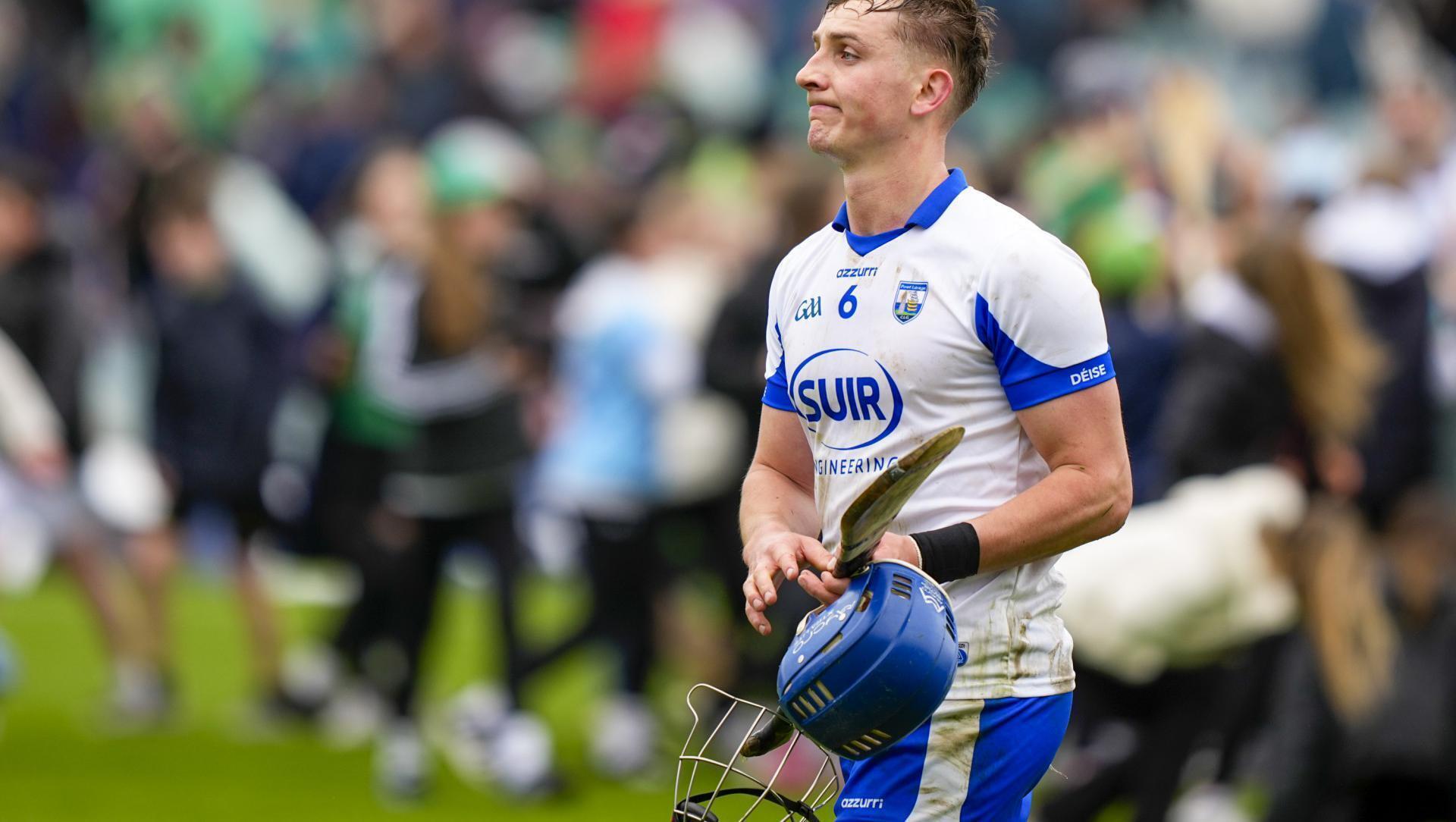
Paddy Leavey of Waterford, dejected after the defeat by Limerick, epitomised Waterford's growth.Pic: INPHO/James Lawlor


“A house divided against itself cannot stand.” 

Abraham Lincoln 

Waterford hurling has always lived close to the edge, emotionally, stylistically and culturally. That’s part of its charm. It’s also the risk. Peter Queally and Neil Moore's success lies as much in the inestimable shift that’s taken place off the pitch as well as on it. For the first time in a number of years we seem to have resisted the urge to turn strength into suspicion. 

This season revealed something quieter, something more important. Voices around the game matter. They can shape the narrative. With weaker management and players, voices of insidious duplicity, a culture of anonymous criticism that festers through WhatsApp groups and online, would seep through and increase pressure on players. 

Thankfully this has been replaced by perspective rather than blame. Queally and Moore's leadership, a clearly aligned succession management plan involving Darragh O'Sullivan and James O'Connor, the brilliant coaching team of O'Rourke, Shanahan and Skehan, and more importantly the honesty, skill and integrity of the players, has ensured that everyone who matters in Waterford GAA and the wider hurling fraternity are as one entity.

Before Waterford’s opening encounter with Clare in Ennis Joe Canning was asked on The Sunday Game by Joanne Cantwell whether Ballygunner’s dominance within Waterford hurling might actually be a “weakness for the county team”. Canning’s response was simple: “It cannot be good.” 

The line landed as I expected: easily. Simple arguments and simpler responses usually do. Particularly in hurling, where county narratives are often built quickly and repeated endlessly until they harden into accepted truth. Simple arguments are not always intelligent ones. 

Therein lay the problem. Reducing Waterford’s challenges to the success of Ballygunner ignored the complexity of inter-county sport entirely. Club and county are stratospheres apart but more than that, the discussion risked validating the very kind of tribal resentment that counties spend years trying to move beyond. 

There is a difference between analysis and pub talk. One belongs in conversation over pints after matches. The other carries weight when spoken on national television by respected voices. That distinction matters. When one club’s excellence is casually framed as a potential county weakness without properly interrogating the evidence, it legitimises suspicion rather than understanding.

The energy and efforts of players and management proved that Waterford hurling is at its healthiest when it pulls people towards the jersey rather than away from it. Excellent coaching and leadership saw the integration of Aaron O'Neill, the emergence of Conor Keane and Sean Mackey and a synergised fusion of old and new. The message is simple to those who struggled and those who excelled. Stick at it.

Nobody represented growth more than Paddy Leavey, who may never fit the traditional image some people hold of an inter-county hurler. His highly effective ball retention, his ability to induce shoulder to chest tackles, his brilliant reading of the game are rarely praised, but sport has a ruthless way of exposing shallow judgement. 

What Leavy lacked in fashionable approval, he answered with something far more valuable: grit, persistence, steel and character. Not just last Sunday with his man-marking job on Gillane but week after week, he stood in under pressure, fought for every breaking ball, tackled with honesty and represented Waterford with a quiet defiance that eventually became impossible to ignore. 

Perhaps that is the final lesson in all of this. Real character does not announce itself when applause is loudest. It reveals itself in persistence when criticism is sharpest. Kevin Mahony's bullish club form manifested itself on the biggest stage. Queally and all the players have succeeded in shifting the tone. The easy narratives have weakened, replaced by public praise for previously admonished players.

The strongest counties, based on multiple successes, learn restraint, perspective and patience. We need to do the same whish is often harder on the back of moral victories. Let’s not patronise. We know that players do not need or seek unconditional praise. They do however need trust and balanced commentary. When the narrative pre-championship becomes fixated on “stepping up” to inter-county the easiest thing in elite sport is to retreat, to protect yourself emotionally, to step back from the weight of expectation. None of the Balygunner players, whether they were performing well or not,  stepped back. None of their teammates or management did either.

Perhaps that is the uncomfortable truth. Success often makes people uneasy, particularly sustained success. Great counties do not become stronger by resenting their strongest standards. They become stronger by learning from them. Which is why broad statements like “it cannot be good” feel too shallow for the complexity of what inter-county challenges present. Informed analysis should illuminate, not inflame. When commentary begins to echo the mood of the mob rather than challenge it thoughtfully, something important is lost, not just in punditry, but in the game itself. Counties built on unity always travel further than counties built on blame.

Tipperary manager Liam Cahill and Clare manager Brian Lohan after the Munster GAA Senior Hurling Championship clash at FBD Semple Stadium in Thurles, Tipperary. Photo by Ray McManus/Sportsfile

TIPPERARY AS ONE ALSO 

“The courage to see it through no matter what”

Atticus Finch, To Kill a Mockingbird

Liam Cahill's dignity and openness under intense scrutiny and pressure has ensured that Tipperary’s players, management and board look similarly aligned and united. An All-Ireland success helps of course in keeping the narrow mindedness and sniping away, so Tipperary’s approach may well be quite logical as opposed to emotional next Sunday.

Waterford’s puckout strategy last Sunday, masterfully coached by O'Rourke, had echoes of Bevans' approach when with Waterford and has its origins with Kinnerk in Limerick. Four in the full-back line with Tadgh as the initial outlet ball, laid traps that even Limerick's normal half-time corrective analysis could not sort. This may well be Tipperary’s starting point. Four or five in the full-back line for Rhys Shelly, inviting the full Limerick press, will have been simulated by both camps this week.

The half-time analysis of last year's All-Ireland final may seem an unusual reference point for a preview of Sunday's game in the Gaelic Grounds. Pitchside, Henry Shefflin replied “I don’t think so" to his own question as to whether you can win an All-Ireland playing the second half with seven defenders. Anthony Daly urged Tipperary to “shove up” as they were six points down. The discussion became centred not on whether the system was functioning but whether it aligned with a more romantic image of hurling. It wasn’t analysis but preference masquerading as certainty. Thankfully, Cahill and Bevans were able to trust evidence over noise. The noise, the difficulty of “selling” the seventh defender, was mentioned in the brilliantly insightful Tipperary documentary as “the most attacking team ever to play a sweeper”.

It’s necessary to be innovative in a county waiting to win Liam MacCarthy since 1959, but in counties like Tipperary and Kilkenny change is more difficult to implement. Brendan Cummins' U20s have been savaged for their sweeper system this year, the same system that brought the holy grail home last year. This year their execution and efficiency has been off, not their system.

The surprise is that Tipperary never really reverted to the system that saw them score 3 goals and 14 points in one half of hurling last year. The irony is that Tipperary had already been showing variations of this tactical flexibility under Liam Cahill long before that final. 

Waterford's 2021 All-Ireland semi-final defeat by Limerick showed Cahill's adaptability in using a plus one to provide not just defensive stability but attacking ambition. Allocating man-markers, as Tipperary have routinely done with Robert Doyle and Ronan Maher, is served better by keeping an stucture that buffers the markers being dragged out of position by the likes of Kelly and Stritch. Tipperary may well revert this weekend coming.

LIMERICK BACK ON TRACK

Limerick's analysis session that John Kiely noted would be uncomfortable should provide a more comfortable outcome this weekend. The obsessive target based tackle count will likely be back on track. Their lowest tackle count (87) of the year was over 30 tackles down on the Clare game. That will be a tangible driver. 

The possibilities that may present themselves in terms of selection and tactical shifts over the coming eight weeks make Limerick now the clear market leader. Cian Lynch can go to 11 with Aidan O'Connor slipping momentarily inside. The twin towers of Hegarty and O'Brien could be used inside. 

With Kinnerk knowing that Gillane will likely be tagged and hounded for the rest of the year, they may well decide in some game to tell the Well maestro to wander outfield rather than stay deep infield. What has become clear to all is the importance of Darragh O'Donovan to the Limerick system. Without being biased, he is the player who understands when to slow chaos, when to accelerate it and when to absorb pressure calmly until the game bends back in Limerick’s favour. A serious hurling IQ, the early dominance of himself and Adam English will likely resurface when Lynch takes up residence at 11. Limerick to take personally their third quarter drop-off last week and win well. Tipp, like Waterford, to begin planning for 2027, unified and well-guided.

More in this section

Sport

Newsletter

Sign up to our daily sports bulletin, delivered straight to your inbox at 5pm. Subscribers also receive an exclusive email from our sports desk editors every Friday evening looking forward to the weekend's sporting action.

Cookie Policy Privacy Policy Brand Safety FAQ Help Contact Us Terms and Conditions

© Examiner Echo Group Limited