John Fogarty: Good hurlers turning into bad actors
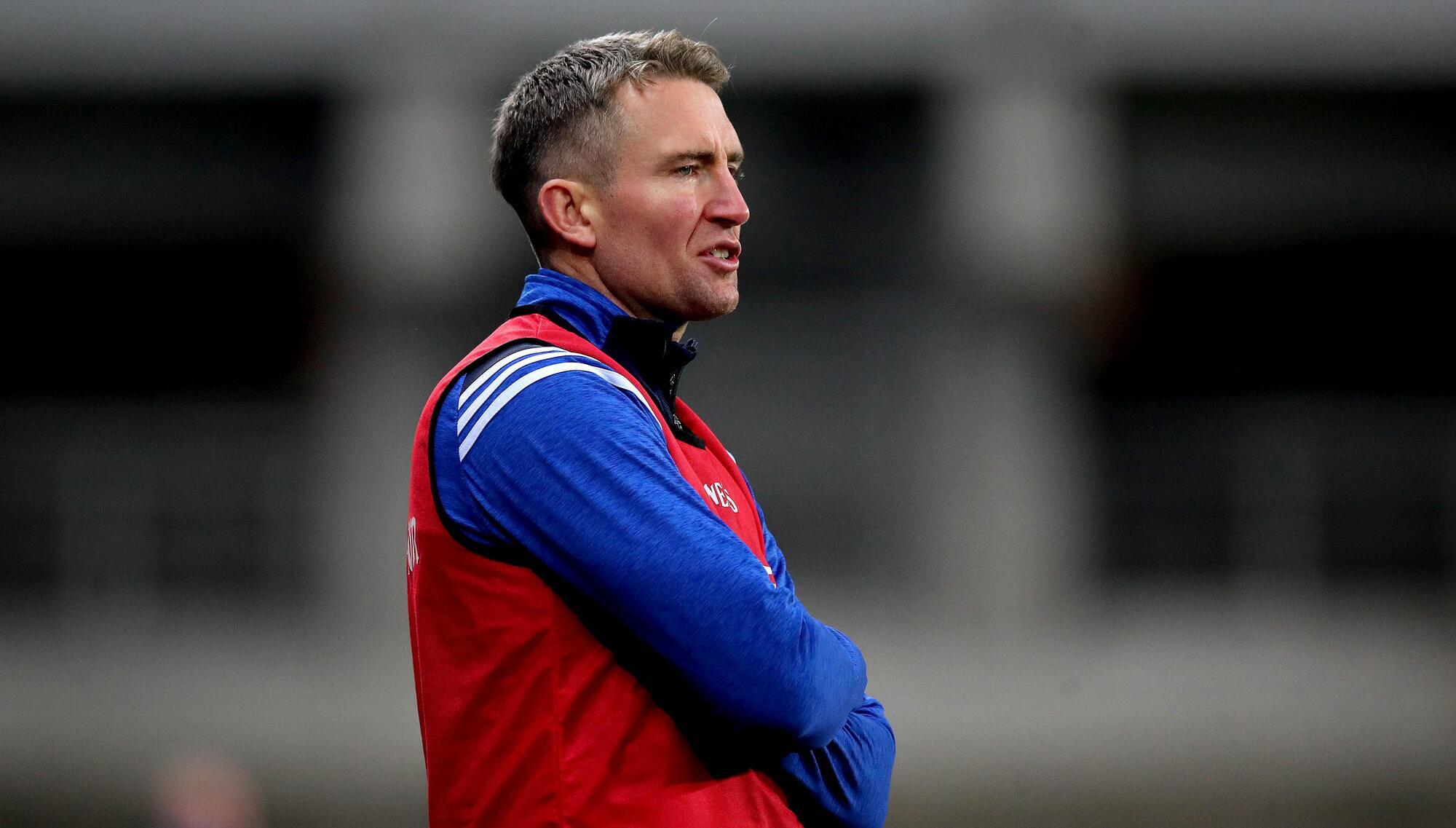
CRITICISM: Former Laois manager and Kilkenny player Eddie Brennan has been loud in his criticism of what he sees as players simulating injury. Pic: INPHO/Ryan Byrne

Six years ago, John Kiely took aim at a comment made from the Clare dugout at Declan Hannon. In his first senior championship in charge, the Limerick manager was on the wrong end of the result but wasn’t taking the remark lying down.
“A comment was passed, I didn’t like it, simple as,” he explained about a heated moment on the Kinane Stand sideline in Thurles. “It was said that he (Hannon) dived and he didn’t dive. Declan doesn’t dive.
“I don’t think any player takes to the field in inter-county hurling that are diving. It was an unfortunate comment, but it’s over now and done with. I’m sure when he thinks back on it he’ll regret it.”
Kiely might have been right at the time but were he to give it now he’d be accused of being wide-eyed or deluded. The number of players who are above dramatising the effects of a challenge is reducing at an alarming rate.
The Clare management has since changed but would Brian Lohan be as comfortable making the same claims now about other team’s players bearing in mind the simulation exhibited by a couple of his charges in recent weeks? As tough but as honest a player as they came, Lohan would not have lowered himself to doing the same.
Not that Clare have exclusive rights over such chicanery. In additional time in Thurles on Sunday, Tipperary’s Dan McCormack was looking to buy a free from Seán Stack only for the referee to point the other way before Barry Nash reacted and the free was overturned. Cathal Barrett was clearly hurt but there is a calculated risk in ducking the head in bracing one’s self for a tackle as it often appears a free, especially when the player challenging is bigger.
Against Kilkenny at the end of April, Galway manager Henry Shefflin had no qualms in gesturing to referee Johnny Murphy and his fellow match officials that he felt Mikey Butler had dived to win a free from Jack Grealish.
In Ennis on Sunday, after conceding a free as he pulled at Ger Mellerick’s shorts, Tony Kelly went down holding his head after Tim O’Mahony shouldered him to the ground. O’Mahony was booked and Cork lost the free as a result.
“We have a fair bit of what we call simulation creeping into the game,” said co-commentator Brendan Cummins. “The reason Tony is doing that is we’re deep into stoppage time to slow the whole thing down.”
Indeed, from the time Kelly committed the foul to the game restarting after he was tended to, a precious 45 seconds had elapsed.
Although there wasn’t much more TV commentary on the matter, few would dispute Cummins’ take on the incident. Tony Kelly is a wonder of a hurler and it’s not as if he is Teflon like Harry Kane — remember his red card against Tipperary in the 2019 league game — but his exemplary character may have earned him a reprieve. Either that or he hoodwinked linesman Thomas Walsh who advised Johnny Murphy to book O’Mahony.
Eddie Brennan has never wavered from his opposition to diving in hurling. As Laois manager, he had skin in the game when he intimated Pádraic Maher was guilty of it in the 2019 All-Ireland semi-final after he was struck by Aaron Dunphy who was sent off — “I think there’s a little simulation creeping into hurling the last couple of years and it’s worrying.”
In December 2021, he was again bemoaning the theatrics, this time on Twitter. “Is there anything worse than lads on a GAA pitch who play act feigning injury and so called sports men actively calling on a ref to send an opponent off/ The absolute shame of it. Some role models for kids in their club.”
His reaction to a clip of Clare’s Rory Hayes’ overreaction to a shove by Waterford’s Stephen Bennett in last Saturday week’s Munster SHC game in Thurles was in keeping with his stance: “The shame of it.”
Just behind “steps” and “throw”, “dive” has become the biggest accusation now from the sidelines and stands and with good reason. It is a cautionable offence but one that can be difficult to identify. Kiely acknowledged his error this month two years ago when he apologised for accusing Galway players of diving during Limerick’s league defeat to them in Salthill.
On a weekend where the GAA took a proactive move against the multitude of throw balls in games by endorsing a trial aimed at making the hand-pass a cleaner transfer and put a reasonable limit on the size of the hurley bas, it is appropriate that they should consider increasing simulation from a yellow to a black card offence.
Safety must always be the priority but if hurling is to be genuinely believed the feigners have to be stopped.
John Kiely’s argument that Limerick are improving incrementally might have a kernel of truth but it’s in Leinster where the contenders are really building.
With each game, Galway and Kilkenny seem to be getting sharper after being able to freewheel in a couple of games. In contrast, some teams emerging from Munster could be punched out by the the All-Ireland series.
Clare were the greatest example of that last year spluttering to a win against Wexford but minus John Conlon in the All-Ireland semi-final loss to Kilkenny looked nothing like the team that topped the Munster SHC — something that could be possible again this season.
In 2018, provincial finalists Clare and Cork were gone by the All-Ireland final stage. Tipperary were an exception the following year when they redeemed themselves after they were mauled by Limerick in the Munster final.
As John Mullane and Shane McGrath pointed out, there is a distinct advantage for Leinster contenders, possibly evident in how well they fared in the All-Ireland semi-finals last year, Galway coming up just short of Limerick.
The attention Munster gets also seems to be gnawing at some in Leinster. Last week, Michael Fennelly said: “There is no relegation in Munster so there is one rule for one group and not for the other.”
As Fennelly added, he made the same point before Munster was taking all the limelight where it’s possible one team could exit the championship this Sunday having lost one of four games with a positive score difference.
For other reasons, some in Munster and those like Fennelly in Leinster could find themselves agreeing that something has to change because one province is too competitive, the other simply isn’t.
But as the Munster Council looks set to break the 2019 attendances record of 273,000 in group stages and gate receipts head towards a sizeable €5m, that debate may have to wait.
The start of the All-Ireland football series was well and truly put in the shade by the four Munster SHC counties in action and Westmeath’s hurlers this past weekend.
It’s too early to judge but the determination to avoid dead rubbers by rewarding three of four teams in each group with knockout places appears it might morph the Super 16 into the Stupefying 16.
That the games in Killarney and Salthill were on GAAGO didn’t cause near as much furore as the decisions to put the earlier Munster hurling games on the streaming service, although there was plenty of notice given that the football fixtures would not be on TV. Driving from Ennis on Saturday, it was a surprise to hear RTÉ Radio spurn a good portion of the second half of Kerry’s historic SFC defeat to Mayo in Fitzgerald Stadium for the build-up to the La Rochelle-Leinster European Rugby Club cup final.
But then does that not reflect the general attitude to a phase where even if Kerry lose to Cork the weekend after next they are not out of the championship?
On another note, what is it with home advantage counting for so little at this time? If it wasn’t enough that just two of eight home games have been won by teams in the Munster SHC, Galway were the only team of four to win on their own patch this weekend. In the Tailteann Cup, nine of 16 home teams have failed to win.