John Fogarty: Safety another promotional issue for hurling
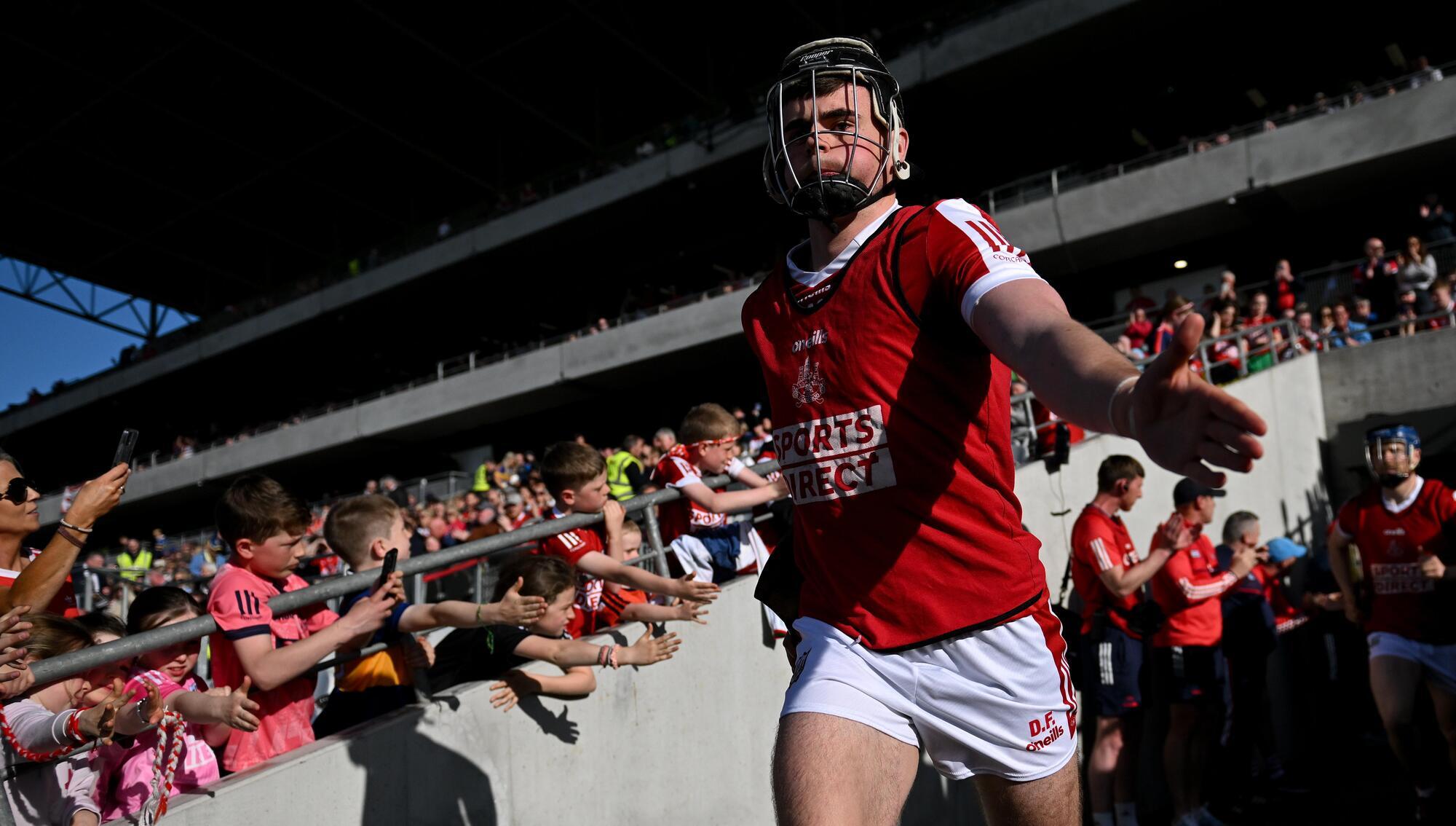
TACKLE: Darragh Fitzgibbon was on the receiving end of a reckless tackle in Cork’s draw with Tipperary. Pic: David Fitzgerald/Sportsfile

The promotion of hurling as a product is exercising plenty of minds right now but there were further reminders over the weekend of the dangers it poses to itself.
Across the opening three weekends of the provincial championships, at least six high-profile head-high tackles have occurred. None were punished by a red card.
It’s true what they say: What’s a foul in February is miniscule in May. If referees aren’t being reminded of their responsibilities to the players in that regard, then the administrators are themselves in dereliction of their duties.
Long gone, it seems, are the days when national referees development chairman Pat McEnaney was warning his match officials that strikes to the head be it with the hurley or body had to be treated with zero tolerance.
“In the past couple of years, I think the widespread use of helmets is leading to a situation where it’s become more acceptable to hit at head height,” he said in 2012. “I’m not saying that this is pre-meditated or that players set out to do it, but the helmet does seem to give a bit more freedom to make challenges like that.
“I’m not saying that as criticism of helmets, which are compulsory, but it’s something we need to be aware of and give yellow cards — and red cards depending on the ferocity —when necessary.”
When Patrick Horgan was dismissed in the 2013 Munster final for tapping the top of Paudie O’Brien’s helmet, there was outrage that the game was being sanitised.
Indeed, the interpretation of the direction from the referees body was taken too literally and the suspension was later rescinded.
That first-half contact on the Limerick defender’s helmet was a caress compared to some of the incidents seen in Thurles and Páirc Uí Chaoimh these last few weekends.
On Saturday, Ronan Maher’s shoulder on Darragh Fitzgibbon was reckless although, as it was screened by Michael Breen, referee Paud O’Dwyer might not have been able to get a clear view. In Croke Park earlier that day, Daire Gray put in a mistimed shoulder on Conor Devitt after the Wexford defender picked up the ball.
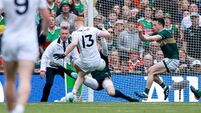
Devitt had no way of bracing himself for the challenge from the side. The staggered way in which he fell to the ground following the contact was extremely disconcerting. Devitt didn’t even win a free.
It was a blow that to a layman’s eye also required a Head Injury Assessment out of the game.
Referee Thomas Walsh seemed just as satisfied as Liam Gordon was with Seamus Flanagan’s shoulder to Stephen Bennett’s head in Thurles last month that the challenge wasn’t much, which seems to contradict a communique from their administrators last year that stated: “Players are responsible for the contact that they make. It doesn’t matter whether it was accidental.”
At times, you wonder if hurling referees are so invested in contributing to a spectacle and knowing how much losing a man can upset that possibility that they are more inclined to give the benefit of the doubt.
You need only look at how Limerick eased to victory over a Horgan-less Cork in that 2013 provincial final or how Tipperary’s task was made easier by Richie Hogan’s first-half dismissal for shouldering Cathal Barrett’s head in the 2019 All-Ireland final.
Referees may be thinking about the game but it’s the one with the capital “G” that counts for most.
An Ulster University study found that across 82 inter-county games in 2018 and ‘19, there were visible signs of concussion in shoulder-to-head impacts in 14 of 37 such cases.
Impacts to the side of the head were 2.7 times more likely to result in visible sides of concussion than those to the front or back of the head.
The paper read: “The league (GAA) might consider implementing more severe penalties, especially for ‘blind-side’ hits to the lateral aspect of
the head, to encourage players to be more deliberate with their tackles.”
It continued: “Referees might approach high-risk situations with a heightened awareness and have a lower threshold for issuing fouls and cards if necessary.”
Anecdotally, we hear of parents moving their children away from rugby to Gaelic games because of the dangers associated with playing the former.
The GAA has benefitted from that sport’s inability to make it safer but how long before hurling is served up a spoonful of that medicine?
Shane O’Donnell’s frightening tale of the concussion he suffered in a Clare training session in 2021 should have been a warning shot across the GAA’s bows never mind the measures he has had to take since to continue playing.
The GAA’s protocols around the subject are in need of update. Perhaps, additional safety wear is required too. Smart gumshields are being used in other sports to measure head impacts in real time.
To enshrine the physical allure of hurling, nothing should be spared in protecting those who excel in it.
With sold-out signs soon to go up on Munster senior hurling championship games two and three weeks away, the argument that hurling is suffering an exposure problem is more difficult to make.
As the reported on Sunday, the provincial council are set to break all attendance and gate receipt records for the competition.
That is in spite of a largely absent Waterford following and a Tipperary support so far unconvinced that they have put last year’s forgettable season behind them.
Cork’s consistent backing of their team, Limerick’s sustained success, and Clare’s excellent Munster final performance last year combined with their recent win over Limerick are major contributory factors.
That some of the games have been streamed on GAAGO may also be cited in some quarters as a reason too.
However, it doesn’t stand up when both Tipperary-Limerick and Clare-Cork games, which will be straining the capacity of Cusack Park and FBD Semple Stadium, are confirmed as live television events. Cork and Limerick’s game is also set to be broadcast on RTÉ.
Having attracted a record 237,000 for the 10 round-robin matches in 2019, it would be fair to estimate a total of over 260,000 are due to attend them this time around.
Throw in the Munster final and the 300,000 mark should be surpassed.
That will make pretty reading for the Munster Council who last year took in €4.736m off the back of total crowds of around 255,000 and may hit the €5m figure this time around.
With good reason, it may be dubbed a provincial championship invisible to those who can’t or won’t attend the games but never in its history will more people have been at its games.
That has to be a positive as much as the 11,550 crowd at the Kilkenny-Galway game in UPMC Nowlan Park last Sunday week was worryingly low. Munster is where it’s at and will be until June 8.
If there is any comfort for the Cliffords over the coming days, it’s that passionate football follower Ellen was able to see her sons claim All-Ireland titles for the county and club in the space of six months. The sight of her embracing David and Paudie after Fossa’s junior final win in January was incredibly poignant.
The family decision for the brothers, David being captain, to line out for Kerry in Sunday’s Munster final against Clare was in keeping with the family’s shared love of the game and their county.
It brought to mind the Ó Sé brothers’ call to face Cork in the 2002 Munster semi-final replay the week after their father Micheál passed away.
Following a request from the Kerry County Board, that game was pushed back to the following weekend, which Cork won. A similar plea was not made this time around given the time constraints of this championship. The Cliffords would likely not have entertained the idea anyway seeing as Kerry’s first Sam Maguire Cup round-robin game was taking place the following weekend.
Although the Cliffords were registered to play on Sunday, Kerry could have replaced them under a new rule introduced this year that allows 11th hour changes for extenuating circumstances such as bereavement. Instead, the siblings chose to line out. They couldn’t do anymore for their county.
Email: john.fogarty@examiner.ie