Derek McGrath: Ballygunner has produced some brilliant teams, but this team is different
Paraic Mahony wrongly proclaimed that 'nice guys win nothing'. Nice guys can be compassionate, giving and ruthlessly driven
Derek McGrath: Ballygunner has produced some brilliant teams, but this team is different

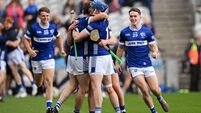
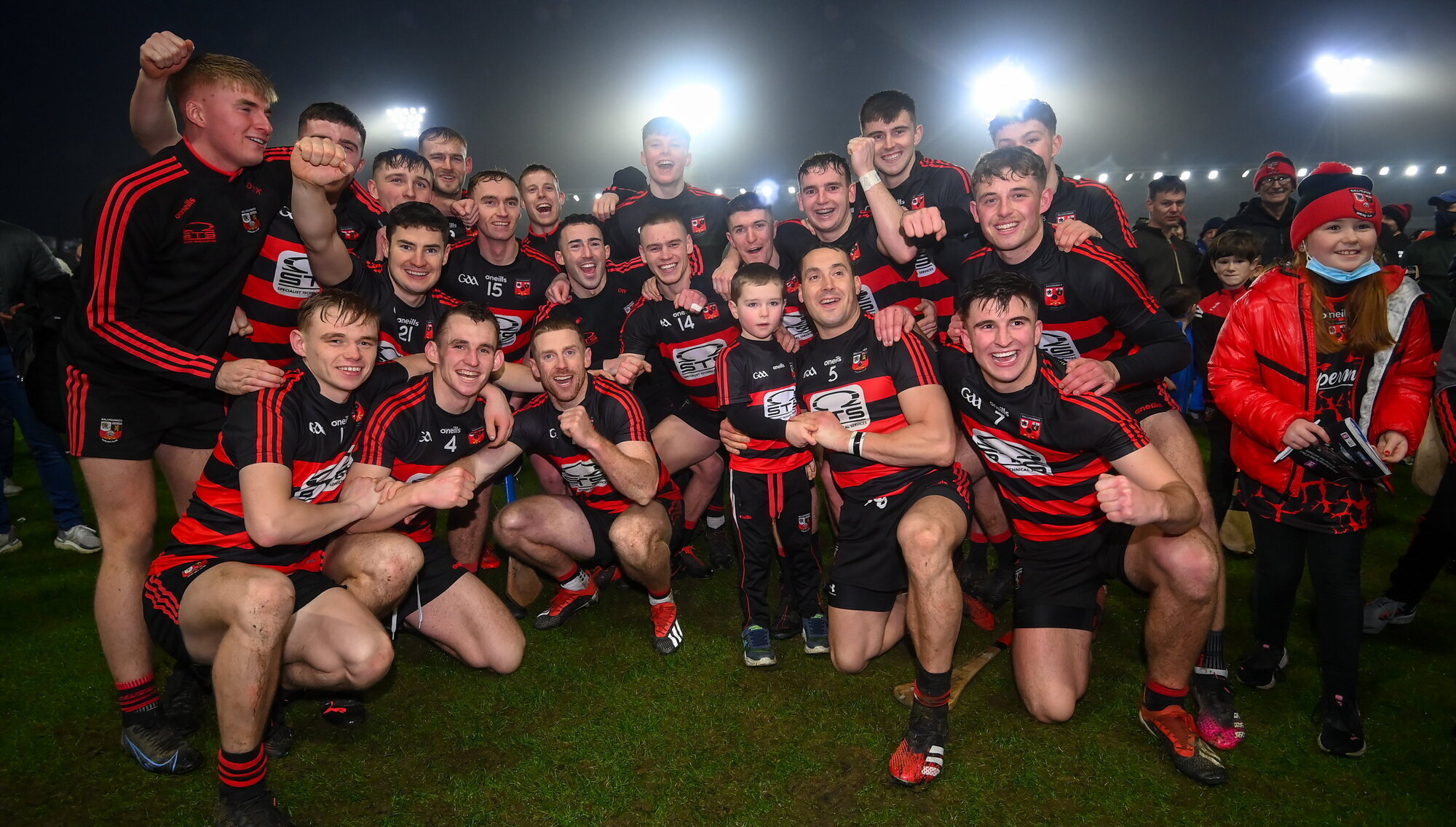
Ballygunner players celebrate after the Munster club final win over Kilmallock. Picture: Stephen McCarthy/Sportsfile


“Those who are victorious plan effectively and change decisively. They are skilled in both planning and adapting and need not fear the result of a thousand battles: for they win in advance defeating those that have already lost.” 

- Sun Tzu, The Art of War

Unusual to begin a preview of an All-Ireland club hurling final with the combined musings of Sun Tzu and Jurgen Klopp. As a lifelong Evertonian, the trauma of Liverpool’s 4-1 December pummelling of the Toffees and the Reds’ record-breaking achievement of scoring two or more goals in 18 consecutive games, was somewhat eased by the German’s insightful commentary on the pre-season brainstorming session amongst his staff.

Realising “how reliant we (they) were on specific things”, Klopp and his coaches recognised the need to evolve, to adapt. “We realised we had problems which we didn’t have before... we needed to analyse everything.”

The depth of the think tank was an epiphany for Klopp who realised that “you can only be offensively creative if you have defensive protection”.

A similar thesis was at the core of the conversation between Dónal Óg Cusack and Davy Fitzgerald on RTÉ’s League Sunday. How will Cork solve the Mark Coleman conundrum — use his creative talent to launch attacks but also reduce the impact of his direct opponent. Many winters are spent detailing the what-if scenarios and no doubt Cork’s brainstorming sessions reflected on Cian Lynch’s influence on last year’s final.

A detailed study of the Ballygunner model would be a good starting point for any team. Evolution and adaptation are among their greatest strengths. Now 43 games unbeaten in the Waterford championship, the Gunners have contested 25 of the last 30 county finals, winning 17.

Aligned with this, since 2009 they have won seven U20/21 titles and last year saw them achieve five in a row at minor level. The concession of late goals in the 2013 county final defeat to Passage was this team’s crucible moment. The continued need to incrementally improve has seen an influx of youth with Tadgh Foley, Ronan Power, Kevin Mahony, Paddy Leavy and Harry Ruddle adding to their dynamic approach.

To borrow Matthew Syed’s contention in Black Box Thinking, the Gunners’ management realised that “the paradox of success: it is built upon failure”. Passage, Na Piarsaigh and particularly Borris-Ileigh prompted action.

Heralded for their high scoring and slickness of their counter-attacking and short play, the freedom to express comes from Ballygunner’s disciplined defensive structure. All attack as one and all defend as one. The most revealing pre-match interview was given by Stephen O Keeffe, the best goalkeeper in Waterford and arguably the best in Ireland. He said: “We pride ourselves in our backs on keeping scores down, we have a lot of confidence in ourselves as a defensive unit”. So, what does it involve?

Philip Mahony orchestrates the whole system. At both throw-ins and, when his man comes within 40 yards of the goal, he will go man to man with his direct opponent, selling the illusion that Ballygunner are a 15 on 15 team.

However, for the majority of the game the willingness, craft, guile and athleticism of the double-jobbing half forwards Mikey Mahony and Paraic Mahony — along with Peter Hogan and one of the full-forward line of Kevin Mahony or Billy O’Keeffe — will allow Paddy Leavy play as anchor-man, not picking the opposition 11 but acting as a screen in front of the opposing half forwards. This allows Philip to dictate the play.

THREE KEY BATTLES ON SATURDAY

Experience v hunger

It’s rare to find a starker contrast.

Ballyhale have eight All-Ireland club titles on the mantelpiece in south Kilkenny, and Ballygunner have none.

The Waterford side have dominated their local championship, with eight consecutive county titles, for so long that the All-Ireland club is the last peak to conquer.

The distinctions can blur a little — Ballyhale are relying now on fresh faces like Eoin Cody and Adrian Mullen, while Ballygunner have a wealth of experience to draw on from their provincial journeys.

But Ballyhale know what it takes to get over the line in an All-Ireland final. Will that make a difference?

Minding TJ Reid

With all due respect to the Ballyhale talisman, he’s closer to the end of his career than the beginning, but with equal respect he remains a powerful weapon for the white and green.

His ability with frees and penalties remains undimmed — witness the closing stages of the All-Ireland semi-final — but in general play he also retains the ability to create his own pace, taking his time to pick out a teammate with a pass while holding off a despairing opponent. Ballygunner will pay particular attention to the big forward.

Minding Dessie Hutchinson

The quicksilver forward is a major trump card for Ballygunner, with his speed over the first 10 minutes a torment for any defender. What’s been encouraging for the Gunners is his ability to bring others into the play as well as scoring himself, with his display against Loughmore-Castleiney the perfect example: on a wet evening in Dungarvan Hutchinson created two goals for teammates and won a penalty as well.

Ballyhale have been well forewarned about the threat Hutchinson posed, particularly in wide open spaces such as Croke Park. The more involved he is the better for Ballygunner.

Words: Michael Moynihan

The role of Sean O’Donnell, lead analyst with Limerick and Ballygunner, is of vital importance. While the three half-forwards may set up conventionally on the opposition puck-outs, once the ball is in general play the two Mahonys and Peter will do their best Hegarty, Lynch and Morrissey impression by operating near the breakdown, snapping up breaks, hunting down the opposition forwards and, crucially, using the ball well.

Have a quick look at Peter Hogan’s brilliant point before half-time in the Munster final. Billy O’Keeffe, nominal corner forward, is on his own 21 as well as the aforementioned half forwards. The transition is so precise that instinct and thinking are fused as one. The Gunners have adapted and evolved. In February 2019, when facing the same opposition as tomorrow, their back six committed to following their men.

The result saw Philip Mahony hold TJ Reid to a point and Barry Coughlan hold Colin Fennelly scoreless. However, for the first time in years Ballygunner went away from being themselves.

The All-Ireland final will see one wing back — most likely Shane O’Sullivan, depending on match-ups and the positioning of the key Ballyhale attackers — remain zonal a la Diarmaid Byrnes. He will act as the first out ball for O’Keeffe and be key distributor with Philip. The depth of the Ballygunner forwards and midfield ensures that there is a randomness to their attack.

Aside from their skill levels, the crucial difference between Ballygunner and most teams is their ability to think while in full flow. When Barry Coughlan and Ian Kenny are the normal two minding the house, the security base of O’Sullivan, O’Mahony and O’Keeffe is reinforced by the forwards, allowing Tadhg Foley, in particular, to bomb forward.

A quick glance at Dessie Hutchinson’s first goal in the county final and his assist in the Munster Club Final goal for Billy O’Keeffe, provides a glimpse of this total hurling approach Likely to face a half-forward line of Eoin Cody, TJ and Adrian Mullen, Darragh O’Sullivan and David Franks will have spent hours detailing how important it is the Gunners are themselves. This involves Mikey Mahony, Peter Hogan and Paraic Mahony meeting and swarming the Ballyhale attackers and in turn bombing forward to support.

Ballygunner know that most teams now set up with a plan around the containment of Hutchinson and Croke Park looks perfectly suited to seeing the top forward in the game right now at his best. Not just in the scoring stakes but also in his vision and spatial awareness.

Don’t rule out Dessie spending initial periods at 11 or slightly out the field to counteract the closing of space. Ballygunner’s flexibility is their main strength. Billy O’Keeffe is one of the finest stickmen in the game and his versatility, allied to the guile of the Mahonys, has added another layer to the attack. To counter Slaugthneil’s sweeper, Ballygunner played a conventional three inside with Kevin and Billy being the main beneficiaries of over-policing of Dessie.

A standout feature of Ballygunner’s game is their skill level in the tight. There’s Paddy Leavy’s quicker version of the Brick Flick. And hopefully James Owens will see Philip Mahony’s brilliance with the high handpass and side offload like Fergal Horgan — that quick handpasses are a beautifully crafted piece of skill.

The genial Darragh O’Sullivan point has emphasised the Borris-Ileigh game hasn’t been mentioned. Nor the perception around simulation in the Loughmore game. But his players were a little more revealing in pointing to being at “rock bottom” after the Munster Final of two years ago and outlining that “people said we were not a winter team”.

You can be sure that the “no team will outwork us’ maxim has been widely espoused ahead of this final.

Perhaps the most impressive feature of the Ballygunner team is their sense of unity, their unique sense of team. Some point to the size of their catchment area, the affluence of the Dunmore Road and adjoining area, a hugely resourced club. To do so completely ignores their culture, their spirit, their relentless work ethic and their leaders.

Darragh O’Sullivan, a brilliant hurling brain and more importantly a sound man, knows that modern leadership is about trust, empathy and human relationships. He also knows it’s about challenge and excellence, so the social significance of gatherings in Grow HQ pre-matches, the Monday morning recovery sessions in Dunmore, the psychological processes with Tony Óg Regan, and the player-driven fining system all play their part.

Ballygunner has produced some brilliant teams over the years, but this team is different. Individually gifted, the collective, intangible unity supersedes everything else. Win or lose will only be the beginning for the team. The likely impact of the gifted Patrick Fitzgerald next year, allied to the influx of talented youngsters like Mark and Colm Hartley, David Leavy and Conor Tobin over the coming years, will see them at the business end of the Waterford championship and beyond for years to come.

On a personal level, my friendship and loyalty to the Ballygunner players runs very deep. No more or different than the effort and diligence that my clubmates Kevin Moran or Jake Dillon gave over the years to school, club and county, the contribution that these Ballygunner players have given to our school and Waterford has been incredible.

Almost the entire panel attended our school here in De La Salle and while they were here in the college, they gave us everything they had in their souls both in the classroom and on the college fields. The return of Philip to the teaching staff of the college has provided our students with an innovative, caring and humble role model.

Supporting another tribe or club within your own county can lead to some thinking that you are being disloyal to your own. The opposite is the case and we all look forward to the day when we can gain a precious victory.

Perhaps George Eliot put it better when reflecting that “it is a narrow mind which cannot look at a subject from various points of view”.

Barry Coughlan, the Mahonys, Sok, Shane O’Sullivan, Ian Kenny, Peter Hogan, Paddy Leavy, Dessie and the entire Gunners squad are lads who give everything, every day. Words would never express the thanks that they are due for what they have given me personally or the school throughout the years.

Often walking the A Floor, the inward eye happens upon an image of the late Gary Murphy (Ballygunner) shooting the breeze with Philip, Paraic, Jake (Dillon) and Daniels (Stephen) outside the tuck shop. More especially, I think of a conversation with Philip where he remarked that “Smurf (Gary) is a true friend, a real friend”.

The beautifully adorned Gary Murphy Indoor Arena in Ballygunner stands as a testament to Gary’s legacy and his father Liam is now a brilliantly efficient treasurer.

Following the Loughmore game, Paraic Mahony wrongly proclaimed that “nice guys win nothing”. Nice guys can be compassionate, giving and ruthlessly driven. The best of guys are about to win big and the best of guys will be cheering them on from above.

More in this section

Sport

Newsletter

Latest news from the world of sport, along with the best in opinion from our outstanding team of sports writers. and reporters

Cookie Policy Privacy Policy Brand Safety FAQ Help Contact Us Terms and Conditions

© Examiner Echo Group Limited