PM O’Sullivan: Why ciotóg Cian Lynch's uncommon hurling grip gives him an edge
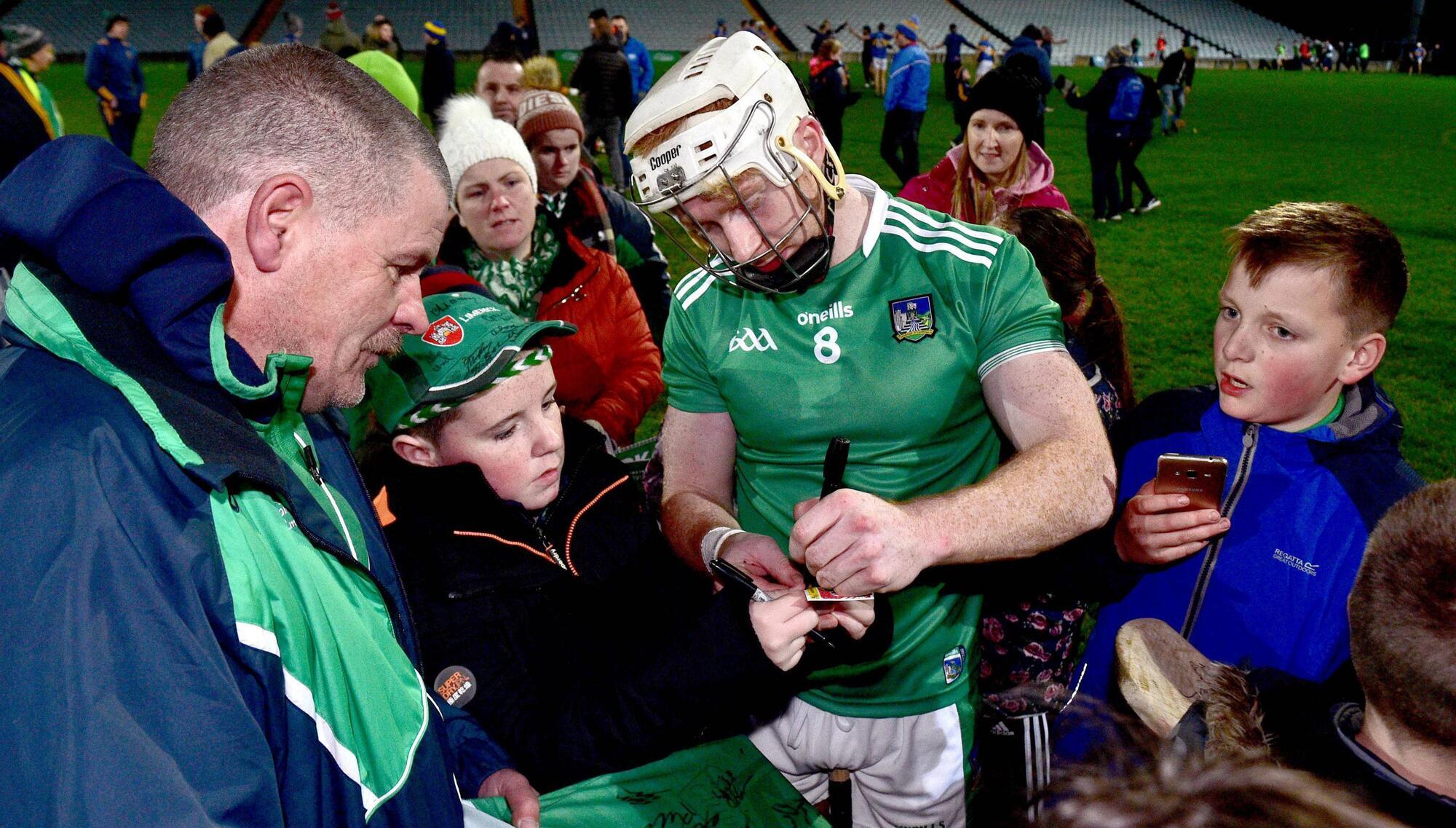
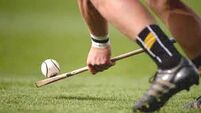
Cian Lynch is part of an intriguing minority of hurlers. Left-handed to write, he grips left hand on top and is right side orientated for frees. Such figures often run in a different line to the ball which might account for Lynch’s unpredictability and unorthodox incisiveness.

Emerald Tuesday, however much Cork hurling folk wanted one of ruby red kind.
The 2021 inter-county season concluded, its action done and faceted. Biggest day not always means widest aftermath — the final might have been really tight, ifs and buts drawing immediate momentum for next campaign — but last weekend counts as exception. The aftermath of Limerick’s imperious win is awe and fear rippling into winter.
Take a look. Bookmakers already make the champions odds-on for next season. Galway, framed as nearest challengers? Set at 7/1.
Think about this perspective. Galway, even though absent from the All-Ireland quarter-finals, are still rated higher than the five counties other than Limerick who reached that stage. I presume this position leans on Galway possessing candidates who might withstand the champions’ physical wherewithal.
Think longer about this perspective. A county that did not meet Limerick in 2021’s championship is more fancied for 2022 than those counties that did. How should we understand this notion? Surely it must be that these champions wreaked massive psychological damage on Cork, Tipperary, and Waterford (and on Dublin and Kilkenny, by implication) for the foreseeable future.
Awe and fear, making concentric with each other.
Limerick supporters danced no doubt on Sunday night to ‘Under My Thumb’. They were every bit entitled to every last bit of levity. A really good team, wearing bright green, became a great team. ‘SS Plaudit’, decked with flags, lies berthed by the Shannon.
I can merely add a few pennants, with perhaps unnoticed detail. Although there were no hesitations beforehand in any quarter about Seán Finn’s qualities, he once again underlined his status as the code’s best natural defender since JJ Delaney. Finn continues as a marvel, doughty and compact, a canny controlled dervish.
The code’s most difficult defensive skill? Collecting the ball while sprinting back towards your own goal. The Bruff clubman makes this facet look a stroll in Croke Park.
I can summon no greater compliment than to say he is as expert in this defensive regard as three past masters, Kilkenny’s Ger Henderson and Willie O’Connor, Offaly’s Brian Whelahan. Just 25 last January, Finn can rise to being one of hurling’s all-time defenders. He is that superb and will shortly land his fourth All-Star in a row.
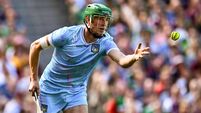
Another wizard has to be mentioned, last weekend’s Man of the Match and 2021’s Hurler of the Year. Nicknames and Cian Lynch are becoming like that 1980s EU wine lake. There is no shortage of intoxication. Last week, he got hailed as the Lionel Messi of hurling. More power to his wrists.
No shortage of sobriquets, no stall in attempts at shorthand for genius. Cian Lynch is Limerick’s Jumpin’ Jack Flash, Big Green Rooster, Honky Tonk Man. We salute strange ungovernable energy with the small mythology of a nickname.
The old game does not take place during witching hours but Lynch, spiritually and tactically, is a Midnight Rambler. His peregrinations stretch opposing sides to the limit. There goes an eldritch talent cloaked in a work ethic never less than ‘die in the last ditch’. As detailed by Brian McDonnell in yesterday’s pages, here is a singular splice of unrelenting graft and magical craft.
So many ways… Lynch at centre forward poses a far bigger conundrum, as remarked yesterday by Anthony Daly, than Lynch at midfield. No sensible management believes their pivotal half back can vacate the centre and follow the Patrickswell clubman. A man-marking job will therefore free up an opposition midfielder or back, who can sit and sweep and knit together counterattacks. There exists no neat solution to this dilemma, so long as one option operates as a false 11 and continues to cast those lethal passes.
Such figures often run in a different line to the ball. This trait might begin to account for Lynch’s unpredictability and unorthodox incisiveness, his non pareil ability to spot a killer assist. He takes possession of the ball, being left-handed, from off-kilter angles.
Plenty of accomplished exponents operate in the same style. Here is a small selection. Antrim: Terence ‘Sambo’ McNaughton. Kilkenny: JJ Delaney, Joey Holden, Eoin Larkin, Lester Ryan. Tipperary: Lar Corbett, Brendan Cummins, Patrick ‘Bonner’ Maher, Jake Morris, Ger ‘Redser’ O’Grady. Waterford: Pauric Mahony.
Backhand-orientated ciotóg hurlers sometimes get viewed as ‘wrong’ in approach. Not so. Gripping with the stronger wrist dominant is classical practice since the GAA’s foundation.
Besides, these men are only a mirror image of numerous right-handed hurlers who prefer their left (backhand) side for dead balls. Lynch’s own teammates bear out this truth. Limerick’s Richie English, Aaron Gillane, Barry Nash and Nickie Quaid are all a deasóg mirror image of their talisman. Gillane is currently the leading right-handed backhand-orientated freetaker.
The Lynch type can get mistaken for a right-handed person hurling left hand on top. The latter style, although countless powerful and successful figures have utilised it, remains problematic. Gripping with the less dominant wrist typically leads both to back foot striking and to limited use of left side strokes. This sort of hurler typically does not have, in the phrase, the same use of himself.
Yet an error persists. Allen Larkin, Eoin’s father, once told me about family pressure around changing his son’s grip to right hand on top. How wise Allen was to resist… I know of numerous similar stories.
The wrinkle of this error? Residual prejudice against lefthanders. My father is lefthanded and got beaten for being so when he started national school in 1949. He was forced into writing with his right hand. That nonsense remains an unacknowledged barbarity in recent Irish history.
I am likewise lefthanded. But not a word was said to me when I started national school in 1971. So my experience of education, from the start, grooved as entirely different. I often wonder how many lefthanders of the father’s generation, of previous generations, never reached their potential because of barbarity experienced as a four-year-old.
For this reason, I love to see a lefthanded hurler, whether of forehand or backhand orientation, doing well. To an extent, Cian Lynch comprises a rebuttal of the cold nonsense that blighted so many lives. He performs with absolute freedom.
There is something marvellous, more broadly than sport’s appeal, about the spectacle.
There is a sort of reckoning in noting Ireland’s sovereign hurler at present as a ciotóg eldritch spectre, bursting with vitality and rude health. Who would have thought it, back the decades?
Now the ideal is flesh and 25 years old.
For every class of a reason, Limerick satisfaction on Emerald Tuesday must be off the charts. The rest are getting haunted.