Colin Sheridan: Thank you Stephen Cluxton for spicing up the GAA summer
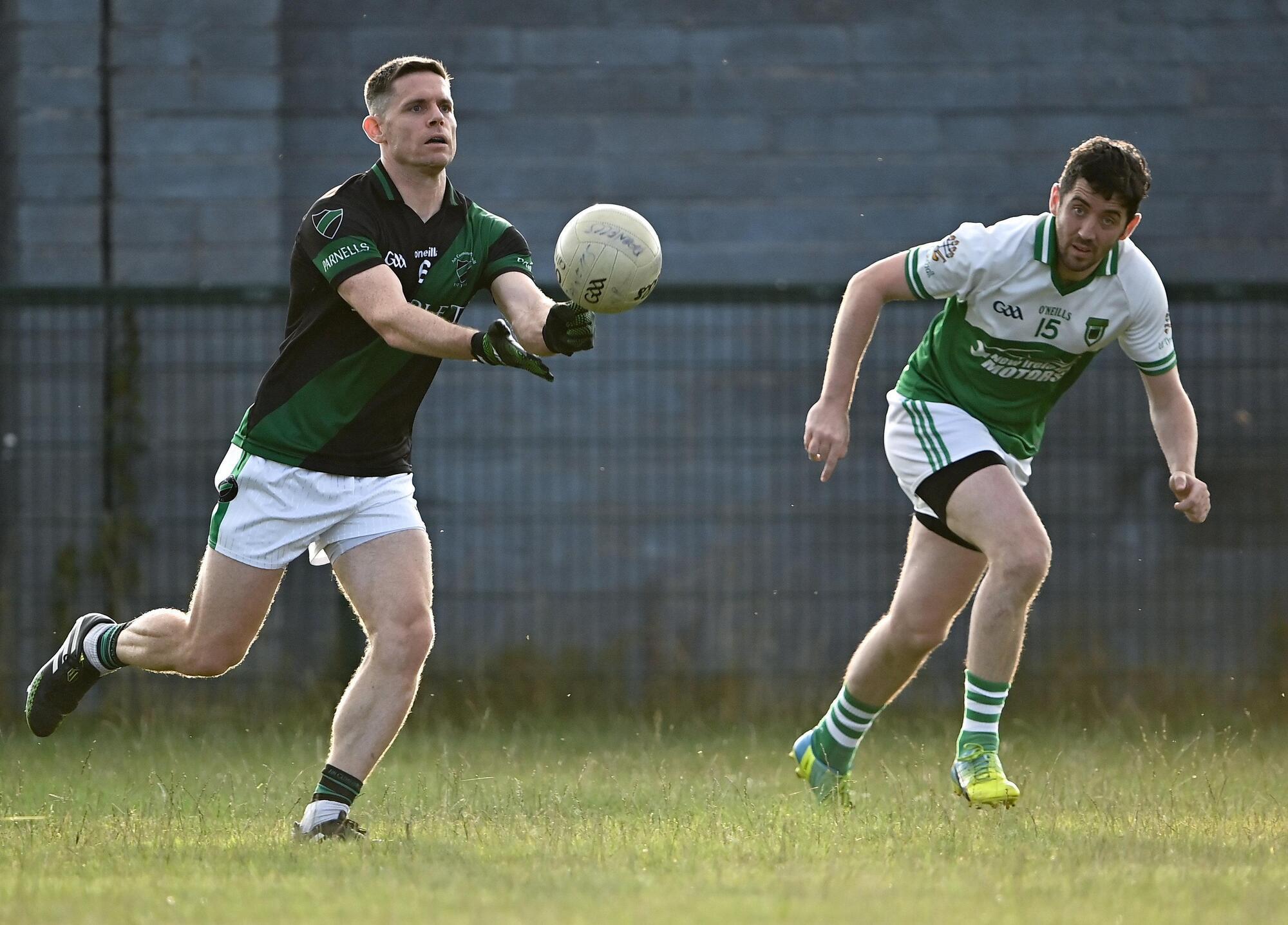
Stephen Cluxton of Parnells in action against Aindiú Ó Muiris of O'Tooles during the Go Ahead Adult Football League Division Three North last week. Pictures: Piaras Ó Mídheach/Sportsfile

It's been a while since we had a good old fashioned availability scandal in the GAA.
With the dawn of sporting post-modernism, things had gotten a little too po-faced. Everyone is taking themselves far too seriously. Teams have PR consultants and spin doctors now. Media bans. Drinking bans. Personality bans. Group think has become the opium of the masses. Dignity charters have to be signed in January before a ball is even kicked, and that’s just the clubs.
Collective expressions of humulity are choreographed and rehearsed before being ‘secretly’ filmed and leaked. Backroom teams outnumber the actual team. Gone are the days of a lad taking off to Boston in between championship games because he was hauled ashore at half time the week before, only to show up at training the following Friday, his ego sated by the furore his pseudo-departure had whipped up.
Players don’t ‘walk off’ panels anymore, they politely leave them with screenshot statements from their notes app on smartphones. There are no more Tony Keady sagas. Those mini-dramas filled many a championship summer in the past, and were arguably more entertaining then the games.
What irony then, that the gretaest giift Dublin football has given us this last decade is not their consistent brilliance on the field, but the odd soap opera off it. The ambiguity surrounding the status of their most influential player, Stephen Cluxton, is wonderfully at odds with their almost obsessional ethos of control as a group.
Regarded paradoxically as both the ultimate team player and a lone wolf, his absence from the Dublin squad, and Dessie Farrell’s rather awkward handling of the messaging around it, has led to a level of conspiracy theorising not reached since Bobby Moore was arrested for shoplifiting in the build up to the 1970 World Cup.
Why would the one man who epitomised the concept of ‘team over everthing’ do something so potentially disruptive to the group he led with such distinction? Why would his manager play down the significance of his absence as if he thought we wouldn’t be that interested in the fact one of the gretest players the game has ever seen was dismounting his horse, mid-race?
Dublin loyalists will understandably opine that Cluxton has more than earned the right to do whatever the hell he likes. He has proved himself as everything but a flaky character, so any sabbataical was likely well-thought out and considered.
The rest of us, desperate for crumbs of comfort from a table that has for so long starved us of hope, will twist ourselves in knots trying to read the tea leafs on this one. Has he simply had enough? Is he tired and needs a break? Is there irreconcilable creative differences between himself and Dessie Farrell, and this is his power play? Is the dressing room divided into pro- and anti-Cluxtonites? It feels like the GAA in the 1990’s all over again.
When Diarmuid Connolly was rumoured to be racking up 4-36 from play every other Sunday for the Donegal club in Boston back in 2018, all eyes turned to Jim Gavin to gauge his reaction. Gavin reiterated the ‘door is always open’ line so often, it was if someone was pulling a string from his back.
Yet, he proved himself much more nuanced a leader of men than many of us gave him credit for when Connolly did, in fact rejoin the panel, at Gavin’s urging. This was a saga which never became a scandal because Gavin was just telling us all the truth. He didn’t know what Diarmuid’s plans were, but he was open to finding out.
The difference between Cluxton and Connolly is that Connolly was always a maverick, and because of that, there was an expectation and eventual acceptance of his quirks. He was the Ferrari in the garage that ony got rolled out for the MTV Cribs crew. You’d never use him to do the school run.
While another county could ill-afford not to have Connolly at the centre of everything, Dublin could treat him differently. It didn’t make it an obvious thing to do, though. The new GAA is notoriously resistant to free spirits, and there was nobody freer than Connolly. He wore the sleveless top and the Leitrim shorts. He was mercurial, but he was also disposable. He could win you games but would never lose you one. Connolly, for all his genius, was a luxury Dublin and Gavin could reluctantly carry. Breathing space, clemency even, was somehing Jim Gavin chose to grant him and by doing so, he enhanced his own legacy as well as the players.
Cluxton is different. He is the metronome by which the Dublin clock ticks. Evan Comerford’s apprenticeship has been managed to ensure continuity of excellence, and his abilities as a goalkeeper are vouched for by those who know him best, but there is no coaching spiritual leadership. There is no like-for-like replacing of totemic figures within your team.
Dublin without Cluxton might still win everything, but they’ll never be the same.
There was a period in Mayo football, between 1951 and 2010 (so, less period, more an era), when you literally didn’t know what you were getting. Players walked and players returned. We did mercural and talismanic better than a French rugby team. If there wasn’t a feud brewing, there was a crisis looming. You had as much chance seeing a player in the departures lounge in Knock airport as you did at training in Castlebar. No matter who was actually picked to play, there was at least two better who should have been, but weren’t. Nobody did drama for so long quite as well as Mayo did.
It was tiring at times, but it was never boring.
For the Dublin empire, this episode may be quickly resolved, or, it may prove the first days of the fall. Sometimes, it’s not about who’s at the party, it’s about who is not. For the first time in forever, we all owe Dublin a debt of gratitude; the summer just got a little more interesting.