John Fogarty: Stephen Cluxton never lost his love for the contest
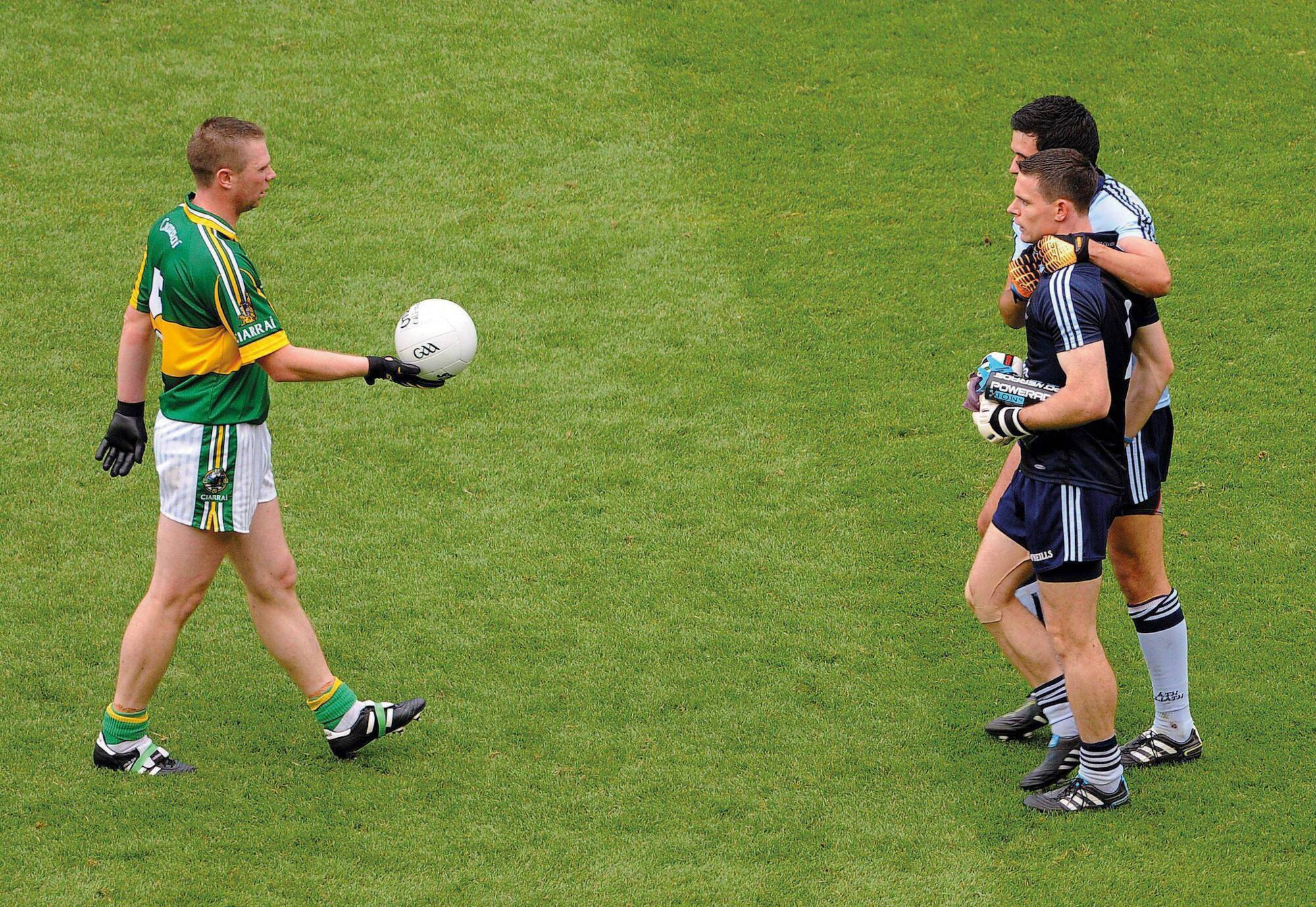
After kicking the most famous free in All-Ireland final history in 2011, Stephen Cluxton booted away the prized match ball handed to him by Tomás Ó Sé on his way to retiring to the dressing room. Picture: Dáire Brennan / SPORTSFILE
There was a time when possessing a player’s mobile number was more than halfway towards securing an interview.
Long before paranoid managers and GDPR took over the world, county boards were only too happy to furnish such details.
In the Tommy Lyons’ era, Dublin were one of them. A contact number for Stephen Cluxton? No problem. A few days before they took on TG4’s Underdogs in December 2003, the would-be great took a call about the upcoming challenge match.
Not surprisingly, our chat was brief but typically frank, Cluxton admitting that if Dublin lost to Mickey O’Sullivan’s ragbag reality TV team they were going nowhere.
Against a team which featured current Roscommon coach Steven Poacher, Dublin scraped a win in Parnell Park, Cluxton dropping a high ball by Poacher for Mayo’s Brian Ó Neachtain to capitalise and find the net.
Losing Declan O’Mahoney to a red card, in the end it was a Mossy Quinn 45 that saved Dublin’s blushes.
Despite his team’s shortcomings in those years, Cluxton’s attitude was always a winning one.
He first came to my attention prior to his senior Dublin debut in 2001 when he was on the IT Tallaght team coached by Liam Hassett, who was teaching in Dublin at the time. My brother was involved in the management team and while there were silly times — Cluxton once booted a kick-out into a howling gale in a league game in Sligo that boomeranged for a 45 — his mentality was extraordinary. His humility too.
Wins were no reason to be showy and how he must have bristled when Dublin embraced their hype in the Lyons’ years.
After kicking the most famous free in All-Ireland final history in 2011, he booted away the prized match ball handed to him by Tomás Ó Sé on his way to retiring to the dressing room.
The tale has grown legs over the years, Ó Sé mentioning how he was told Cluxton thumped it into Row Z in the Cusack Stand, when he actually sent it scuttering over the Hogan Stand sideline. But that lack of sentimentality said so much about Dublin’s No 1 as did his phone call to Ó Sé the following Wednesday to ensure there was no insult intended, spoke of his class.
He addressed his famed lack of celebration following last December’s final win over Mayo.
“I wouldn’t like to be on the receiving end of people jeering and shouting in my face so I just think it’s a nice gesture to quietly go in and celebrate out of harm’s way.
The hurt the Mayo guys are feeling, I know what it feels like. It’s just an appreciation for the contest.”
The recent yarn in The Irish Times about how Cluxton in 2016 took exception with AIG’s “Dublin — Home of Sam” billboard in Commercials GAA club that looked over the M7 motorway coming into the capital also captured his essence of walking easy when the jug is full. Coming home from a league game, Cluxton insisted to management on the team bus that it be taken down for fear it could motivate other teams and it was, Jim Gavin also aware of how bad it looked.
The sign had been spoken about, particularly in the Kerry camp. Not that it was enough to inspire Éamonn Fitzmaurice’s team to beat Dublin in that year’s thrilling All-Ireland semi-final but the captain realised the target on the champions’ back was big enough already.
Last week’s news that he had recently played with Parnells’ intermediate team brought to mind how he also lined out for their second team in 2014 when it was reported he refused to represent the senior team.
The transfer of former Armagh footballer and the county’s senior footballers’ current selector Ciarán McKeever was seen as the last straw by some in the club and had created divisions.
“Cluxton has refused to play because he says he wants to play with the players he grew up with,” a club member told the Irish Mail on Sunday at the time.
On Sunday, Dessie Farrell apologised for Dublin’s illegal training session on March 30. “I 100% regret it happened and I think ultimately as manager of the team, that decision rests with me and I take full responsibility for that,” he said before adding: “It is not the standard I set myself on a personal level. I fell short on that front.”
It’s understood the staging of that session upset members of the Dublin group but whether Cluxton was one of them and it is a reason for his indefinite absence from the panel is uncertain.
When he has so often acted on principle and his “appreciation for the contest”, it is not beyond the realms of possibility to suggest he has exited stage left on a point of principle. We may never know if this is an enigmatic end for an enigmatic sportsman.
Sin bin can be asset to hurling

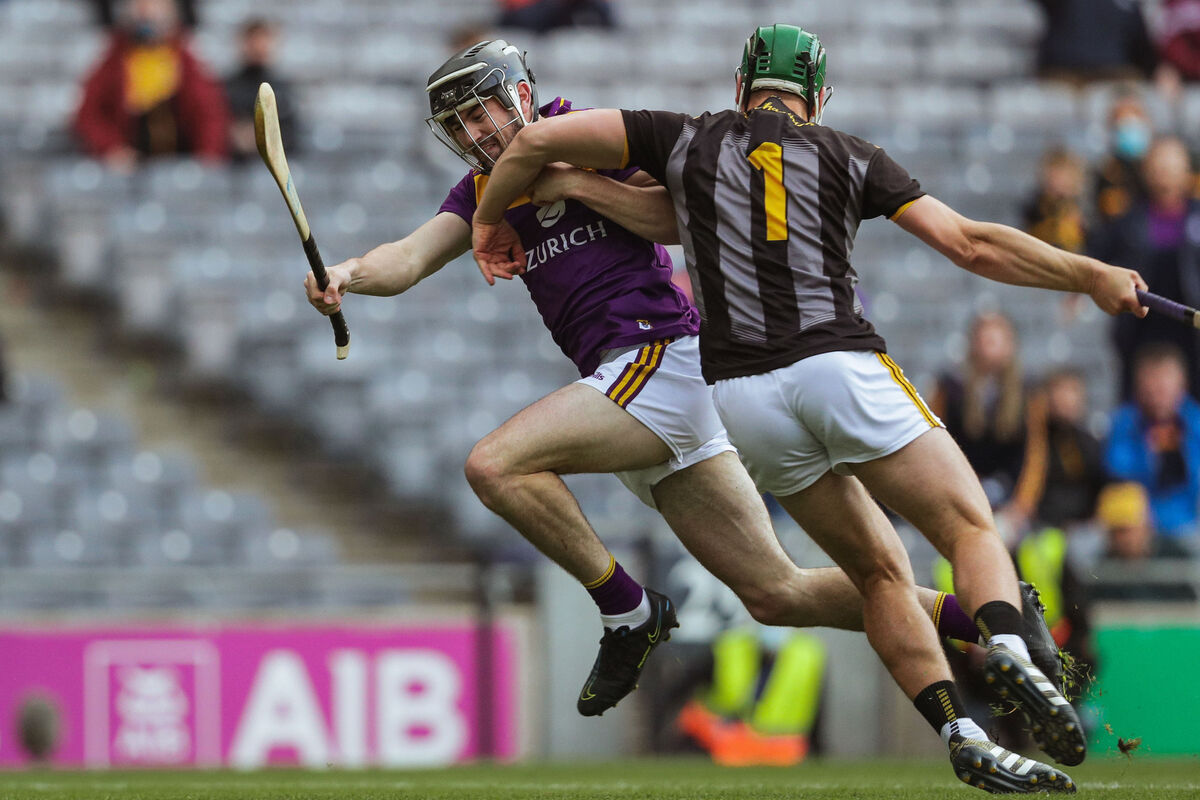
The penalty/sin bin is not going to go away, not when fouls like the one committed by Eoin Murphy in Saturday’s Leinster semi-final prove that there is a reason for it to be retained.
But on the basis of the Kilkenny goalkeeper’s instincts, it’s going to take time to bed in with players. Not that Murphy had much time to think about what to do but it might have been cheaper to foul Conall Flood differently or simply tackle him legitimately than being dismissed for 10 minutes on top of conceding the penalty.
As it turned out, Kilkenny more than managed in his absence but he rode his luck as he did with bringing down Liam Ryan’s long point attempt from behind the posts (on Twitter, he blessed HawkEye but Fergal Horgan’s umpire was so sharp in awarding it before Conor McDonald had put the rebound in the net).
On the other hand, had the sin bin not been in place Murphy would have done well to remain on the field given the professional and dangerous nature of the foul.
Had he escaped that sanction, a mere booking even if it was accompanied by a penalty would have been generally considered insufficient.
The sin bin was always going to have teething problems and Sunday’s episode in Limerick was the equivalent of an abscess but if hurling is so strenuously opposed to players being dismissed permanently from the field the sin bin is a compromise.
It is far from perfect in its wording — how can a foul be cynical and careless at the same time? — and the interpretation is far too wide as demonstrated by what happened to Aidan McCarthy. But it can be an asset to the game.
Attracting managers difficult in uncertain times

On the back of 22 and 16-point Leinster SFC quarter-final defeats to Division 2 teams, Pádraic Davis and Mike Quirke stepped down from their respective roles in Longford and Laois in the past couple of days.
Both counties will ply their trade in Division 3 next year, with Laois being demoted from Division 2. Quirke, in his statement yesterday, insisted he wanted to give the county board as much time as possible to find his successor. With Laois’s financial difficulties well known, that could be easier said than done, but the sentiment was appreciated by board officials.
It might be easier for Laois and Longford to nail down their managers for next season if they actually knew what the championship is going to look like. Being in Division 3, they have an opportunity to avoid the Tailteann Cup but, even if they don’t, doesn’t the secondary competition represent an opportunity to actually win summer silverware?
Neither are going to challenge Dublin for Leinster honours any time soon, so it might be in their favour to back the league-based championship proposal rather than a round-robin provincial competition where they could be subject to further heavy beatings.
After the opening two weekends of the provincial championship, in which 14 of the 29 2021 All-Ireland SFC games have been played, the average winning/losing margin is 12.2 points. In Ulster, where there will be most opposition to changing the provincial system, it’s running at an average of 12 points. That should drop, but the disparities are telling.
Email: john.fogarty@examiner.ie