Kieran Shannon: GAA must realise water breaks are actually good for Gaelic games
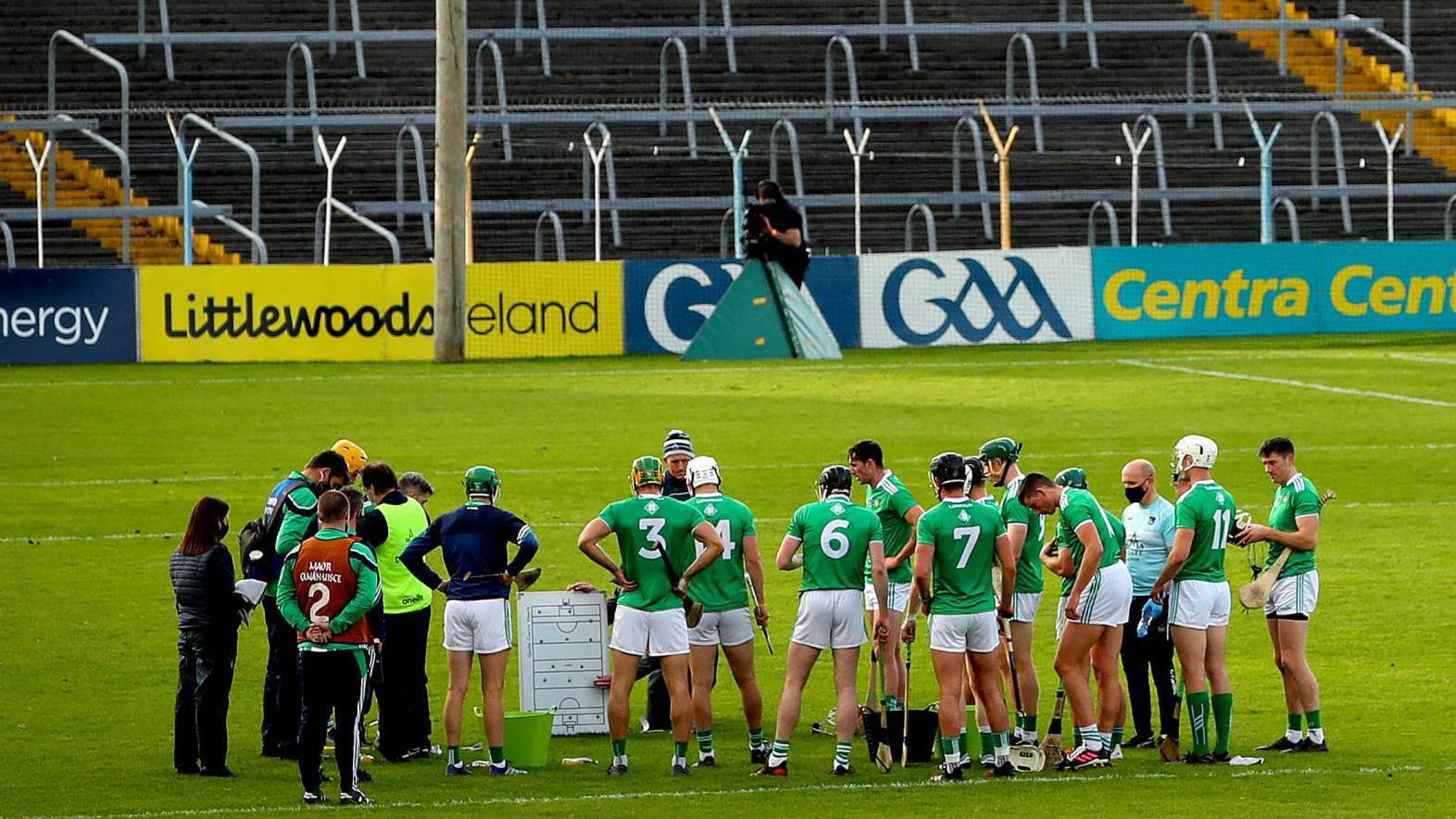
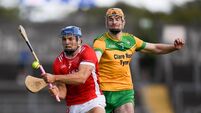
One newspaper columnist’s opposition to the development was based on the sight of Paul Kinnerk’s tactics board and how it was “as much a tactical break as anything” else like taking a swig of water. Picture: INPHO/Ryan Byrne
In spite of all the times we’ve heard the moans of a game being “lost on the line”, we’re hearing a fair share of people bemoaning anyone trying to coach on the line at all.
With the championship on our doorstep and the clubs back in action, some familiar heckles about the water break have returned as well.
Last week on an OTBAM show, one of the stable’s presenters Eoin Sheehan and its reporter Aisling O’Reilly shot the breeze about the latter’s first game of camogie this year and the joy of simply being back out on a field. There was only one downer: the game had been too close for comfort.
After dominating the first quarter, her side just about prevailed by two points, causing palpitations for the team management. “See these water breaks, I’m done with them!” O’Reilly remarked, somewhat in jest. After going scoreless in the first quarter, the opposition regrouped while her team’s “whole momentum dropped”.
“I think there’s something to be said about the water break,” she’d add. “It really works for the team not on top in that [earlier] moment.”
So, despite her initial remark and item being accompanied by the strap that she was “done with these water breaks”, O’Reilly, somewhat indirectly, advanced the case why the GAA shouldn’t be done with them, at least for now.
A game that was in danger of running away from the trailing side became highly competitive. So what if the team manager’s nerves were frayed if it got supporters nervous and excited as well. While the water break hadn’t been great for O’Reilly’s team, it had been for the match itself, surely the main consideration for the guardians of any sport.
It wasn’t by accident though that the programme’s editors ran with the line “I am done with these water breaks” and refrained from using any exclamation mark. It chimed with a prevailing sentiment and chorus from last year. Water breaks weren’t just interrupting our games but alien to them. Leading football players and managers, from Paul Murphy to James Horan and Mick Bohan expressed their reservations about the Covid-triggered intervention, with the Kerry stalwart failing to “see the benefits of the water break”, it supposedly being a bad thing that under-pressure teams be given “a reset and a chance”.
One newspaper columnist’s opposition to the development was based on the sight of Paul Kinnerk’s tactics board and how it was “as much a tactical break as anything” else like taking a swig of water. A similar mindset prompted the Clare club Ruan proposing at its annual convention that if indeed the water break was to be made permanent, it should be strictly only for refuelling purposes “and not used for tactical reasons”.
To which we can only ask: why not? What’s so bad about tactics and Kinnerk’s board and making some in-game adjustments to those tactics?
The dislike of the water break would seem to be in keeping with a yearning for a return to a simpler time, a time we can call The Pre-Tactical Era, because basically that’s what 20th century Gaelic football was before Armagh won the last Ulster title of that millennium.
In hurling too, outside of the odd Galway corner forward roaming out to midfield or David Forde floating between both forward lines in the 1997 All-Ireland final, Kilkenny were hardly alone in not doing tactics. The way you won games on the line was mostly by changing personnel or swapping positions, not altering how you were set up. But at various points more and more counties and managers copped that in the 21st century not only were tactics pivotal, but half-time or full-time were too late to tweak them.
Maor foirnes were the perfect conduit to make those adjustments, but because of a few hard cases the GAA decided last year to make a bad law and banish them.
On a recent Examiner Sport podcast, Anthony Daly’s cabal of fellow 90s hurlers who appreciate it’s now the 2020s outlined their concerns and disappointment with this development. Derek McGrath mentioned how the likes of Dan Shanahan and Diarmuid O’Sullivan brought a bit of theatre to the role and the sport. Mark Landers noted about how it’s going to be virtually impossible when crowds return for management to get in — and players to hear — messages on the opposite side of the pitch.
McGrath even foresaw members of medical teams being compromised by being asked to morph into de facto maor foirnes, relaying tactical messages while supposedly going to attend to a player that has possibly feigned injury. More childish and mind games, just for the right to play a tactical one.
It didn’t — doesn’t — have to be this way. Everyone could grow up a bit. Instead of banning maor foirnes, the GAA could simply tidy up when and where they could come onto the field and punish those who overstep those parameters, the way basketball penalises any coach who steps on the floor while the game is in play by awarding the opposition free throws.
Indeed, not for the first time, that sport is one GAA administrators could learn from, especially as so many GAA coaching set-ups might be better. While they’ll never acknowledge or possibly even realise it, GAA administrators and even a considerable share of our supporters tend to think of the tempo and nature of our sports as similar to the other traditional field sports in this country: soccer, rugby. In those sports, there are no quarters or members of the coaching staff entering the field. But they’re literally different sports.
Rugby is a highly stop-start sport where there are windows to relay tactical messages.
Soccer is a relatively low-scoring sport on a smaller playing area; it’s easier to make adjustments. But Gaelic Games are high-tempo, high-scoring sports more akin to a sport like basketball where a coach has continuous in-game access to players, be it through timeouts, quarters, or courtside instruction.
No one wants any player, GAA or otherwise, being joystick coached throughout a game; in this day and age, it’s all about empowering and producing players to be autonomous, to think on their feet, recognise what’s in front of them, be decision-makers, playmakers. But there’s nothing wrong with offering them some verbal reinforcement or reminders or tactical instructions.
John Kiely and Paul Kinnerk understand this. Their whole approach is not just player-centred but player-driven. But as Kiely pointed out when the GAA were moving to ban maor foirnes, “Why would you do away with a particular role which is an absolute vital role in managing the team on the day of games to help facilitate the best possible games we can?”
Managing and coaching teams is difficult and pressurised enough as it is. Managers and coaches are investing too much time and thought and energy into the sports without being able to make the kind of interventions they’d like and need to have when it matters most: in-game.
The water break offers them some opportunity to do that as well as allow their players and the rest of us a minute to catch our breath; indeed more and more sports, including soccer we predict, will go to quarters, for recovery as well as obvious commercial reasons.
But if after Covid the water break goes with it, then the maor foirne needs to return. There has to be at least one of the two, if not both. Because momentum swings are actually good things.
The games are better for them — and tactics boards.