Colin Sheridan: Yes, I want to see an All-Star full back night nurse his infant twins to sleep
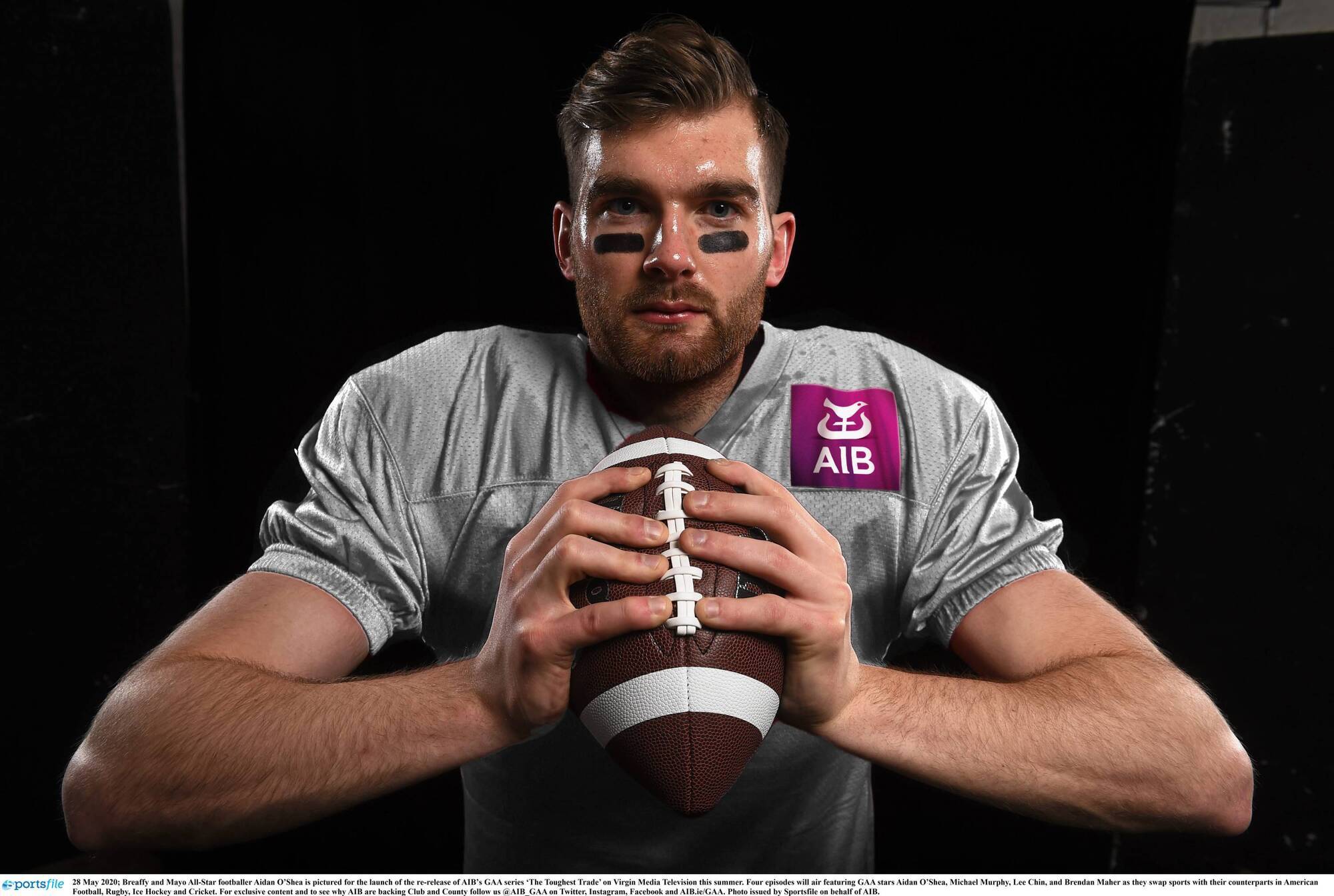
SWAPSHOP: Aidan O’Shea pictured for the GAA series ‘The Toughest Trade’, The show had its moments but fell on the kitchness of having retired stars from foreign fields come here to tell us how great we are.

What light through yonder window breaks? It is the east, and if the last six championships have taught us anything, Dublin is the sun.
The sun can be nice for a while; you get some colour on the face, save turf, eat al fresco, but too much sun is a killer. It leaves you dehydrated, tired, and haggard. Too much sun will make you want to never see the sun again. Too much sun will make you long for winter. It can also give you melanoma. Enough of that for now, the sun’s just rising. We will slap on the factor 50 and hope for the best.
This month’s return to Championship football is just another submission in an anthology of Covid landscape returns. Last winter’s knockout football was a panacea to a universally tough time, and while the movie ended the way everybody expected, there were, at least, poignant reminders of the transcendent power of the improbable, as practised by amateur sports people.
The unlikely emergence of Cavan and Tipperary gave oxygen to an asphyxiated competition, one who’s predictability has for some time been its achilles heel. Speaking of which, the news that Mayo’s Cillian O’Connor may be out for the season was a blow, not just to Mayo and O’Connor, but to the spectacle of the entire season.
The “news” element to this is interesting in the sense that Mayo’s press release detailing O’Connor’s injury was low on actual detail. The defence of protecting a player’s privacy seems a tad precious and a little counter-productive, if only that, by not saying it, it made it into more of a story. Admittedly, guarding the integrity of a player’s personal life should be paramount. An obsession with controlling the narrative is, however, something that is becoming increasingly pervasive in a sport whose primary appeal should be its accessibility to all (at clubs everywhere, players, devoid of discernible ability, can train and play with all-time greats).
The GAA, so good at so much, is missing a serious trick here. As other, professional sports seek to connect with their fan bases by providing (albeit contrived) windows into the soul of their teams, the GAA is headed in the opposite direction. The very thing that makes inter-county players relatable — they walk amongst us, they teach our kids, they police our streets — is the very thing teams and the organisation at large should be capitalising on during a period for the game when the final results have never been in less doubt.
How many more iterations of Hard Knock’s style, sports documentary series do we have to pay to watch before the GAA comes up with its own? Personally, I have no interest in watching Callum Best ‘train’ Moy Davitts, as he did during RTÉ’s almost 10 years ago. That’s as close as we’ve come to access and insight. I think Brian Dowling got a twist, too. Christ.
What I do have an interest in is what it’s like to marry a professional life in Dublin with an inter-county career in Donegal. I want to see an All-Star full back night nurse his infant twins to sleep as he watches reruns of last year’s All-Ireland final. I could watch curated footage of David Clifford practising frees for an hour, all scored by Mogwai. I want to eavesdrop on a county board chairman and the team nutritionist as they lean over a fence at the side of a field in Aughrim, ruminating over who’s moving well. Maybe I’m just weird.
Surely Dermot Bannon has found enough small spaces to put his tongue and groove. Nathan Carter has had more time on terrestrial TV than Con O’Callaghan. There’s something amiss here. There is no midweek GAA programme. The entirety of its highlights package is book-ended into a Sunday night show that meanders along like a Sergio Leone western.
RTÉ’s recent recruitment of additional female faces as pundits is admirable, but stinks of trying a little too hard to redress a historic imbalance. Almost one million people watched last year’s All- Ireland football final. Those numbers have been a lock for a long time, but, as Dublin’s dominance shows little sign of abating, for how much longer?
Last year’s Amazon documentary series , was so bad in parts, while also being exceptionally good. Footage of footballers sitting around eating lunch watching deadline day footage on Sky Sports news will never not be interesting to us. We don’t need to understand the high press. No trade secrets need to be revealed. Similarly, the Netflix production has done a considerable amount for the resurgence in popularity for Formula One racing, quite simply by giving it a human face.
Why the resistance from teams and the organisation to open its doors to audiences hungry for insight and connection? The closest they’ve come was installment a few years back, which had its moments (the best of which was always having Aidan O’Shea, Michael Murphy, or one of the sports actual stars on screen), but fell on the kitchness of having retired sports stars from foreign fields come over and drink pints and tell how great we all are for not getting paid for it. We’ve sung that song for long enough. It didn’t didn’t help that it was overly branded by a bank subsequently embroiled in a tracker mortgage scandal that legitimately ruined lives.
Are managers afraid of setting themselves up for a fall? Is the organisation afraid of ceding control to individual counties? Are players afraid of putting themselves in the shop window as commercial assets and, dare we whisper it, role models?
It’s 23 years since shot stopper turned auteur Pat Comer turned his camera on John O’Mahony’s Galway. It stands up, still, because the balance was perfect. Comer gave us a glimpse behind the curtain, showing a hint of the mastery and mystery, while focusing his lens on the poetry around the margins; the loneliness of the dropped player, the cherubic face of Declan Meehan, the talk in pubs before matches.
Is it that far-fetched to consider we wouldn’t tune in for eight weeks in a row to see a contemporary take on that? We watched , after all.