John Fogarty: The GAA can be trusted to play it safe with Covid responsibilities
File photo: INPHO/Laszlo Geczo
Reading the correspondence between the GAA and government departments over the last year, one truism jumps out: Croke Park has played it safe throughout the pandemic.
Waiting until the 11th hour for a government subvention instead of exercising available credit lines to run last year’s Championship may have appeared risky but the alternative was no Championship. Frugality was always going to win out.
Likewise, conservatism has coloured their entire return-to-play approach.
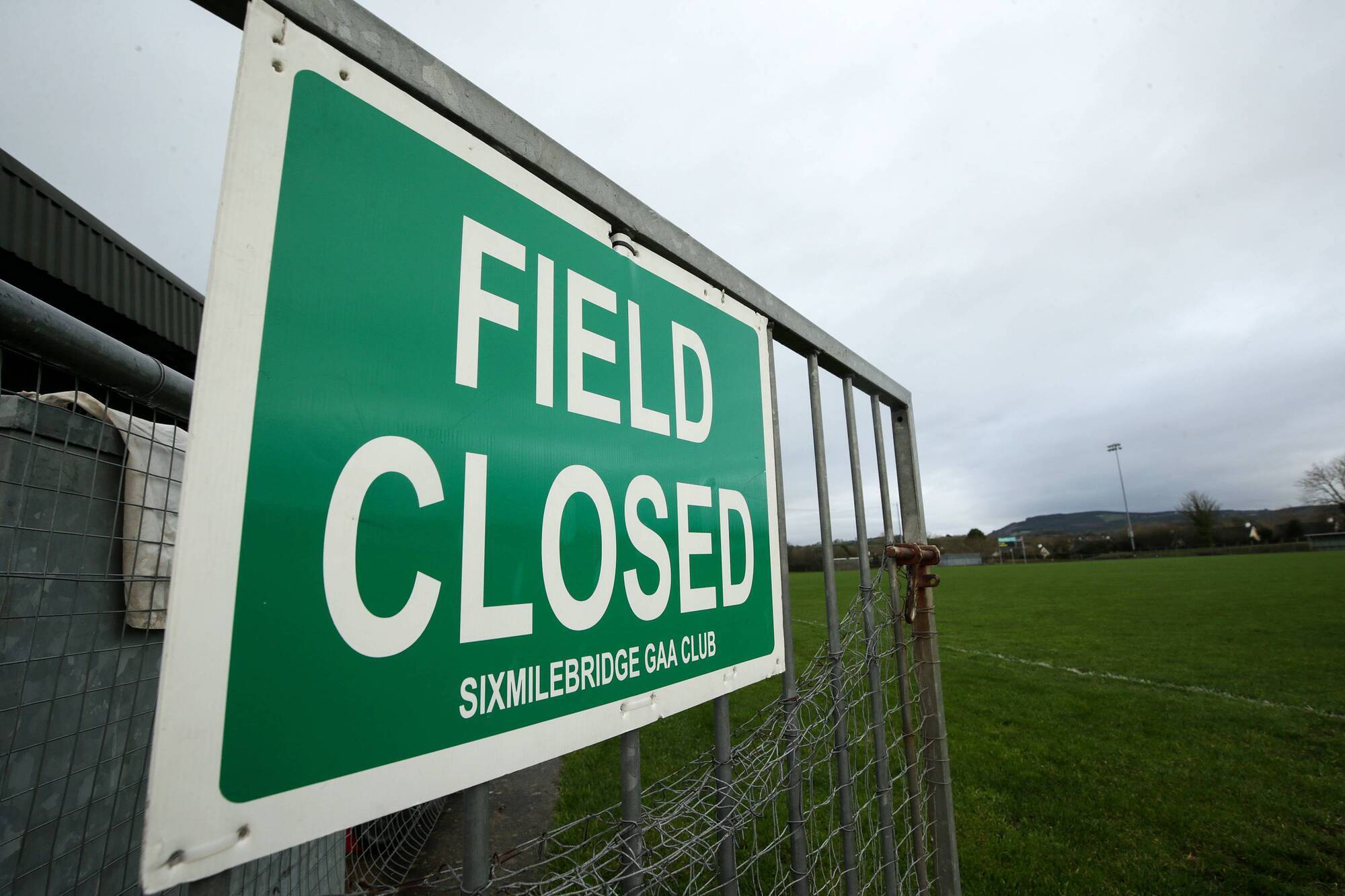
With the fields hopefully opening up again next month, the GAA’s cautiousness of last summer bears repeating.
When the Government told them they could open their pitches from June 8, they demured and waited until the end of the month. When they were informed they could organise games from June 29, they waited until July 17 so as to get their ducks in a row.
The latest tranche of documents released to the Irish Examiner following a Freedom of Information request reveals that the safe approach continued until the end of 2020. As the country moved to level 3 restrictions at the start of December, the GAA’s Higher Education Committee requested permission for some of their games be played.
“Comhairle Ardoideachais, the third level GAA governing body, would like to apply for permission to have a number of our championships classed as elite sport in order for them to be played in the event of Ireland remaining in level 3 restrictions or higher”, their letter read.
This petition was passed on by Croke Park to the Department of Tourism, Culture, Arts, Gaeltacht, Sport and Media but not without comment. GAA director of club, player, and games administration Feargal McGill wrote: “My own view is that it would be extremely difficult to justify it at a time when the Government Roadmap is trying to keep people off campus! But it would be interesting to get other views.”
Also in December, the department clarified to the GAA which non-playing panel members and coaching staff exactly could attend matches during level 3 restrictions, which came in at the start of that month. They were informed that apart from the starting players and substitutes, those “registered, or otherwise eligible, for selection to participate in the event, a member of staff of the relevant sporting body of an athlete or competitor participating in the event, a coach or a trainer connected to the event” would be able to be in the stadium.
They added: “In terms of interpretation, it will be for the respective sporting bodies to determine the eligibility of players for selection and those coaches/trainers connected to the event.”
Other than allowing all extended panel members to attend the All-Ireland finals, the GAA didn’t take the opportunity to permit more than 12 non-playing individuals per team to the matches. Mayo suspended three of their backroom team for three months after Croke Park alerted them to the fact that they gained access to the Dublin game without accreditation.
Those bans, just as those handed out to Cork and Down’s senior footballers and their managers Ronan McCarthy and Paddy Tally and the Dungarvan GAA club, were on the basis of breaching GAA rules.
A special committee was charged with investigating the Cork and Down training breaches in January, which unbeknownst to the GAA and the teams contravened level 5 restrictions but also went against advice from the department: “In correspondence to the GAA, Camogie Association and LGFA on 22 October, the department confirmed that teams eliminated from the championships would thereafter have to suspend their training activities.”
But the GAA had taken the matter into their own hands.
Likewise, when all club games were suspended following Blackrock-Glen Rovers’ Cork senior hurling final last October, the GAA’s management committee realised that they couldn’t continue to allow finals be reasons for social distancing and other Covid-related responsibilities to be ignored.
It was a downright shame several championships were not completed but in terms of showing leadership and for reputational purposes, it was the right thing to do.
The GAA don’t have to convince too many that they will do so again. We could throw the figures at you — the 12 million questionnaires filled out by GAA participants, the one Covid case relating to last year’s Cúl Camps which was attended by 71,000 children — but the authorities are already aware of them.
Eight months before she was appointed to the National Public Health Emergency Team, Professor Mary Horgan accepted the invitation by the Gaelic Athletic Medics Association chairman and Mayo team medic Dr Seán Moffatt to join the GAA’s Covid-19 advisory body.
That foresight served the GAA well in 2020 as it did this year when the Covid body were able to predict in early February GAA activity wouldn’t return until after Easter at the earliest.
The GAA can be trusted to play it safe.
Hurling’s sin bin is not that confusing

The clocks are forward, the grand stretch is most definitely real, and if you listen closely, you might hear ash contacting leather.
Maybe it’s a case of our hope hoping but the return of Dalo’s Irish Examiner hurling podcast does whet the appetite for the return of games.
Listening to it on Monday, the debate on the sin bin/penalty to be implemented in hurling on an experimental basis proved interesting.
TJ Ryan and Derek McGrath oppose the idea of it, believing there is too much room for interpretation when a goal-scoring opportunity is thwarted by a cynical foul inside the 20m line or in the semi-circle.
“Inside the 20m line, out towards the sideline, does that constitute a penalty?” asked ex-Limerick captain Ryan.
“I think that would be a major, major call late in a game if that’s called a cynical foul. I think this one is a recipe for disaster.”
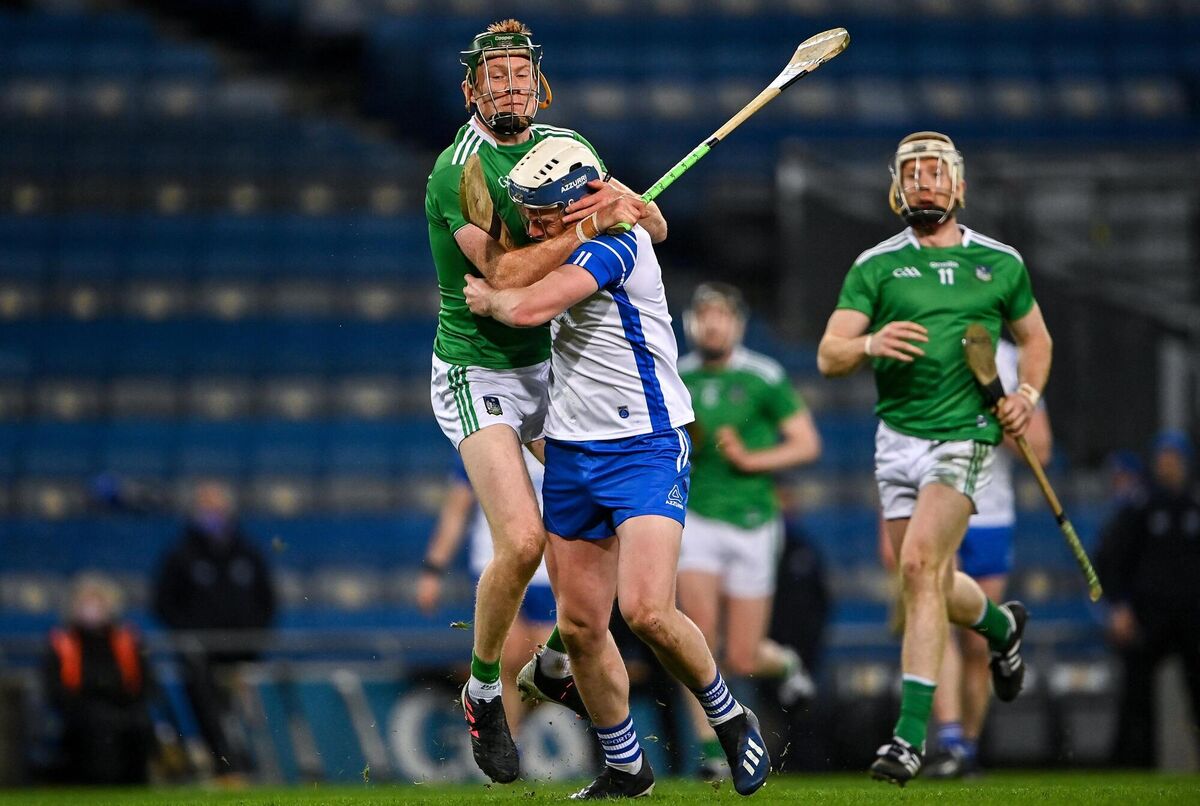
Using the example of Will O’Donoghue’s foul on Stephen Bennett in last year’s All-Ireland final, former Waterford manager McGrath remarked: “Is it a goal-scoring opportunity when there is possibly two other defenders in front of Stephen Bennett after O’Donoghue?”
We’ve mentioned before that the rule isn’t perfect but it most certainly is a start in tackling a genuine problem for hurling.
And here’s something worth considering: if a player is committing a cynical foul in the D or inside 20m (and it doesn’t have to be one of the prescribed infringements that would result in a penalty and a sin bin), the chances are he is not doing it to prevent a point.
15 frightening numbers

Easter Sunday marks six months since the last club games.
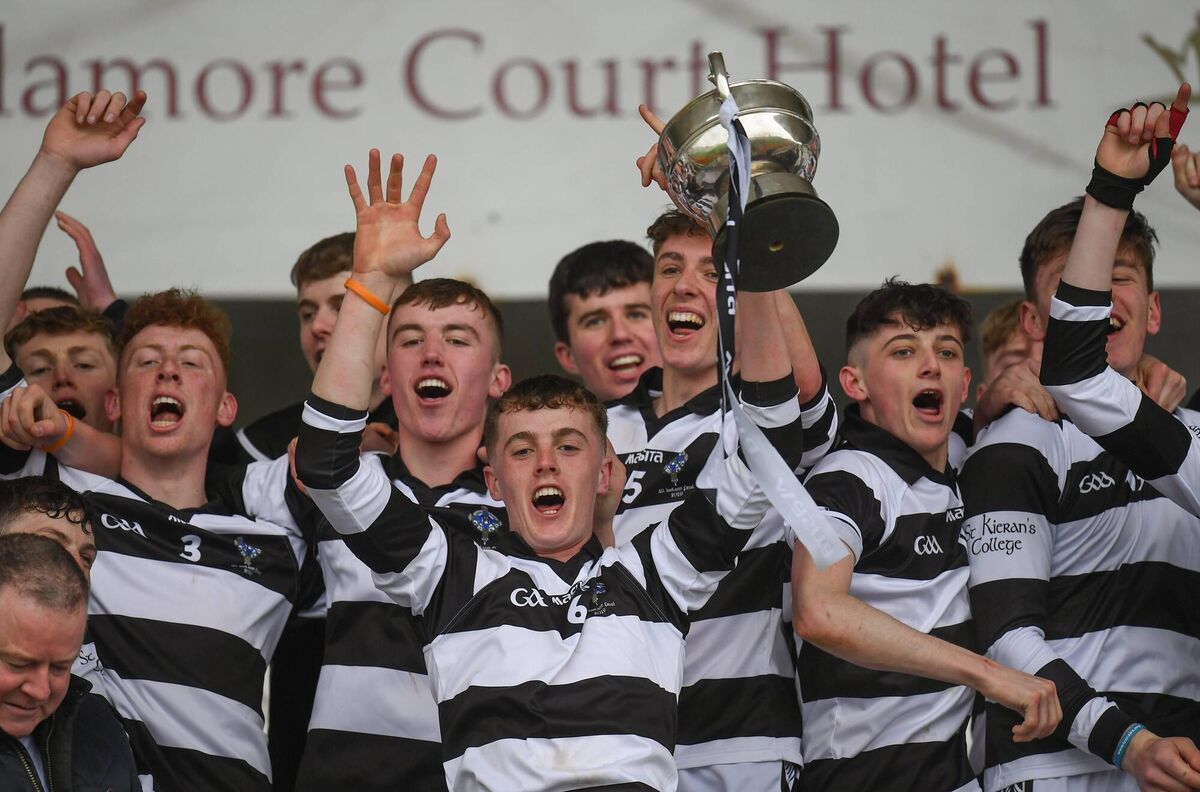
Tuesday is also two years to the day that St Kieran’s College won the last Dr Croke Cup final, a total of 732 days.
It’s a frightening gap but the GAA vacuum is extensive across the board:
724: The number of days since the last Hogan Cup final.
695: The number of days since New York last played a Championship game.
520: The number of days since the last Cork senior football final.
485: The number of days since the last provincial club senior hurling game.
478: The number of days since the last provincial club senior football game.
436: The number of days since the last All-Ireland club game.
426: The number of days since the last Sigerson Cup game.
412: The number of days since the last Fitzgibbon Cup game.
402: The number of days since the last Corn Uí Mhuirí game.
394: The number of days since the last Harty Cup game.
387: The number of days since the last National Hurling League game (excluding the Clare-Limerick Munster first round game, which doubled up as the final).
177: The number of days since the last club game.
157: The number of days since the last National Football League game.
101: The number of days since the All-Ireland senior football final. A day less for the All-Ireland ladies football final.
97: The number of days since the last inter-county underage game, the Cork-Tipperary U20 hurling final.
Email: john.fogarty@examiner.ie

Subscribe to access all of the Irish Examiner.
Try unlimited access from only €1.50 a week
Already a subscriber? Sign in