Colin Sheridan: GAA missionaries represent the ideals of the association
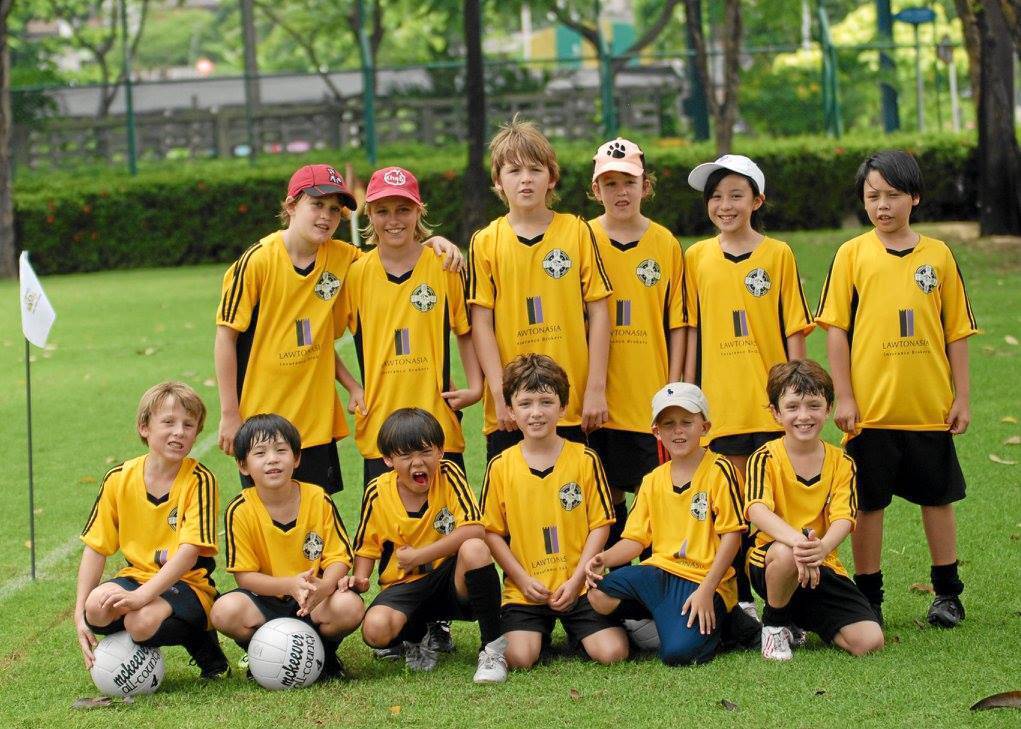
Young Gaelic footballers at Thailand GAA Picture via: thailandgaa.com
Buried deep in Don DeLillo's prescient opus Underworld, there is an obscure and forgettable reference to Van Cortlandt Park in the Bronx; ‘where the Irish play their games’. It’s a throwaway sentence in a book of wild magnificence, but there it sits for eternity as maybe the only tip of the cap in living literature to the GAA abroad.
Underworld was published in 1997 and spans decades, and though Van Cortlandt Park, and Gaelic Park and Canton in Boston and Ruislip in London are still very much where the Irish still play their games, the reach of the Irish diaspora has evolved since DeLillo wrote about life above the subways. A new GAA has emerged, in Hanoi and Helsinki and countless other cities across the globe. Gaelic games have gone global, and in doing so, have never been more connected to their origins; promoting community and culture.
Next week, in Kanchanaburi, a small town in West Thailand that sits on the River Kwai, over 60 players will meet to play a domestic tournament as part of the Thailand GAA club. Members of Patpong Plunketts and Sukhumvit Sarsfields — amongst others — will travel to play football, hurling and camogie, in what may be one of the few GAA tournaments happening anywhere around the world this spring.
Conor Melvin from Castlebar originally moved to Seoul in 2007, and was instrumental in setting up an underage program in the Korean capital. The initiative saw juvenile teams travel to Ireland to play at half-time in Connacht and All-Ireland semi-finals. Conor got stuck in Thailand at the beginning of Covid last March, and has been there since.
“The club have been incredible in helping me out. I’ve been without work or income for six months and they’ve really made me feel welcome and looked after me.”
Thailand, a country of almost 70 million people, recorded only 90 new Covid-19 cases on Saturday, March 20, and so is slowly coming back to life. “There is no lockdown here,” Melvin explains, “so we’ve been back playing GAA for a few months already.”
Back in Seoul, the vibrant GAA community Melvin left behind him has felt the pandemic-induced pain just as hard as any club back home. Two men at the centre of that community — Dubliner Neil Timmins and Leitrim man Kevin Conlon — have watched as both players and underage coaches as young Koreans have taken to Gaelic football.
“Up until Covid hit, we had made great strides with the underage teams here,” explains Timmins. “We had a group of about 20 Korean kids who loved the game, and putting structure on their training was allowing us to develop their skills. Societal pressure is such in Korea, that the focus on education is quite intense, especially amongst the middle class. Kids don’t get the opportunities they might elsewhere to play sports and enjoy themselves.
Gaelic football gives them that outlet. They love it, and their parents too.
Timmins and Conlon’s spreading of the GAA gospel does not stop in Seoul, however. With Timmins’s background in coaching kids and Conlon’s experiences in youth development, life skills coaching and mentorship, the pair saw a unique opportunity to use the spirit and ethos of Gaelic games to serve a much broader purpose, reaching into remote communities in the region, using GAA as a tool to provide youths with direction, teaching them not just how to pass off either hand, but more importantly learn life skills, teamwork and developing confidence.
Just before Covid struck, the pair hit for India with a bag of balls and a camera. Together with a team of coaches from Seoul, they travelled to Chennai and Kashmir, to pilot a youth development program, the goal of which was to use Gaelic football as a platform to develop fundamental life skills in youth communities.
“After I came back from the 2019 World Games, I felt there was a story to be told; that there was untapped potential within the GAA, to use it as a force for good in teaching kids all over the world,” explains Conlon who had been part of the GAA bubble both at home and abroad, having lived and played in New York.
“Living in Seoul now, it’s a completely different scene, both in terms of how the games are structured and played, and who the target audience is. The work our club, Seoul Gaels, has done has been phenomenal, not just for the Irish community, but for small numbers of youth of the city.
We wanted to take that model and bring it to new places, explore its potential.
That they did. The footage they shot of their time in India last year — particularly in Kashmir, when the team went to a small village on the edge of the Himalayas — perfectly captures their vision of the potential of Gaelic games as a conduit for development. The sight of O’Neill’s footballs zipping across the snowy plains of Kashmir, being chased by kids clearly loving it, is a thing of rare beauty.
This is not Gaelic Games being used as a gimmick or an attempt at commercial chicanery, but simply as a bridge to communicate and connect.
“We wanted to help young people,” Conlon continues, “but we needed organisations to see the potential in designing sustainable programs for youth development.”
As the GAA — the organisation, not the community — becomes increasingly obsessed with revenue streams and commercial reach, the work being done abroad by our young, immigrant cadre to serve not just the Irish community but the indigenous communities they live and work in, is perhaps the greatest representation of the ideals of the association.
A friend said to me recently: “Before, when I arrived in a new city, the first place I’d go was to a meeting, because the AA community would see that I had a place to stay and a job if I needed it, a purpose. Now, I find the GAA club.”
We should be proud and supportive of them. The places where the Irish play their games are a lot more than a forgotten line in a big-ass book.
Thanks to Timmins, Conlon and all the other sporting missionaries, it’s a universal state of mind.