John Fogarty: How can we tackle GAA’s out-of-control social media abusers?
John Fogarty: How can we tackle GAA’s out-of-control social media abusers?

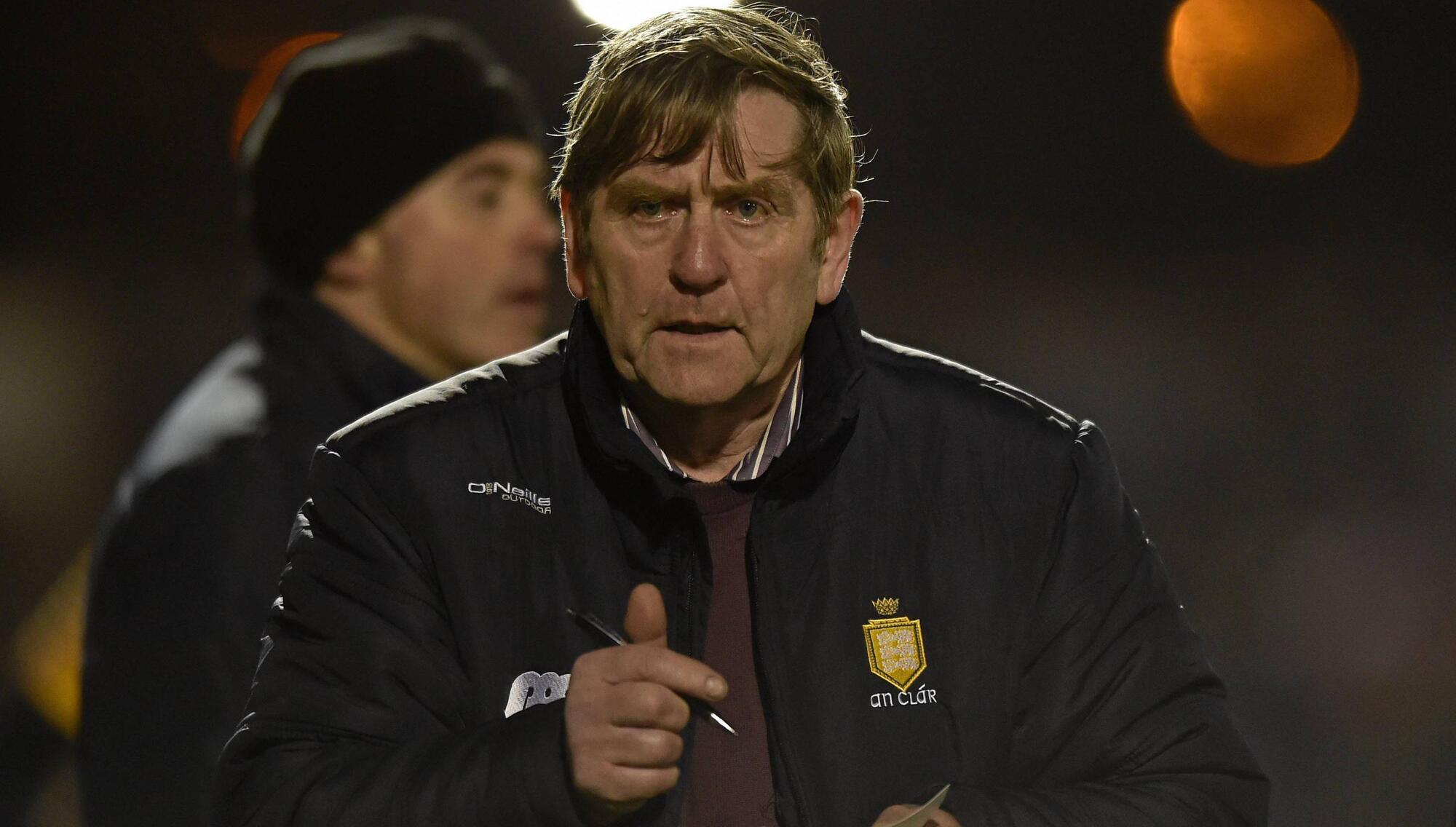
Recent coverage of affairs in Clare GAA has highlighted the online abuse aimed at Pat Fitzgerald is the subject of a Garda investigation. Picture: Diarmuid Greene / SPORTSFILE

Though they sing off the same hymnsheet on some issues, it was purely coincidental that John Horan and Larry McCarthy both addressed the ills of social media in their Congress addresses last Saturday week.

“Too much of what masquerades as commentary and analysis now is a fear and loathing mentality, driven at times by a social media gang mentality where people can feel brave because they are anonymous,” said Horan in his final speech in office.

“If you are one of those keyboard warriors who, in cowardly fashion hides behind nom de plumes and aliases, and castigates our officials, players or referees, stop,” demanded McCarthy.

“Your behaviour not only has a corrosive effect on civility, it has a long term corrosive effect on the GAA as it discourages people from volunteering as members of our Association.”

Inadvertently tandem, their message was powerful and comes in the wake of strong remarks from other prominent GAA officials like Munster secretary Kieran Leddy who in January hit out at the abuse meted out to Clare secretary Pat Fitzgerald on social media.

“The abuse is a cowardly act by the perpetrators,” Leddy wrote in his annual convention report.

“There is no doubt that, while social media has its positive points, the unfettered ability of people, often acting behind pseudonyms, to direct sustained and vile abuse at individuals and organisations, is undoubtedly a major downside.”

Seeing how Gordon Elliott was beaten down last week to the point that some claimed he had committed an atrocity only reinforced the theory that social media’s lack of regulation can no longer be tolerated.

If they are to continue wielding such power, they must be more responsible.

Now over 10 years on Twitter, I have primarily used it as a signpost towards this newspaper.

It remains a source but its reliability as one in this day and age when the first reaction is offence and second indignation has waned.

Mistakes are made far easier there — I have made several — and tolerance is in short supply.

You don’t expect everyone to agree with you but there’s a level of sanity any right-minded person would like to keep. I mute notifications from users who haven’t either confirmed their email address or phone number.

It’s a compliment to Twitter that such an option is available but really such filters should come as standard.

If you’re going to be as bold as to give your opinion, be bold enough to identify yourself sufficiently.

Last week’s Elliott episode also underlined the fact that there’s a lot of anger in this country right now, much of it projected as we cope with this lockdown.

Not that I could consider a list of people I have curated as an accurate cross-section of society but the outpouring of vile from some quarters was such that it said more about the authors than the subject. Elliott did wrong. Those who looked to destroy him didn’t do right.

There have been several righteous calls for children to be allowed back to their sports clubs and do something other than look at screens but the same could be said of adults.

As we splutter our way through this choking cabin fever, a lot of people have turned to social media as a refuge if only to vent and vilify.

That unhealthy form of escapism isn’t going to be exhausted any time soon.

Recent coverage of affairs in Clare GAA has highlighted the online abuse aimed at Pat Fitzgerald is the subject of a Garda investigation.

Perhaps that might be a watershed moment.

The Ian Wright case should have been the watershed moment, when the former Arsenal striker was subjected to racial insults on Instagram by a Kerry teenager.

The punishment was light. Even the latest development that the individual has been banned from playing certain video games by EA Sports seems a difficult one to enforce.

The GAA’s social media guidelines are quite clear: “A breach of any part of this Social Media Policy shall be regarded not only as a breach of the GAA Code of Conduct but, if carried out against an underage person, is also a breach of our Code of Best Practice in Youth Sport when working with underage players.

“If a member is found to have breached this Social Media Policy in any way, disciplinary action may be taken in line with the GAA’s Disciplinary Process.”

What isn’t so obvious is identifying the keyboard warriors McCarthy spoke about, who have lit the matches with fabricated stories about prominent GAA people on the likes of WhatsApp particularly over these last 12 months and watched in the hope the reputations of those people burned.

The tech giants have either lost control of the behemoths they have created or simply aren’t interested in being responsible media platforms.Doing little or nothing to keep such behaviour in check is anything but social.

Vaccination disparity may cause issues

At 8.41am last Thursday, we sent an email to the Department of Tourism, Arts, Gaeltacht, Sport, and Media with a query.

It read: “Bearing in mind it is likely Northern Ireland will move to the Assembly’s level 2 Covid restrictions before we move to level 4 and the challenges that will bring, in terms of sports and activities does the Department/Government have any contingency plans in place for such an eventuality? If so, would they include amending level 5 restrictions here?”

A reply asking when we required an answer to our question came three minutes later.

“Close of business today,” we responded, expecting an answer in the evening as the department has done so previously.

None, though, was forthcoming, an apology coming by way of a text at 10.08pm.

It was erroneously thought that we required an answer by Friday.

What was issued on Friday was a regurgitation of what was explained in ‘The Path Ahead’ the previous week about April 5.

The only hint of an acknowledgement of the potential disparity between the jurisdictions came in the final line: “There is also regular dialogue between officials in the Department and the Northern Ireland Department for Communities.”

The vagueness and tardiness of another message from Government is almost expected given their communications skills of late have had all the hallmarks of a flustered parakeet.

The NI Department for Communities maintains the lockdown will continue until April 1.

However, outdoor sports may yet come back before then — more than 40% of the North’s population have had their first jabs, in contrast to less than 10% in the Republic.

Failing to get the message across could be the least of the Government’s worries if regular life returns to the North well in advance of the remainder of the island.

When it comes to GAA, where there’s smoke, there’s Amazon fire

Mum’s the word from Amazon right now about the suggestion they might bid for GAA media rights next year. “We’ve got nothing to add to this story,” their press office told the Irish Examiner last month. “We don’t comment on rumours or speculation.”

That came in the wake of GAA stadium and commercial director Peter McKenna mentioning the company last month. “I would be very confident that we’ll have a very healthy discussion with the existing partners but there are newcomers coming into that frame too, like Amazon, for example.”

McKenna may have been setting the stage ahead of what he hopes will be a competitive bidding battle in 2022 but there are a number of indicators that point in the direction of an Amazon bid.

Firstly, consider Amazon’s plans to expand their workforce in Ireland, as well as develop an Amazon warehouse in Baldonnell in south-west Dublin, and the expectation that will coincide with the launch of amazon.ie. Capturing GAA rights from 2023 may be considered a synergical move to drive PrimeVideo subscriptions.

New markets are also appealing to the company’s sports sector. “We always start with the country or the territory,” said Amazon’s vice president of global sports video Marie Donoghue in December. “We figure out what are the most attractive sports offerings for those audiences? Where is there an opportunity?

“Sports are largely inherently local. No matter how much we talk about the global appeal of sports, which they have, ultimately the most passion is often local.”

It’s not only her name that suggests an understanding of Irish sensibilities.

Email: john.fogarty@examiner.ie

x

More in this section

Sport

Newsletter

Latest news from the world of sport, along with the best in opinion from our outstanding team of sports writers. and reporters

Cookie Policy Privacy Policy Brand Safety FAQ Help Contact Us Terms and Conditions

© Examiner Echo Group Limited