John Fogarty: GAA too big to be the sport that starts first
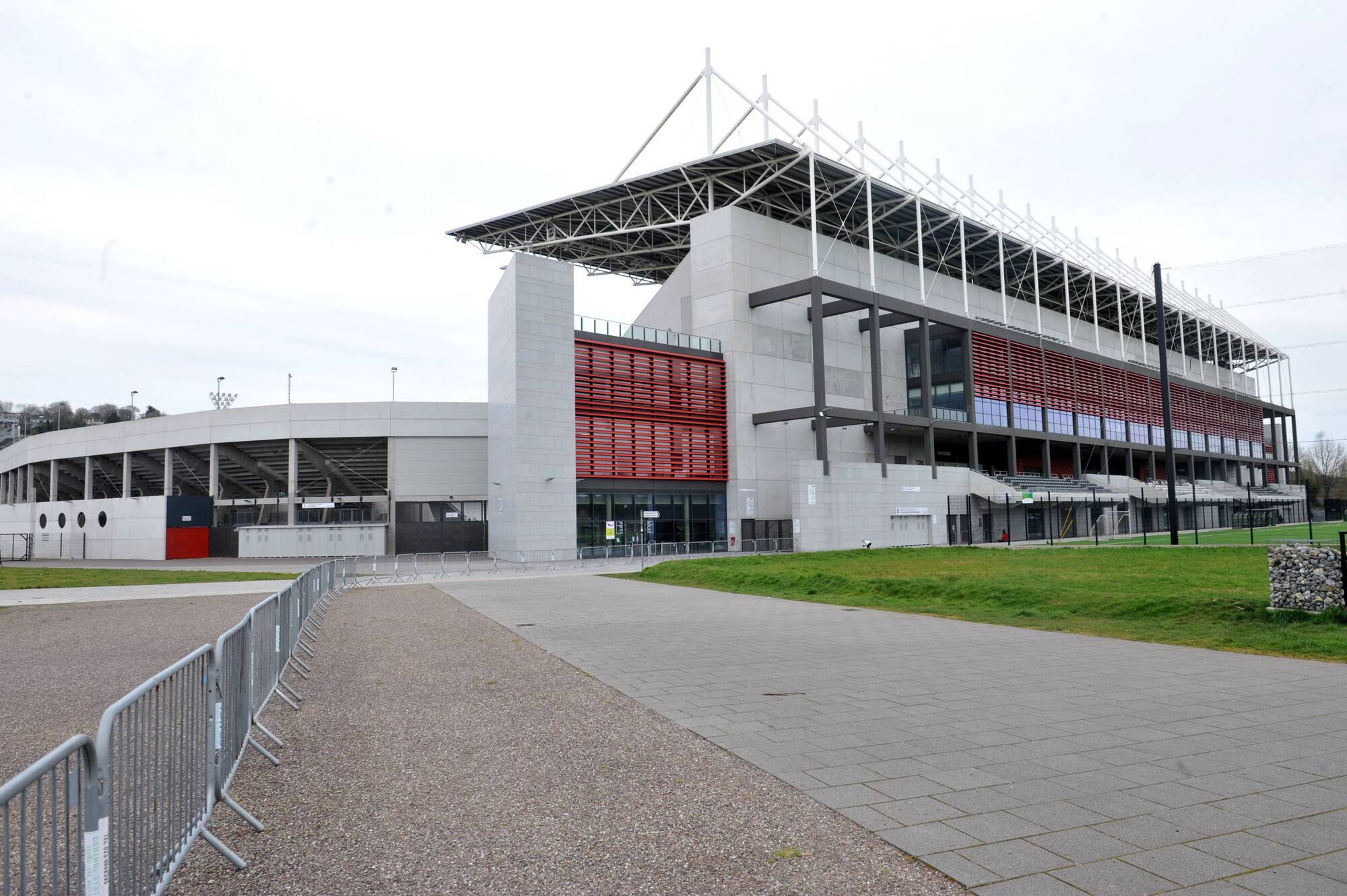
Pairc Uí Chaoimh will be one of five vaccination centres used in Cork, it was confirmed yesterday. Mallow GAA will also be a vaccination centre. Picture: Larry Cummins

Boy, has this pandemic made a fool out of us all. So much so that it was difficult to make out who was the biggest one last week when it was revealed inter-county GAA’s exemption as a level 5 sport had elapsed.
Clearly, nobody told the GAA. Oblivious to that fact, they formulated a master fixtures programme for 2021. So concerned were they themselves with the Covid case numbers last month that, not for the first month, they chose to hold their horses and postpone the return of inter-county training.
As it later turned out, they needn’t have. It was reminiscent of how an inter-county hurler in Leinster told his manager a few years back that he was taking a year out to which the manager replied, “That’s good to hear. You saved me a phone call.”
As Croke Park officials’ ears fill with the ire of inter-county managers arguing they didn’t put up a fight against the Government (but then how could they put up their dukes when they have a cap in each hand?), the Government were making bigger eejits of themselves. If it wasn’t their inability to legislate for Sunday’s Six Nations game in Dublin to take place, it was their attempt to cod the GAA that their exemption elapsed in December.
Minister for State Jack Chambers said: “When the GAA Championship was run off, that was done in the context of level 5 and there was a concession outside of Level 5 framework approved by the Government. Once the Championship finished in December, as you know there were no fixtures scheduled at that point.”
Funny that. The obvious problem with Chambers’ point is already mentioned — the GAA weren’t aware of their agreement concluding in December. In fact, on December 18 an amendment was made to allow for U20, minor as well as U16 in Ladies Gaelic football and camogie. Undoubtedly, the dramatic rise in Covid-19 cases towards the end of December prompted a change in policy but the GAA were acute to that so why the need for the Government to double down?
The Department of Tourism, Culture, Arts, Gaeltacht, Sports and Media maintain that the GAA, Camogie Association, and Ladies Gaelic Football Association were informed on October 22 that “the Government’s decision to permit the inter-county championships to proceed in the level 5 restrictions was a concession outside of the framework approved by Government”. But then what about the 28 Allianz Football League games that were played in the latter half of October?
The Government’s decision to give the League of Ireland the go ahead next month is the fly in the ointment. It wasn’t as if Chambers could go back on his word having given the FAI assurances the previous week but his argument for a competition that is not wholly professional and can hardly bubble were laughable.
“[The] League of Ireland is a professional league. That is the distinction,” said Minister for State of Sport Jack Chambers. The department later added: “The FAI confirmed to the Minister that the association and the League of Ireland clubs will continue to comply with all relevant public health regulations and advice.”
If that was good enough for Chambers then the GAA’s impressive running of the last two rounds of last year’s football league and the Championship should have counted for something.
When the return of any sport should be embraced, pitting the GAA against the League of Ireland was a disappointing side-effect of the Government’s fumbling on this issue. “I think it’s kind of hilarious to call League of Ireland elite and the Dubs not elite,” said Clare manager Colm Collins last week. Speaking to other inter-county managers off the record, their opinion was the same, only more colourful.
Had Chambers simply said the GAA was too big to return next month, that there were too many teams, his argument would have been more credible. Twenty League of Ireland teams doesn’t compare to the 106 senior panels competing in the three Gaelic organisations’ inter-county competitions.
The difference between the sports is as evident in those watching as those participating. According to the Irish Independent last month, almost 4,700 people subscribed to a League of Ireland season pass at €55 for Irish customers and €69 for overseas last year. Close to 11,000 paid on a match-by-match basis. According to sources, €300,000 is a generous estimate of revenue generated from the initiative. The Galway County Board alone made that from streaming their club games in 2020.
What the League of Ireland’s season start next month could be is a soft launch for the return of multi-team competitions in Ireland, possibly paving the way for the Allianz Leagues to return in April. As they share information as members of the Return to Sport expert group, the GAA will certainly be interested in the feedback from the FAI. As a peer, only that bit bigger.
Who will be the 1,500th All Star?
By our calculations, the 1,500th PwC All Star will be announced this Saturday evening when the 2020 hurling team is revealed. That honour will fall to the forward chosen in the sixth and final slot in attack.
We are careful not to say left-corner-forward, because the award is no longer position or line-specific. It wasn’t when Paul Galvin became the 1000th All Star, winning his first of three awards, having been selected at right half-forward. Back then, the selections were line-specific, so Galvin was one of nine contending for the three spots across the forward line — they had been position-specific up to the mid-1990s.
In 2015, the judging rules were changed to select 18 nominees in both defence and attack so as to reflect the fluidity of both football and hurling while also trying to ensure the best-performing players picked up awards.
In the last couple of years, the All Stars steering committee decided to allow players nominated in one area of the field to be eligible for an All Star in another. This was done to get the most accurate list of nominations right and to mirror the game — for years James McCarthy could be picked in defence or midfield, and last year Cian Lynch was a viable candidate in midfield and attack.
The byproduct of this has been to create more suspense. Looking at the list of hurling nominations, there are four possible winners nominated in midfield — Jamie Barron, Lynch, Tony Kelly, and William O’Donoghue. As a Hurler of the Year nominee, Kelly is all but a cert for an award, but could it be him who becomes the 1,500th man in the 50th staging and 50th year of the award?
Mergers a double-edged sword for rural clubs
Stevie O’Donnell’s work on Tipperary Mid West Radio provides some fascinating insights into local GAA life, and his recent interview with Emly’s Seamus Walsh, who guided the club to the 2001 junior football county title, on the subject of amalgamations is thought-provoking.
“I’ll say it straight out — I think the GAA have a bit of an act to get right here about the situation in clubs,” he told O’Donnell.
“You see all these amalgamations going on and they’re in and out, up and down, and the amalgamations need to be organised better geographically.
“We have a great relationship with Seán Treacys (Emly’s sister hurling club); we’re going 50 minutes to drive from here to Kilcommon. But we’ve learned hugely from Seán Treacys — they’re a hurling area, they bring us on there. But geographically it’s difficult to get it done. We won’t meet them as often.”
To survive, this is the extent of what is being done by clubs and it’s a similar picture in Kerry where, for several years, many clubs have had to cast the net wide to field underage teams.
Walsh’s point is well made and can be expanded — if geography militates against your clubs doing anything else other than training and playing, when does it stop feeling like a club?
That is the double-edged sword that faces plenty of clubs this year. Already Valentia Young Islanders are in search of a senior team to combine forces.
But distance really is the lesser of the two evils.
- Email: john.fogarty@examiner.ie