Colin Sheridan: Ask any accomplished kicker - there's something sacred about free-taking
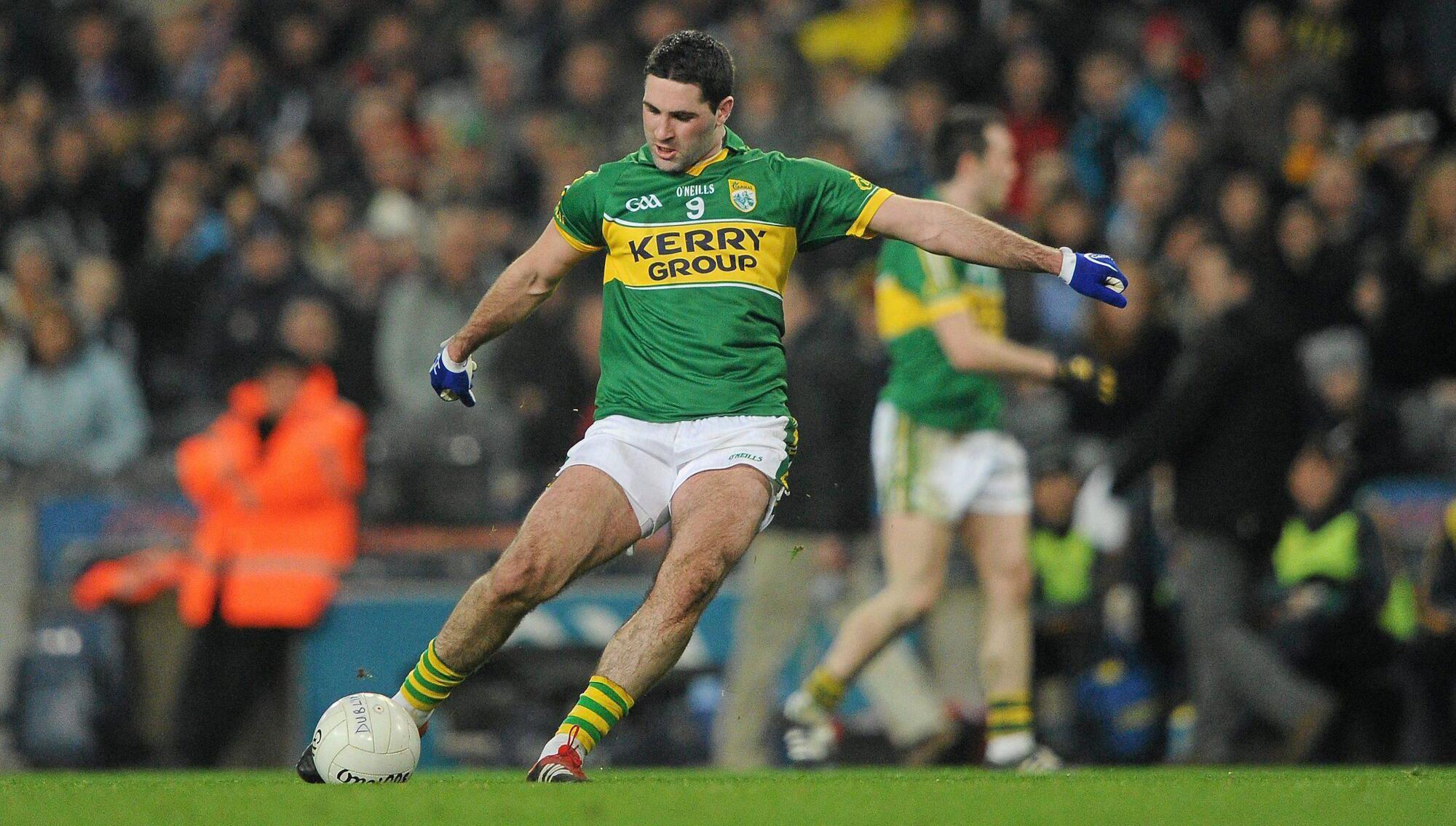
Bryan Sheehan kicks a free during the 2012 Allianz League clash with Dublin. 'One day, there will be a book written about what the Kerry man saw when he stood over a free, 60 yards out from goal,' writes Colin Sheridan. Picture: Stephen McCarthy

LONELINESS, sang Bryan Ferry, is a crowded room. In team sport, there are few lonelier than that of the kicker, no matter how many occupy the stands. When everything is reactionary and spontaneous, the bespoke role of a place-kicker remains an outlier. From the NFL to Junior B. Everything about the kicker’s process is control. Art, maybe, but control. The kicker will often find the fate of his team thrust upon him. His coach will always publicly back him and say the result of a game is never down to one kick. He’ll say it, but nobody believes it.
Speaking once about the beautiful burden, legendary Australian out-half Michael Lynagh said: “When you’ve got the goal-kicking, you are running and tackling one minute and lining-up a kick the next. What you have to do is bring yourself down to a lower level of arousal, because it is a fine-tuned skill. That’s not easy to do. It’s like asking Greg Norman to run 400 metres and then sink a 10ft putt.”
What state of arousal JJ Hanrahan was in on Saturday night in Thomond Park, only he knows, but his performance was proof that the role of the place-kicker is one not to be underestimated, ever. His side leading 10-3 against Leinster, he had an opportunity — albeit from distance — to extend the advantage, right on half-time. Momentum is an overused cliche in rugby, but like most cliches, it’s true. Hanrahan’s kick struck the post. Minutes later, Johnny Sexton kicked a goal from a not dissimilar distance. There was no crowd in Thomond Park, but the ground groaned nonetheless.
If Hanrahan’s long-distance miss was forgivable, his next was not. Seven minutes after the restart, his side up 10-6, in a game that was inevitably going to be decided by a solitary score, Munster won a penalty in the Leinster 22, to the right of the posts. Hanrahan, who to that point had played well, running and tackling one minute, was lining up his penalty kick the next. He missed. He then disappeared from the game, first figuratively, then literally, replaced six minutes later.
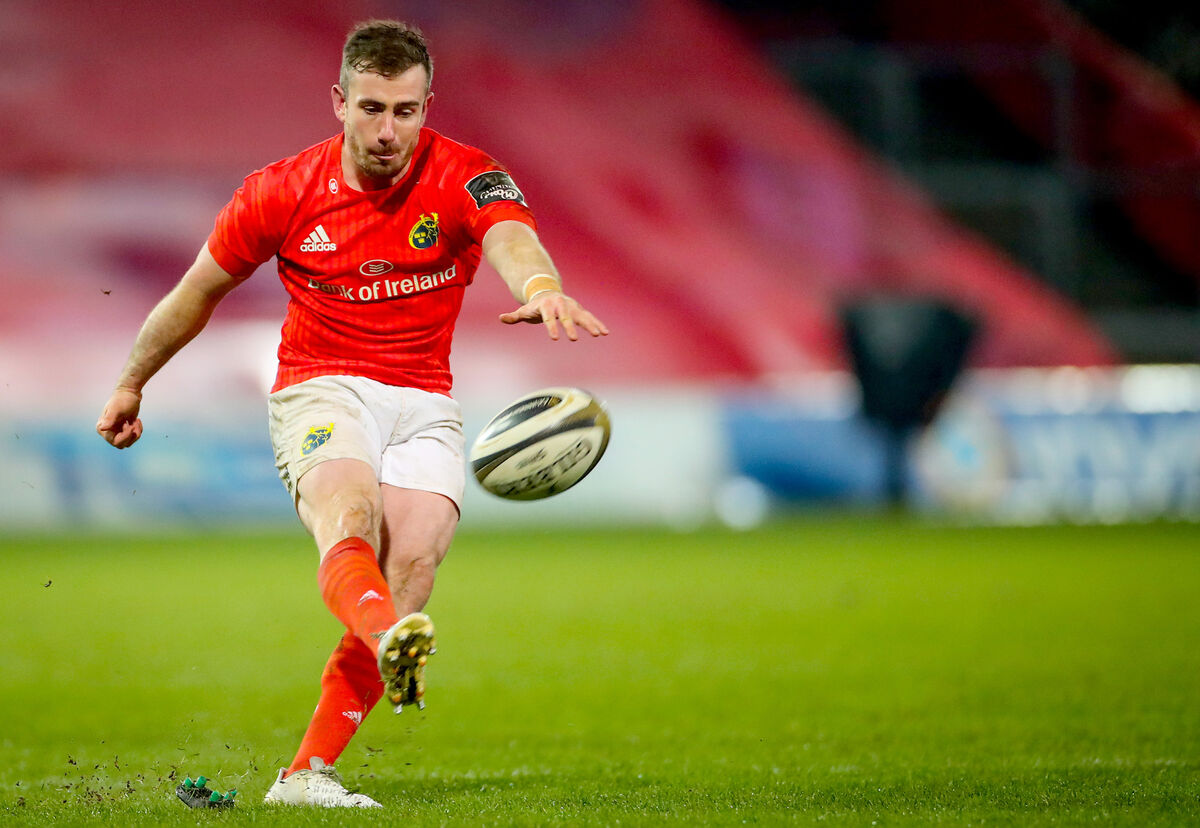
It’s a lonely place, one with every free-taker can empathise. Managers and players may know the worth of having a reliable place-kicker, but their value to the general public will never go beyond that of being taken for granted.
During the polite discourse that followed this column’s defence of Mayo’s Cillian O’Connor’s case for Footballer of the Year last week, it was pointed out ad nauseum that so much of his scoring was done ‘from frees’, and not ‘from play’.
Those two words — from play — are the bane of every free-taker’s life. It’s like having an older sibling who is perennially more beloved. Scored 0-9 in an All-Ireland final? Yeah, but how many from play? We should create a Latin equivalent; de fabula.
If anything, O’Connor’s case is enhanced by the additional responsibility he so easily carries being his team’s kicker. He doesn’t do it to pad his numbers. This isn’t astro on a Tuesday night.
Dean Rock has been arguably more valuable to this Dublin team than any other player, especially in big games. Ask any of his teammates who they would want hitting a free to win an All-Ireland, they’d tell you it’s him. His contribution de fabula has always been significant, but his ability from dead balls has cemented his worth to the most successful team in the game’s history.
There is nothing boring or routine about what he, O’Connor, Sean O’Shea, or Michael Murphy do. It is borne out a dedication to a craft, the fabled 10,000 hours (minimum) from childhood, to go from explicit to implicit skill.
One day, there will be a book written about what Bryan Sheehan saw when he stood over a free, 60 yards out from goal. The book will likely be of the coffee table variety; the Monocle Guide to Free Taking, with a foreword from Jimmy Keaveney. It should detail the thought process Colin Corkery had as he deliberated whether to draw or fade a kick, not to mention with which foot to hit it.
Ask any accomplished kicker and they will tell you there is something sacred about free-taking, something celestial. Something organic, of the dirt. The joyous repetition of patient practice, of boot on ball, as a flow is discovered. Developing the ability to see the shape of kick required, and convert it into a zen-like automotive groove, free of internal distractions.
Which makes it all the sadder that place-kicking is something the GAA has chosen to pretty much abandon. It is as if they had one piece of high-art to save from the fire, and they chose high-fielding, the introduction of the mark being the preservation order. A slap in the face to many of its past and present practitioners, and a trick missed when the game needs innovative ways to reward dying skills. The untrained eye may never realise the precision and skill required to kick a free-kick front-on, to fade it, to draw it, all depending on wind, nap of the grass, mood and preference.
And all of it executed after taking and giving hits, blocking, tackling, shutting out the sledging from opponents. NFL kickers live a charmed existence by comparison; with their little practice nets, every kick straight in front. It’d be some craic to ask Tom Brady to hit the kicks as well as throw touchdown passes.
For TV commentators it can be broken down into two categories: that fella should hit from that side, and the other fella from the other. There is no nuance to this analysis. It is truly a shame. People will always remember Maurice Fitz as one of the great kickers. I doubt you will ever read an obituary that begins “He was one of the great hand-passers of the game…”
Coaches, too, seem to be following the rule-makers’ lead and concentrating their minds elsewhere. Athleticism is too often valued over bespoke skill. And while that serves a broader purpose, it won’t dig you out of a hole in a qualifier in Newry on a damp June evening. Wait and see.