Eimear Ryan: Female pioneers crafted their own 2020 sporting narratives
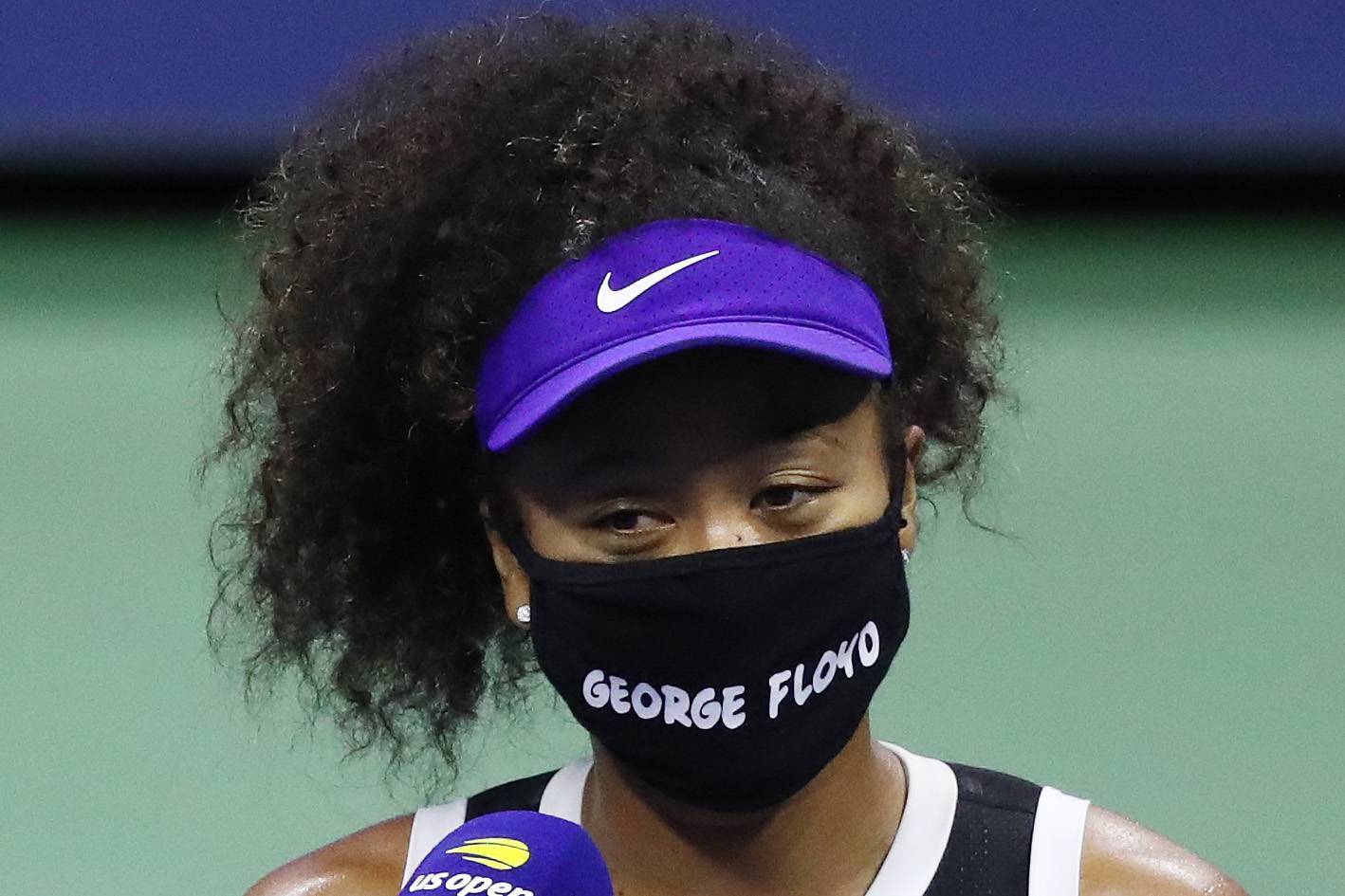
In a year when Naomi Osaka became the highest paid sportswoman in the world, she will be better remembered for the awareness she generated for Black Lives Matter by wearing seven different masks bearing the names of seven black victims of police brutality throughout her victorious US Open campaign. Photo by Matthew Stockman/Getty Images
Then we came to the end. While the damp squib that was 2020 created challenges and setbacks for sport across the spectrum, it felt especially unfortunate in the case of women’s team sports, which have been making significant ground in recent years.
The excellent 20x20 campaign, which began two years ago with the aim of increasing participation in and visibility of women’s sports by 20% by the end of 2020, had its data skewed more than a little by the tumbleweeds drifting across stadiums for the better part of the season.
Women’s team sports have been enjoying such a sharp increase in attendances in recent years that it felt cruel to have that progress stopped in its tracks. If you can cast your mind back to the dim and distant past: in November 2019, a record crowd of 77,768 convened at Wembley to watch the England women’s soccer team lose 2-1 to Germany.
On March 8, just before lockdown, a crowd of 86,174 turned out in Melbourne to watch Australia beat India in the women’s cricket T20 World Cup final.
Indeed, it felt strange to watch the All-Ireland ladies football final earlier this month without the traditional attendance announcement at half-time, Dáithí cheerfully letting us all know that the record has been smashed yet again (2019’s tally was 56,114).
However, sportswomen around the world made waves in other ways this year. In June, the National Women’s Soccer League in the US became the first team sport to ‘go first’ in the pandemic. They organised a month-long tournament called the Challenge Cup to replace their usual league format, returning to play two weeks before the MLS and a full month before the NBA began its Disney World bubble. The women’s soccer league was rewarded for its innovation, breaking its viewership records by nearly 300%. There are benefits to going first.
Closer to home, there was a suggestion by Adrian O’Sullivan and David Reidy of the Women’s Hurling Podcast (essential listening) that the Camogie Association should seize the opportunity to run off the All-Ireland championship in July and August, allowing camogie to for once take centre stage. If the GAA was going to go club first, then county, why shouldn’t camogie go county first, then club? As O’Sullivan and Reidy wrote: "All those column inches to be filled, all that air time. The Gaelic games public starved of live games! Two hours every Sunday evening on The Sunday Game."
However, it wasn’t to be, and this intriguing idea was added to the pile of 2020 what-ifs. Still, the All-Ireland camogie final drew a quarter of a million viewers, so it’s good to know the women’s code is still finding an audience, even in a year such as this.
Across all sports, the multiplicity of platforms is serving women’s sport well. Resources are no longer as finite. If women’s sport isn’t getting its fair share of column inches or terrestrial TV schedules, there is always online content and streaming. Increasingly, the challenge for women’s sport will be in finding the balance between maximising revenue and reaching the broadest audience possible. Eyeballs are essential, but money talks.
Elsewhere, female pioneers crafted their own 2020 narratives. In a year when Naomi Osaka became the highest paid sportswoman in the world, she will be better remembered for the awareness she generated for Black Lives Matter by wearing seven different masks bearing the names of seven black victims of police brutality throughout her victorious US Open campaign.
In November, Kim Ng became general manager at the Miami Marlins, becoming the first ever female GM in baseball and the first ever Asian-American GM, neatly mirroring Kamala Harris’s similar ceiling-smashing in her election as vice president. And earlier this month, Frenchwoman Stéphanie Frappart became the first woman to referee a Champions League match when she officiated at Juventus v Dynamo Kyiv.
One of my favourite sports stories of the year was that of Sarah Fuller, a 21-year-old soccer goalie at Vanderbilt University in Nashville, Tennessee. Her month-long American football career, well documented on social media, is the stuff of inspirational sports movies.
In November, Fuller had just helped her college women’s soccer team to a Southeastern Conference title. She was probably planning to have a nice quiet Thanksgiving and hang the boots up for the winter. But the Vanderbilt Commodores, the college’s American football team, had its roster ravaged by injury and Covid-19 and found itself without a kicker. Fuller got the call-up, becoming the first woman to play for a Power Five team, the top tier of college football.
It wouldn’t be a celebration without @SarahFuller_27 👏
— National Women’s Soccer League (@NWSL) December 29, 2020
We celebrate you for setting the standard for years to come 🏈 pic.twitter.com/rijzFPo6Xm
In two games, she kicked off for the Commodores and converted two extra points. Watching the clips online, what impressed me most about Fuller was her poise and self-awareness. She seemed to be fully cognisant of the symbolic impact of her taking the field with the guys, even having the words Play Like a Girl emblazoned on her helmet. And her coolness in perfectly executing those PATs, knowing the gendered jeering that would come her way if she fluffed it, was incredibly impressive.
Predictably, she got trolled on social media anyway. But a heartwarming antidote to this was the reaction of her male teammates, who just treated her as one of the bros, backslapping her when she kicked her conversions.
As the recent GPA-WGPA merger demonstrates, the problem of misogyny in sport hardly ever lies with male players. Generally, game recognises game, and male players respect the commitment and skill of their female counterparts. Misogyny generally comes from men who have never played, lifelong spectators who watch sports as a way of enacting some vicarious fantasy of masculinity, and are angry and threatened when a woman puts her hand up to say: I can play too. If there isn’t a Netflix Original about Fuller in 2021, I’ll eat my helmet.