Éamonn Fitzmaurice: Watching Dublin make history from empty Hill 16 was an education
There were signs of wear and tear in Dublin's performance. Mikey Sheehy reckoned the great Kerry side won an All-Ireland or two with sheer knowhow and experience. I feel Dublin are in a similar position now.
Éamonn Fitzmaurice: Watching Dublin make history from empty Hill 16 was an education

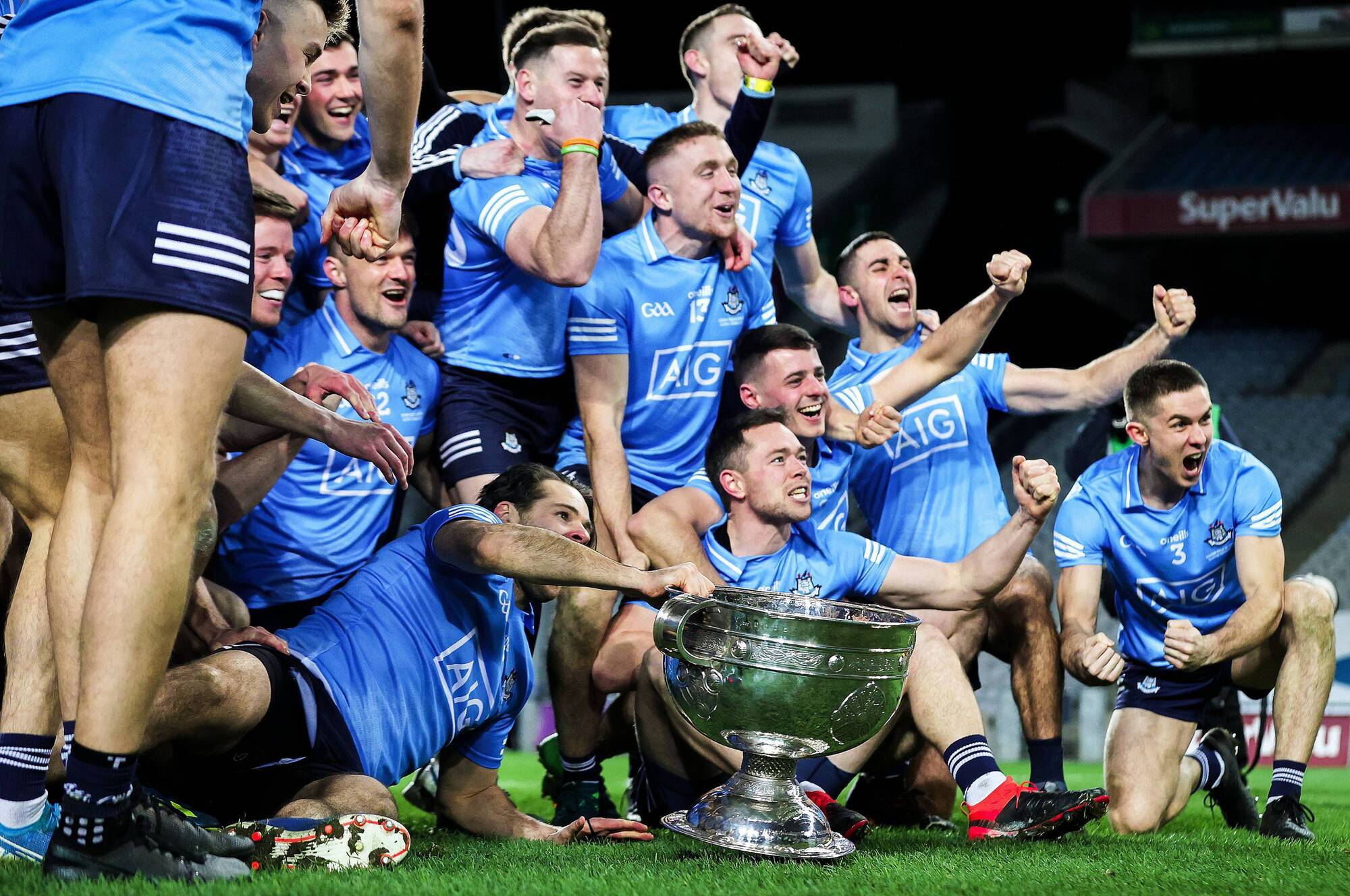
Dublin players celebrate after victory over Mayo in the All-Ireland SFC final on Saturday night. Picture: Tommy Dickson

Let’s begin by acknowledging Dublin’s brilliance over the last decade.

Ten years ago, in December 2010, they had not won an All Ireland in 15 years and were regarded as a bit of a soft touch. They have now won eight of the last 10, including the momentous six-in-a-row achievement.


Remember when winning back-to-back All-Irelands was viewed as remarkable? They have also won five National Leagues in the same period. They have contested 14 national finals, losing only one, the National League final of 2017. It really has been the decade of the Dubs.

I feel privileged to have attended the All-Ireland final on Saturday. It was a historic and unique occasion. Two and a half hours before throw-in I was able to drive straight up Jones Road, where the usual All-Ireland final day bedlam was replaced by a dark, eerie and deserted scene.

That sombre atmosphere continued into Croke Park. In most ways, it was sad, a cameo of where we are as a civilisation at the moment as we battle this pandemic.

The GAA deserve huge credit for safely successfully staging this year’s championship. It was different but defiant. It has been a great distraction for the nation and we are now almost at Christmas without realising it as we look forward with hope to a better 2021 for everyone.

I watched the first half from right up at the back of Hill 16, both from the point of view of a different perspective and to also to be able to claim that I watched an All Ireland involving Dublin from the Hill! The two big takeaways from that first half were how patient and economical the Dublin forwards were with their movement and David Clarke’s performance.

To create space, when I was involved in management we would have encouraged our inside forwards to make long hard lateral runs, often in the knowledge that they were probably not going to get the ball. The idea was to engage backs, to open up space for one of their colleagues while at the same time staying close to the danger zone. 

Sometimes it involved making two or three of these hard runs in quick succession and this could eventually open the crucial space for a colleague or separation for yourself to get on the ball and to try and make something happen.

Standing still 

On many occasions Saturday, the Dublin forwards would be standing still and make that break at the very last second. Everything is so choreographed and accurate that the one run was sufficient. It requires a lofty level of coaching and game intelligence from the players to get to that point.

Colm Cooper at his peak was similar. This meant that they had loads of energy when they got possession of the ball to actually go and hurt Mayo.

I was also very impressed with Clarke’s first-half performance. He could do little about the two goals and he kicked excellently winning 100% of his kickouts, including four long kicks. What most impressed me though was how vocal he was. Most keepers are and need to be vocal but it was the content of what he was saying.

Clear, concise instructions to his backs to help them. “He is gone to your left Lee but he is going to go right; Oisín you are the plus one drop slightly in front of Chris; Paddy, support the man in possession, he is going to go left Stephen; Diarmuid push at the ball”.

It was seriously effective communication. He was putting a name and an action to each call and his players responded to it. He was constantly reminding players of their roles as the ball moved up the field and was in many ways like an on pitch manager.

If James Horan was told Saturday morning that Dublin would only win 61% of their own kick outs and that Mayo would win 86% of their own restarts, he would have been giddy with excitement. He would have felt that platform of possession would be enough for them to finally slay the beast. Just one more time it underlines the best quality of this Dublin team.

Regardless of the circumstances or pattern of the game, they find a way. For me, the main factors were their work rate, the impact of the bench, big interventions from big players at crucial times and their final quarter performance.

Work-rate

One of the most basic instructions a manager can give to a player or a team is when things aren’t going well, you can always work harder. You control that. Dublin embodied that on Saturday.

In total, they scored half of their scores from turnovers, 1-7. Interestingly 1-5 of that total came after each water-break with 1-2 in the second quarter and three points in the final quarter. They deserve massive credit for continuing to show that level of appetite after all their success.

To be able to bring substitutes of the quality of Brian Howard and Paul Mannion on is a luxury no other manager has. Both of them impacted with Howard back to his 2019 levels and kicking a key point in the final quarter.

As we have seen so many times with this Dublin team they won the game in that final quarter. On 50 minutes the match was level but once Dean Rock kicked a tough free and put them into the lead they only conceded one score for the rest of the game. They won the final quarter by five points to one. Two of those scores came from the only two kick-outs Clarke lost in the game. Mayo needed a goal to win but once more the Dublin defence was outstanding and didn’t give Mayo even a sniff of a half chance.

When Dublin needed their big players at different times in the game they all intervened. James McCarthy made the initial burst that ended up with Con O’Callaghan’s goal, Brian Fenton was immense in the second half, fielding and kicking a big score while they were down to 14 men. Ciarán Kilkenny thundered into the game, kicking crucial points and Stephen Cluxton fixed his kick-outs winning 100% of them in the final quarter. That calibre, personality and know-how is hard to beat.

Dublin's Brian Fenton with Diarmuid O’Connor of Mayo. Picture: INPHO/Tommy Dickson

James Horan got a lot right and much of what they tried worked, particularly when it came to limiting Dublin. The two big issues were the concession of the goals and the old failing of profligacy up front.

They kicked five balls into Cluxton’s hands. At schools level leaving the ball short is a cardinal error but doing it five times in an All-Ireland final against the best team of all time is unforgivable. The margin at the end? Five points and while it is lazy to link the two, it was a factor.

Mayo also lost shape at times and forwards ended up in unfamiliar defensive positions covering for their team mates. For Con O’Callaghan’s goal, Cillian O’Connor was marking Niall Scully in the Mayo fullback line.

When O’Callaghan made the initial break, O’Connor left his man and went bald-headed for O’Callaghan.

In effect he defended like a forward would, making up O’Callaghan’s mind for him, allowing him to play a simple one-two with Scully and score the goal. It may have been more prudent to give up the point, a decision a back more accustomed to being in that position would possibly have made.

Progress

Mayo have definitely progressed and will be back competing again next year. At this stage they seem to absorb the loss, shake themselves down and go again without too much in the way of scar tissue to their immense credit.

With regard to the champions — and while it might be a big statement — I saw signs of wear and tear Saturday evening. By the end of their time, Mikey Sheehy reckoned the great Kerry side won an All-Ireland or two with sheer knowhow and experience. I feel Dublin are in a similar position now.

To beat them you have to go and take it off them though as they won’t readily relinquish their crown.

Management and playing personnel have evolved but the winning culture remains the same.

The fact that a group of players have reached the milestone of eight medals underlines their dominance and is worthy of our admiration and respect.

More in this section

Sport

Newsletter

Latest news from the world of sport, along with the best in opinion from our outstanding team of sports writers. and reporters

Cookie Policy Privacy Policy Brand Safety FAQ Help Contact Us Terms and Conditions

© Examiner Echo Group Limited