Colin Sheridan: When it comes to Mayo and finals, there is no vaccination against hope
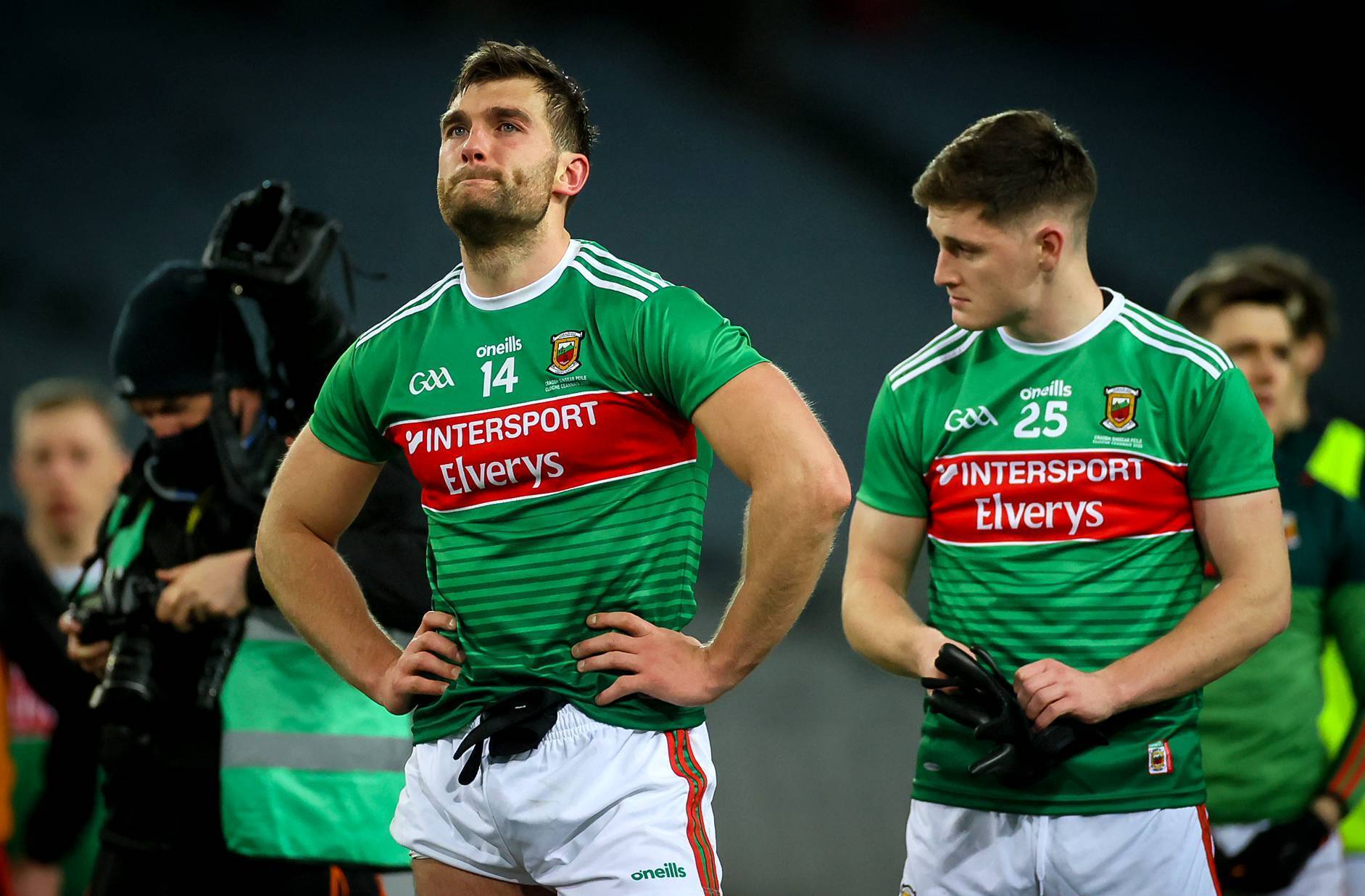
Mayo's Aidan O'Shea dejected after the game. Picture: James Crombie

Nothing changes but the seasons. In a year when everything was novel, and perspective tumbled forth like rain from the sky, two constants remain.
Dublin winning, and Mayo misery.
Just like that blasted tree that apparently fell in the forest, you had to wonder; if Mayo appeared in another final and nobody was there to see it, could they really lose? Yes, it turns out, they really could.
It was an afternoon of few surprises. For all the reasons we already knew, Dublin were heavily fancied to complete a six in a row. On the flip side, it was hoped, much more than expected, that Mayo would do enough to make a game of it for an hour. Imagine that’s how low the bar is; just hoping the underdog will show up and make a game of it?
In the hours before the game, there were subliminal forces at work; our televisions were literally speaking to us. Sensing the nation’s vulnerability, RTÉ scheduled a repeat of the wonderful Players of the Faithful immediately before their final coverage. As Mayo people were turning their sitting rooms into impenetrable bunkers, promising their kids everything from PS5s to cigarettes to be unseen for three hours, Martin Furlong, the late Eugene McGee, and the princely Matt Connor were looking them dead in the eye, saying “nobody gave us a chance”.
As psychological warfare goes, it was strangely effective.
Indeed, when it comes to Mayo and All-Irelands, there is no vaccination against hope.
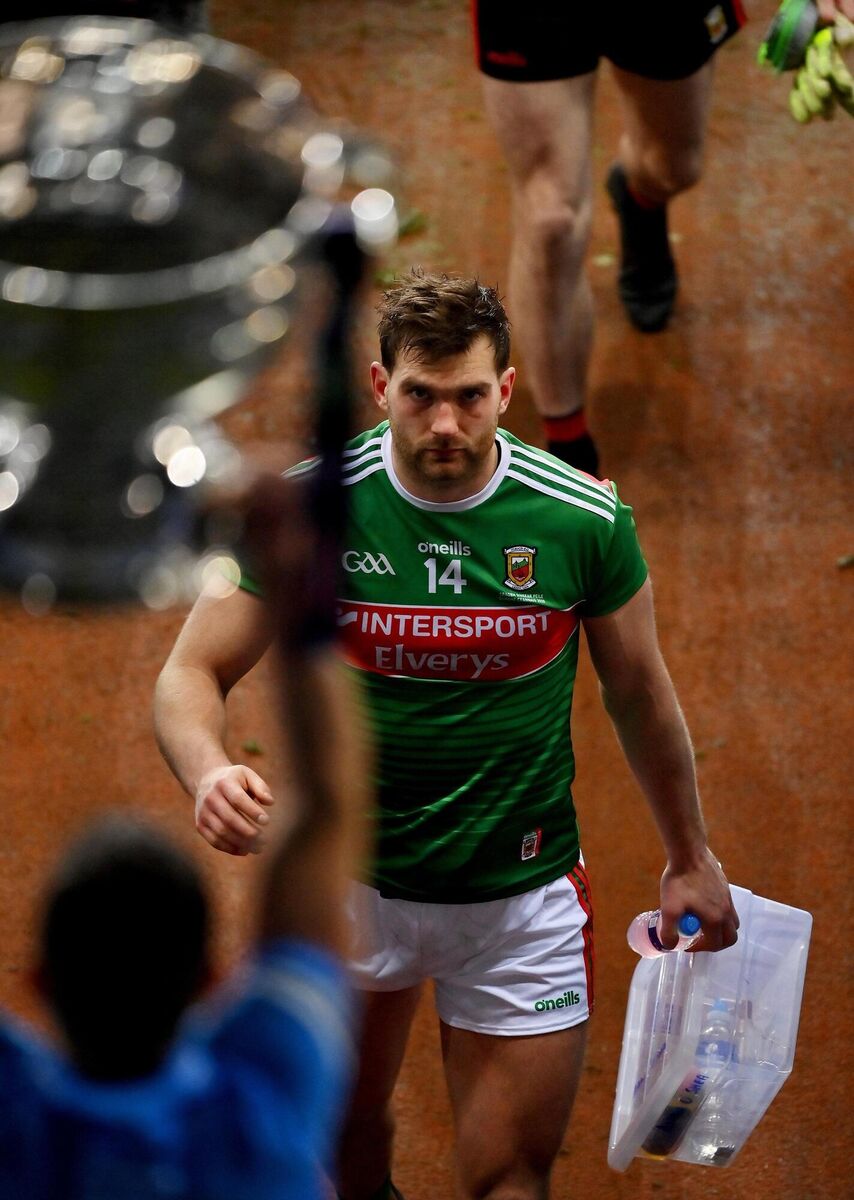
By the time they emerged from the tunnel to warm up, every person of reading age from Ballycroy to Balla had learned what Dr David Hickey thought of them and their tragic complex. Cautious optimism had given way to not-quite-blind, but, visually impaired rage. The stadium was empty, but Mayo hearts were slowly filling. Only to be suddenly drained again.
‘Amhrain na bhFiann’ had barely ended and Dublin were a goal up. Had they not heard they were killing the game of Gaelic Football? Did they not care they were the Death Star? Could they not have played along for more than 13 seconds? Please, somebody, turn back on Matt Connor.
Mayo’s reaction to Dean Rock’s palmed goal was nothing if not typical; in true Irish-mammy-at-Christmas fashion, they carried on as if the bad thing hadn’t happened.
Cillian O’Connor once again led from the front, setting an example Ryan O’Donoghue would follow. If Mayo were to do the unthinkable, newcomers O’Donoghue and Oisin Mullin would have to have big games.
Their offerings in the opening half in the context of the occasion were nothing short of heroic. O’Donoghue’s point on 14 minutes followed a turnover by Diarmuid O’Connor on Robbie McDaid; Dublin, after a winter of swatting flies, had finally met a different beast. It was level at the first water break; a palpable sense of relief was felt the world over that this, if nothing else, was a contest.
Mayo tipped along, ticking boxes on the “how to beat Dublin” blueprint as they went: Win the kick-out battle? Check. Win individual battles? Check. Nullify Ciaran Kilkenny? Check. Kick no wides? Check. For all of that, they went in at the break a man up, but two points down.
On television, the experts ruminated, trying to make the case for rebellion. On Sky, Peter Canavan broke down all the areas Mayo had got it right, while dolefully admitting it still looked like they’d ultimately get it wrong. Billy Joe Padden, cast away on Hill 16 like a scolded schoolboy, was admirably impartial in his analysis. The consensus, however, was a cruel one; for all Mayo’s blood spilled, Dublin still led and would likely continue to lead, ad infinitum.
The second half may have resembled a competitive game of football, but was instead a 35-minute reenactment of the baptism scene at the end of The Godfather. Dublin picked apart every trap Mayo had laid for them; Kilkenny, free of the injured Paddy Durkan’s attentions, rediscovered his class.
Mayo’s kick-out creaked under pressure as Dublin introduced Brian Howard and Paul Mannion. Mayo’s bench made no impact. Dublin renounced Satan and all his works, Lee Keegan was almost ended by a shoulder-to-chest hit by Mick Fitzsimons. All the while, Dessie Farrell looked on from beneath a gold-encrusted mask. As the clock ticked on, Mayo were going bankrupt slowly, then all at once.
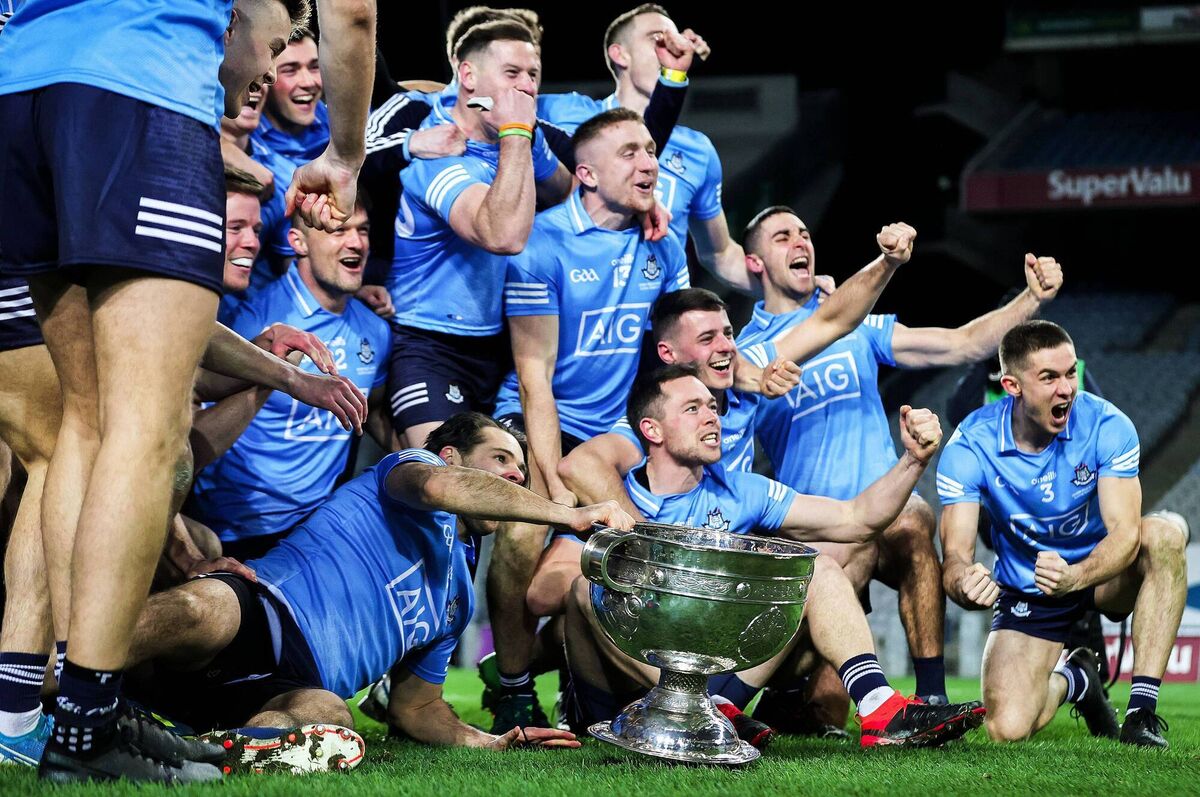
If Dublin were happy to be victorious, it seemed Stephan Cluxton would still have rathered Aidan O’Shea alight the steps to collect Sam then himself. His speech was more CEO’s state of the union than “people of Dublin, we love you”.
If the footballing class of his team is unquestionable, the lack of broader meaning that accompanies their victories is just as irrefutable.
By the time the GAA ever deign to correct their overcorrection, Dublin may have already reached a dozen on the trot. By then, Billy Joe may still be the only one on Hill 16, just not because of a damned pandemic, but consumer apathy.
It is, however, not their problem.
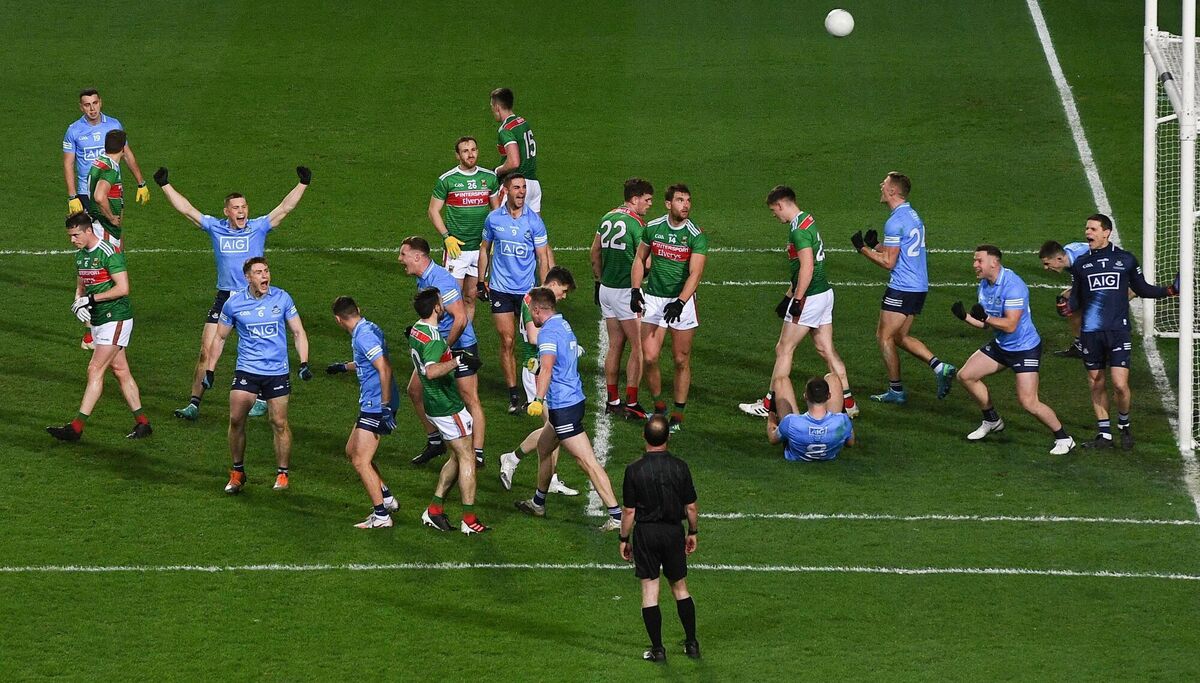
Mayo will have genuine regrets. Conceding goals to Dublin on consecutive throw-ins — albeit 15 months apart — stinks of unforgivable naivety. An inability to take advantage of a numerical superiority — something they must have planned for, and especially with the entire half-time break to strategise — speaks to the two key differences between the sides; depth and accuracy, both on and off the field.
Still, at least their losing will likely mean no spike in Covid numbers back west. Every cloud...
By the time the Saturday Game rolled around, the Dublin players did at least look pleased to the point of exhibiting a sense of humour; Brian Fenton managed to keep a straight face when delivering one of the lines of the year, straight to camera: “It’s unbelievable”, he said, “you’d never get sick of it”.
Speak for yourself, Fento. It turns out there is a vaccine for hope. It’s called Dublin.