John Fogarty on Bloody Sunday: Winter Championship an ode to the game that didn't finish
There will be nine Championship games played this Bloody Sunday weekend
John Fogarty on Bloody Sunday: Winter Championship an ode to the game that didn't finish

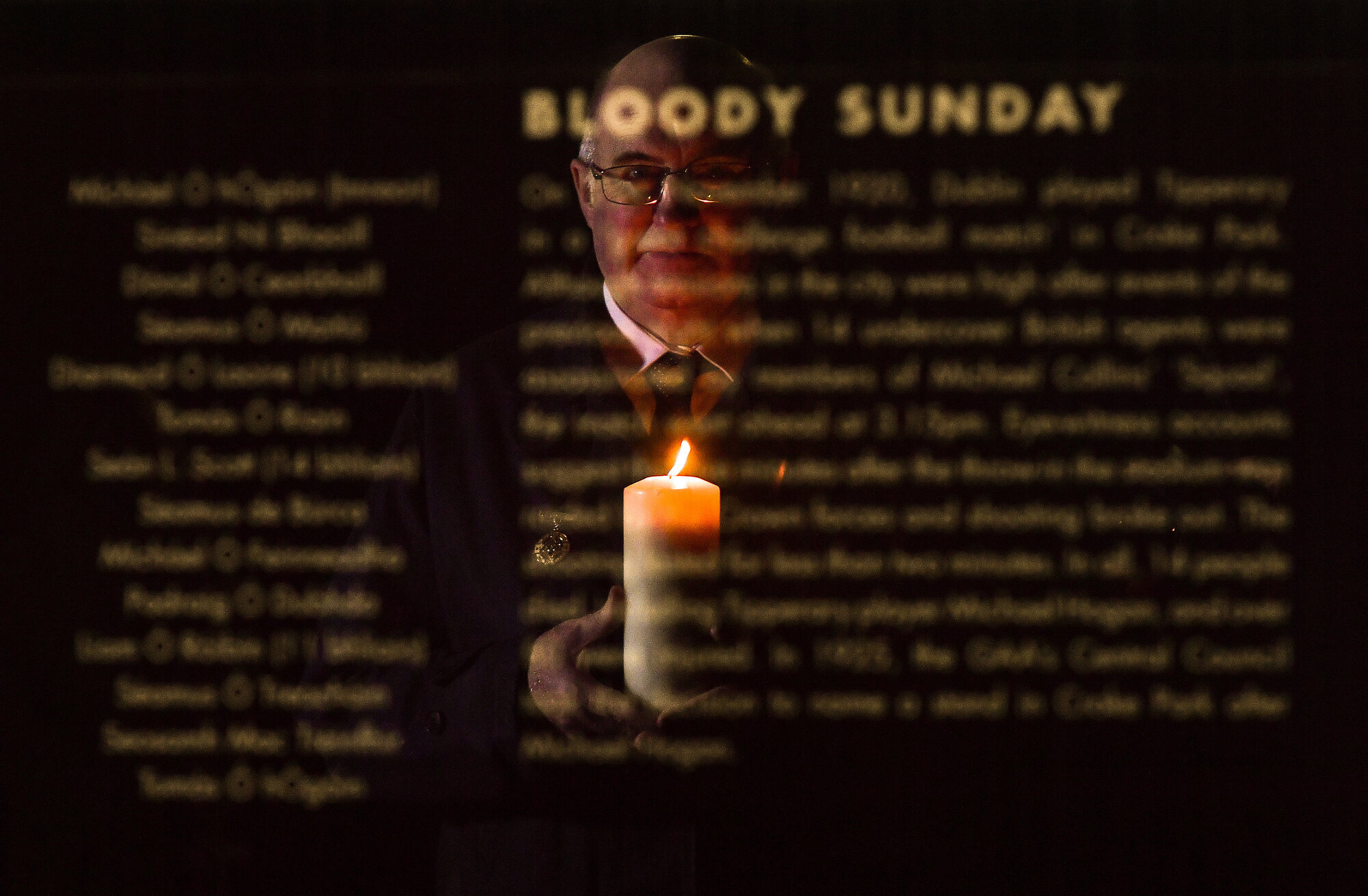
GAA president John Horan lights a candle at the Bloody Sunday memorial in Croke Park. In lieu of a larger commemorative event at Croke Park, the GAA is encouraging members, supporters, and the wider public to light a candle at dusk next Saturday, remembering the 14 people who lost their lives that day 100 years ago. Picture: Brendan Moran/Sportsfile

Including three provincial football finals, there will be nine Championship games played this Bloody Sunday weekend. Two involve Tipperary, one Dublin. Given the hurdles that stood in their way, the GAA must be pleased with such a billing across a poignant couple of days.

Only Dublin and Tipperary’s senior footballers facing off in a game of consequence in Croke Park would have been a more fitting way of commemorating that awful day. Well, next best might have been staging Tipperary’s Munster SFC final with Cork as well as Dublin’s Leinster decider with Meath at the site of that tragedy 100 years ago this Saturday. But how it’s worked out is considerably better than the original plan to replicate the challenge game with another one between the counties and follow it with an International Rules game.

For all the arguments made for going ahead with a winter Championship, few if any mentioned that it was the most appropriate way of enshrining a game that was cruelly abandoned.

Even if it wasn’t the intention, that all games must finish on the day is also a nod to that past. To consider that no matches would be played this weekend, that Croke Park would lay empty on a momentous occasion is a shuddering thought.

The Hill being vacant for a Dublin-Meath Leinster final is a strange and unfortunate sight but there is something evocative about the GAA’s plans to light 14 torches on the terrace for Michael Hogan and the others who perished in or around the venue.

From commissioning headstones for some of the victims who were buried in unmarked graves to their beautiful short films personalising the deceased, and the museum exhibition, the GAA has done a fine job remembering their dead.

Speaking on radio yesterday morning, GAA president John Horan asked the GAA membership to light a candle in their homes for those who died, which included Wexford man Tom Ryan who was shot whispering the act of contrition to Hogan, Jane Boyle who was to be married five days later, 10-year-old William Robinson, and 14-year-old John William Scott. It’s a thoughtful gesture and sure to be taken up the length and breadth of the country.

The parallels between now — when those who have lost loved ones have been prevented from doing so properly — and then won’t be lost on many. As Michael Foley relays in his highly-recommended The Bloodied Field podcast of many of the victims’ funerals: “All the families were subject to the same restrictions by the authorities. No flags, no banners, and no public displays of any kind were permitted. Attendance was limited to close family and friends.”

The suspension of fixtures that year also echoes. The month before Bloody Sunday, Cork County Board called off all matches following the death of Terence McSwiney and the Munster Council extended that suspension, which was what prompted Tipperary to seek the game with Dublin as they were preparing for an All-Ireland semi-final (we should add Cavan, Dublin, Mayo, and Tipperary, all still involved this year, comprised football’s last four in 1920).

But the games endured. On December 12, three weeks after Bloody Sunday, Croke Park played host to the meeting of Milltown Emmets and Fox and Geese in a Dublin junior B football championship final. The Clondalkin men wore crepe armlets in honour of 20-year-old Joe Traynor who was shot twice in the back as he tried to escape the shooting over a wall behind the Canal (now Davin) End.

Like they did two years previous when they organised Gaelic Sunday in defiance of the British authorities, matches were a form of protest. At the start of the first lockdown, GAA director general Tom Ryan spoke of games being all the Association had but their balming qualities are so evident in these wounded times. As Micheál Martin said in August of playing the Championship: “I think it would be a symbol that a country is fighting this virus, that it’s not going to surrender to it.”

And what drama and delight they have provided, with last weekend gushing with examples. The maestro Tony Kelly opening up the bas of his hurley like a sand wedge and cutting across the sliotar to score from a ridiculously acute angle. Richie Hogan’s bewitching skill to fool Éanna Murphy before tapping the ball to the net to break Galway.

The simple encouragement of Aaron Gillane shouting “over the bar, kid” to Seamus Flanagan and with his first touch the Limerick substitute doing just that.

The boldness of Peadar Mogan to split the Armagh defence time after time. The abiding determination of Mayo to overcome a gruelling five-week assault course. The resilience of Cavan to flout the odds once more. Ciarán Kilkenny giving another demonstration of total football against Laois. The transformation of the Meath attack in the second half of their Leinster semi-final.

The potency of games to forget our troubles is as strong as their ability to remember them.
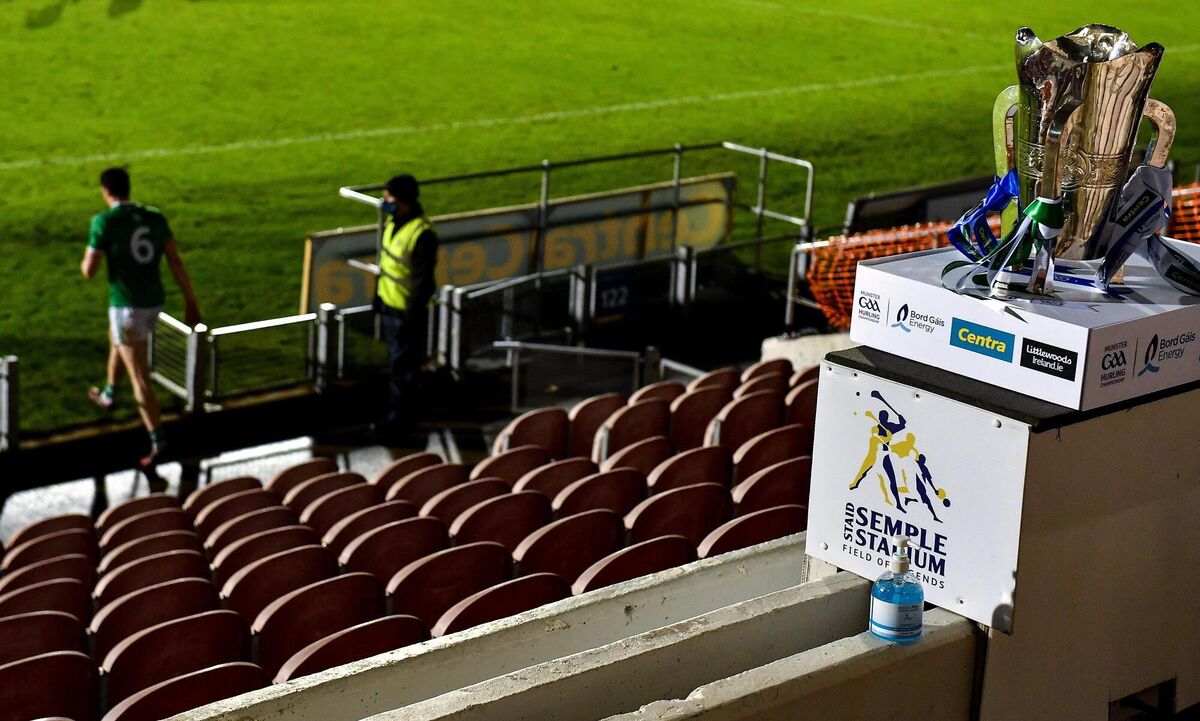
Is Declan Hannon's silence an act of protest?

Limerick captain Declan Hannon walks away having given the Munster Senior Hurling Championship trophy a ceremonial lift at Semple Stadium. Picture: Brendan Moran/Sportsfile

The school principal in John Kiely was evident in the Kinane Stand on Sunday evening. Looking up the steps towards the assembled print and online media, he lashed: “We’ve 10 players at home, which in my view is completely and utterly unacceptable, given that I’ve 20 reporters standing in front of me and I’ve 10 of my panel at home. I’m quite offended by that situation we’ve been put in.”

Kiely has never been afraid to face down the fourth estate. After Limerick sealed their All-Ireland final place two years ago, he opened the press conference with a warning: “If I could just ask for one piece of cooperation over the next three weeks. Do not contact any of our group or I will shut the whole thing down, okay?”

On Sunday, Kiely was only using the media to illustrate a point but it was a forceful one that he had also made in the lead-up to the game. Ten of his players, 10 who had helped to prepare the other 26 to beat Waterford and defend their Munster crown, were not allowed enter the stadium.

What he didn’t say was several others in the backroom team were also unable to be there. According to one source, their two kitmen watched the game from outside the stadium.

So many volunteers are missing out but when those who are making such contributions to the betterment of a team and are part of that team playing in a bonus of a Championship are being deprived of that communal experience, Kiely is right to ask questions.

Twice Declan Hannon has received cups in Semple Stadium’s Ryan Stand these last four weeks and twice he has chosen not to speak. Out of protest for his absent colleagues, possibly?
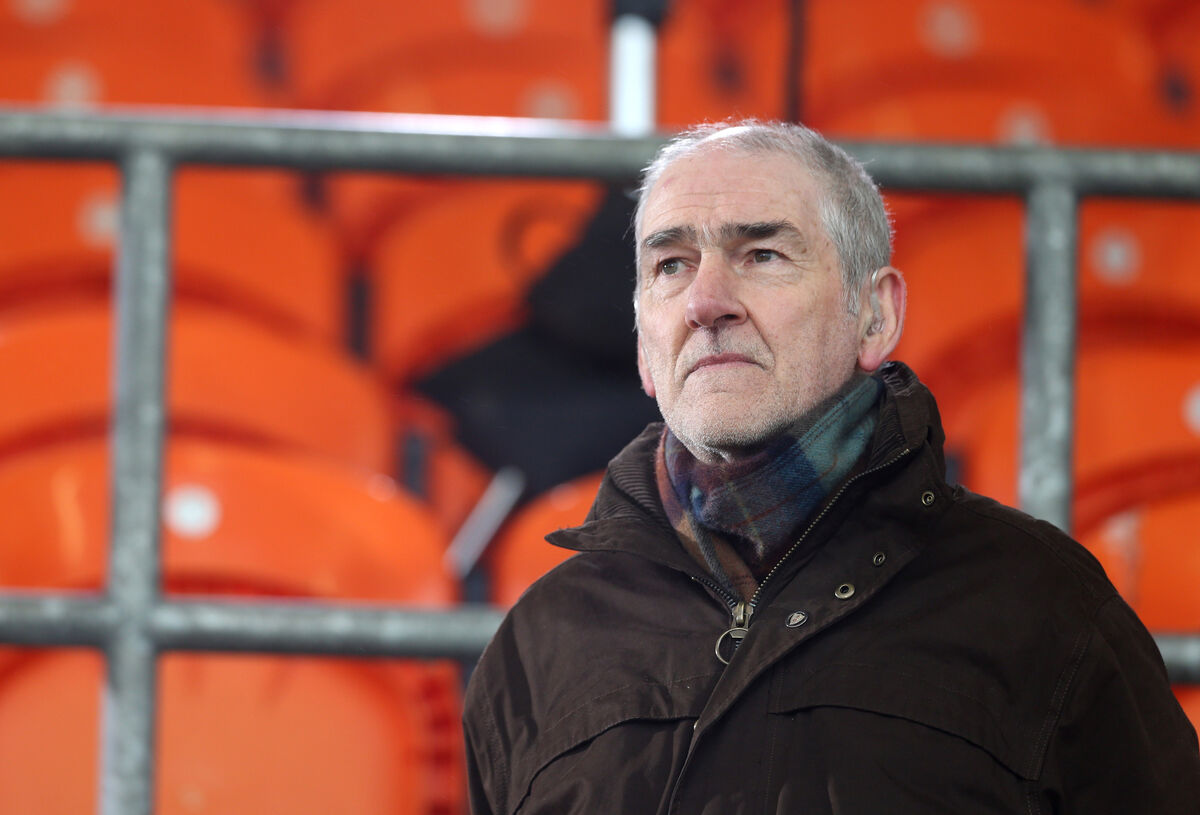
A parting gift: In leaving now, Mickey Harte put Tyrone before himself

Mickey Harte in attendance at the Cavan vs Down Ulster SFC semi-final where he was on punditry with the BBC. Picture: INPHO/Matt Mackey

Mickey Harte could have chosen to go down swinging. Three All-Ireland titles and a final appearance three years ago still counts for a lot and there is such respect for him in the county that there may have been nobody brave enough to challenge him if he had to reapply for the position.

His suggestion to the Tyrone GAA executive that this season should not count as his final one was worth considering but in the end, he bowed out gracefully and in doing so instead of seeking another two or three years, it would appear he was only intent on 2021 being his last.

Retaining Tyrone’s Division 1 status, Harte has at least ensured his team have a chance of winning an All-Ireland next season — his prediction almost 10 years ago that only a Division 1 team can win the Sam Maguire Cup remains true.

Possibly assisted by Harte’s former captain Brian Dooher, 2015 All-Ireland U21 winning manager Fergal Logan seems to be the best man positioned to take over from Harte, with maybe somebody like Collie Holmes taking over further down the line, and there could be changes afoot at county board level too. There is a belief that Tyrone have to be more savvy in a number of areas to reach the heights they last scaled in the 2000s.

Harte’s legacy is rich and richer because he has put the county before himself.

Clearing the way for the next man in, the transition can be smooth.

Email: john.fogarty@examiner.ie

More in this section

Sport

Newsletter

Latest news from the world of sport, along with the best in opinion from our outstanding team of sports writers. and reporters

Cookie Policy Privacy Policy Brand Safety FAQ Help Contact Us Terms and Conditions

© Examiner Echo Group Limited