Investing in employees’ futures
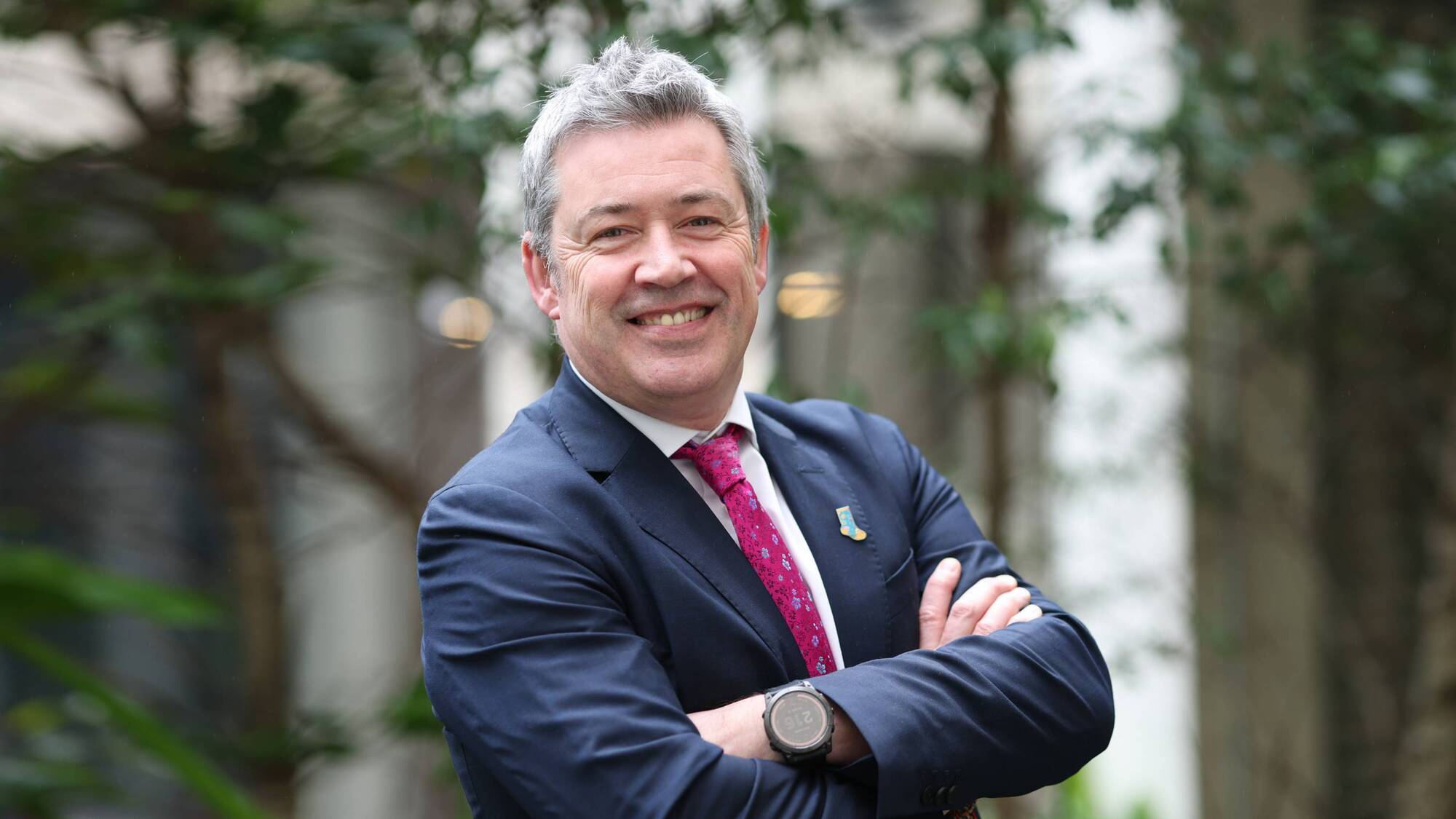
Aidan Stacey, CEO at Down Syndrome Ireland.
When Aidan Stacey took up the role of CEO at Down Syndrome Ireland, one of the issues he identified was the absence of a workplace pension scheme. With the introduction of MyFutureFund approaching, the organisation faced a choice: participate in the State auto-enrolment scheme or establish its own pension arrangement.
“From my own experience, it was an important attractor to potential employees, and a requirement for retention,” he says. “Within the not-for-profit sector, and particularly in the service side of the not-for-profit sector, securing good staff is a big issue. There aren’t many out there. So being competitive in our salary and package offering was important.”
Stacey also believes providing a pension was an important reflection of how an organisation values its people. “It seemed unusual within the sector that the pension wasn’t being offered,” he says.
Introducing a scheme represented a significant financial commitment, however. With just over 100 employees at the time, the additional cost would affect the organisation’s bottom line. The alternative, Stacey believed, could prove more damaging.
“If we weren’t able to attract and retain staff, we were just going to be in a circular spiral downwards,” he says.
To find the right pension provider for their specific needs, Down Syndrome Ireland undertook a competitive tender process, initially considering four providers before narrowing the field to three. “Our organisation is about information and service provision, so we were very much looking for pension providers who aligned with that,” says Stacey.
Fees were another major consideration, says Stacey, particularly how much employees would see deducted in charges. Investment performance, choice and risk also featured in the assessment. “Service and fees were really the two,” says Stacey, describing investment performance as a tertiary priority.
Zurich prides itself on its solid history of providing consistent, long-term fund performance for its Prisma fund range*. Stacey says Zurich’s reputation and historical investment performance helped distinguish it from competitors.
“One was the Zurich brand name and its performance over time,” he says, explaining that his recommendation to the board was influenced partly by his understanding of the company’s track record over the previous decade. However, investment performance was not the sole deciding factor. “Investment performance, no matter what the brand, can go up and down,” he says.
Stacey says Zurich’s representative spent time engaging with the management team and employees to understand their needs before returning with a proposed package.
“That level of detail, getting down under the organisation and understanding our people, and also then speed of response and queries, it was just head and shoulders above the others,” he says.
The representative’s approach was an important factor in Stacey’s recommendation to the board. Crucially, Stacey says the commitment demonstrated during the tender continued after Zurich was appointed. “It wasn’t just a new business pitch. It has been very strong since.”
The pension scheme began operating in January, and the response from employees has exceeded expectations. With a workforce spanning different age groups, management had initially been uncertain about participation levels. However, according to Stacey, more than 95 per cent of employees have joined, while every new starter has enrolled.
“It’s been phenomenal,” he says.
Providing accessible information has been an important part of implementation. “We had three or four sessions right at the start of the year, for our employees run by Zurich, which were really well attended, and then questions came in after.”
Stacey believes employers have an important role in helping staff understand the value of pension saving, particularly those reluctant to reduce their immediate take-home pay. Employees may view pension contributions as money being taken away from their daily income rather than an investment in their future.
“It’s not a tax, it’s an investment, and it really is an investment in their future,” he says. He recalls one younger employee who was initially reluctant to participate but subsequently joined and selected a relatively high-risk investment portfolio after discussing the options available.
Alongside employee engagement, the administrative experience has been another positive aspect of the arrangement. For a relatively small organisation, introducing a pension could have created additional demands on management and HR resources. Instead, Stacey says the process has required very little involvement from him since the initial decision.
“The fact that I, as the CEO of a relatively small organisation, have had to do very, very little once we made the decision, it’s fantastic for me,” he says. He reports that the HR team is happy with how the scheme has been managed and that he has not received queries from staff or HR requiring his intervention.
For employers considering introducing or reviewing a workplace pension, Stacey’s advice is to begin by understanding what employees actually need. In Down Syndrome Ireland’s case, the approaching introduction of MyFutureFund meant decisions had to be made within a relatively short timeframe. Looking back, he believes more time spent consulting employees beforehand would have been worthwhile.
“Chat to your employees beforehand,” he says to find out their needs and wants. He also stresses the importance of evaluating service alongside investment performance and fees. “You can’t underestimate the service, because it’s not a straightforward transaction for an employee, and it’s not a straightforward transaction for the organisation.” F
or Stacey, a successful workplace pension should give employees a sense of security, confidence in their investment choices and access to clear advice about balancing risk and potential growth.
Although Down Syndrome Ireland’s scheme is still relatively new, strong participation and a positive implementation experience have provided an encouraging start. The broader lesson, he believes, is that employers should never assume their people understand pensions or appreciate their value. Helping employees make informed decisions about their financial futures is an important part of offering the benefit.
For more than 40 years, Zurich has been supporting customers with retirement solutions and is now one of the largest pension providers in Ireland. The Zurich Master Trust draws on our long-standing experience, our expertise and innovation, and our strong focus on scheme governance to deliver a streamlined pension arrangement – helping to give you and your employees greater peace of mind. Contact your Scheme Advisor or Financial Broker to learn more about Corporate Pensions from Zurich. You can also contact Zurich directly here or call us on 01 209 2299.
*Source: Zurich Prisma Funds - annualised investment performance since launch (11/10/2013 - 01/10/2026). Annual management charges (AMC) apply. Zurich Life, October 2026.