Coillte takes biodiversity lead with 'Forests for Nature' strategy
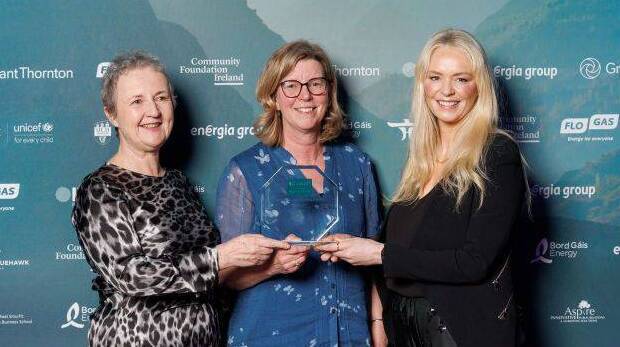
Coillte won the ‘Biodiversity Leadership in Business Award’ at the Business & Finance ESG Awards 2026, in partnership with Grant Thornton. Pictured: Aileen O’Sullivan head of nature conservation, Coillte, and Janice Fuller, nature conservation design and planning lead, Coillte, receiving the award for Biodiversity Leadership in Business from Janice Daly of Grant Thornton.
Coillte was recently awarded the Biodiversity Leadership in Business Award at the Business & Finance ESG Awards 2026, in partnership with Grant Thornton. The awards recognise the efforts of organisations to advance Environmental, Social, and Governance (ESG) initiatives and benchmark progress across multiple categories.
Coillte received the award in recognition of its innovative, science-led approach to delivering a large-scale biodiversity programme and for increasing the proportion of its estate managed primarily for nature and biodiversity.
Coillte, Ireland’s semi-state forestry company, is responsible for managing 440,000 hectares of primarily forested land, representing 7% of the country.
In July 2025, Coillte announced that it increased the proportion of its estate managed primarily for nature and biodiversity from 20% to 30%. This represents the successful fulfilment of a key ’Forests for Nature’ strategic objective outlined in Coillte’s strategic vision for its future forest estate, first published in 2022. As a result, 134,000 hectares of land, an increase of 44,000 hectares, are now being managed primarily for nature and biodiversity across Ireland. Coillte’s longer-term ambition is to transform areas of the estate so that 50% is managed primarily for nature going forward.
The expansion to 30% was made possible through the implementation of the BioClass System, a science-based framework developed to identify and classify the ecological value of areas across the Coillte estate. The BioClass System functions as a habitat scoring process, assessing forests, bogs, and open landscapes based on defined ecological criteria. Using this system, Coillte’s team of ecologists and foresters systematically ranked sites according to their natural value, enabling the organisation to identify key biodiversity areas and implement bespoke management plans to protect and enhance them.
The Coillte estate consists of a varied tapestry of different habitats, ranging from forests (conifer, mixed, broadleaf, and native forests) to peatlands and uplands (blanket and raised bogs, wet and dry heaths) lakes and rivers. Every part of the Coillte estate is available as habitat for Ireland’s wild plants and animals and therefore has some value for biodiversity.
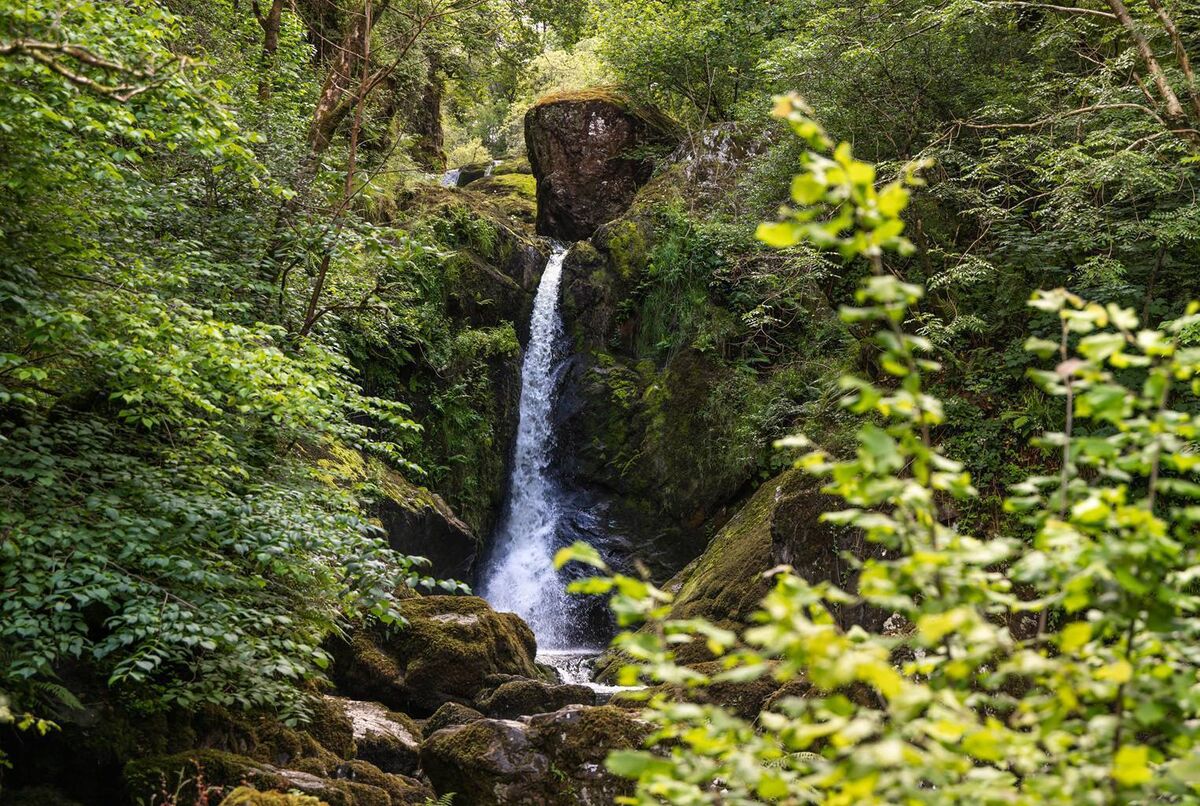
Coillte’s strategic vision aims to deliver multiple benefits from Ireland’s state forests across four strategic pillars: climate, nature, wood and people. It aims to bring more focus to climate action, setting ambitious new targets on biodiversity and recreation, while continuing to deliver for the forest and wood products industry.
Coillte’s approach to conserving nature has been to focus nature management actions on the sites that are most likely to yield the highest potential biodiversity gains. It uses science-based ecological assessments to select these sites and map them as biodiversity areas.
Biodiversity areas vary significantly in their condition and management needs. Some areas already contain habitats of high nature conservation value and require little intervention, while others have the potential to become more valuable over time with active management.
Coillte’s approach reflects this variation, combining protection with restoration depending on the condition of each site. A central element of this approach is the use of Continuous Cover Forestry (CCF), a management practice that involves removing individual trees to create gaps in the forest canopy, allowing light to reach the forest floor and encouraging natural regeneration. This process supports the development of more diverse, multi-layered forests that better mimic natural ecosystems.
Each year, Coillte selects biodiversity areas for proactive nature conservation management through an annual improvement programme of work.
For selected biodiversity areas, site-specific ecological management plans are developed and implemented by Coillte’s ecologists and foresters. The plans ensure that nature conservation objectives are considered and reviewed in the light of silvicultural practice and site conditions. Based on their assessment of site characteristics, the ecologists identify the management goals (including target habitat) for the site, and the foresters propose a set of management actions. The process produces a practical, multi-annual plan that will deliver the best outcome for nature.
Management actions for nature include controlling invasive species, restoring hydrological regimes (bogs) and implementing close-to-nature forest management practices such as Continuous Cover Forestry (CCF), plus species-focussed habitat restoration and enhancement projects, as well ashabitat monitoring. Examples of some of the nature restoration projects underway by Coillte are outlined below.
In , Co Wicklow, a mixed Coillte forest located near Arklow and identified as a possible ancient forest site, the presence of long-term forest cover makes it particularly valuable for biodiversity. However, the forest is relatively even aged, lacking a multi-layered structure, sufficient natural regeneration and adequate deadwood. A close to nature approach is being adopted, using Continuous Cover Forestry to gradually transform the forest into a more diverse, multi-aged system with increased structural complexity and improved ecological function.
In in Co Sligo, which includes one of the most significant alluvial forests in Ireland, the main ecological issue was the presence of dense invasive shrubs such as rhododendron and cherry laurel. These species suppressed native vegetation and prevented natural regeneration. Restoration efforts have focused on removing these invasive species, allowing native flora such as marsh marigold, wood anemone and bluebells to reappear, alongside the regeneration of native trees. Continuous Cover Forestry is also being used in adjacent areas to improve the overall structure and resilience of the forest.
The project demonstrates how Coillte is adapting its management approach in upland forests with high recreational use. The project aims to transform 700 hectares of forest to improve biodiversity, enhance recreational value and increase resilience to climate change. Continuous Cover Forestry is being applied to create more diverse forest structures, while some areas are being replanted with native tree species. Open habitats such as wet heath and blanket bog are also being protected and enhanced, contributing to a more balanced and multifunctional landscape.
In peatland environments, in Co Galway illustrates Coillte’s approach to habitat restoration. This raised bog, which is designated as a Special Area of Conservation, has undergone restoration measures including blocking drainage systems to raise the water table locally and support peat-forming vegetation. This has resulted in an expansion of areas of active bog, which is beneficial for both biodiversity and carbon capture, demonstrating how ecological restoration can contribute to climate objectives.
At in Co Wicklow, an ancient woodland site featuring a river valley ecosystem, Coillte’s management has focused on removing invasive species to allow native vegetation to recover. In addition, work has been undertaken in partnership with Inland Fisheries Ireland to improve spawning conditions for salmonids in the Vartry River. This integrated approach highlights how forest management can support both terrestrial and aquatic biodiversity within a single landscape.
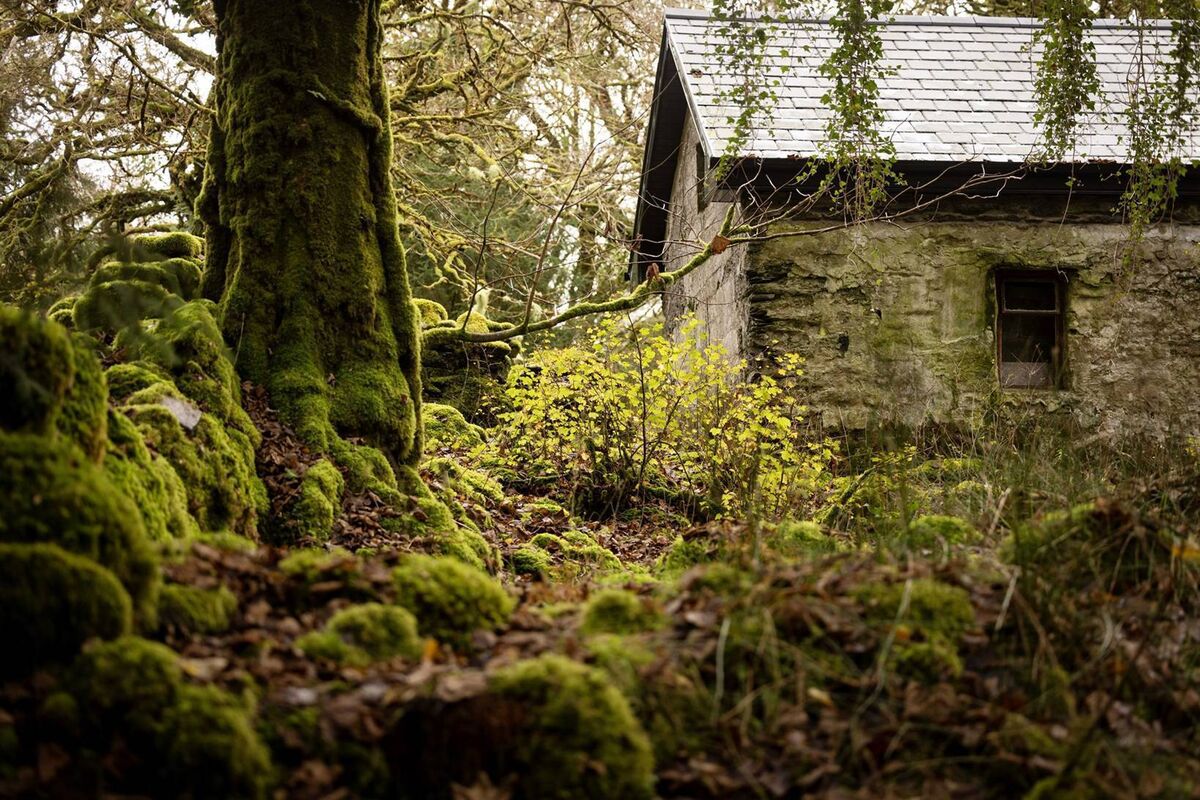
The conservation of the lesser horseshoe bat at , Co Kerry, provides an example of species-specific intervention. The restoration of a derelict building, jointly funded in a partnership between the NPWS and Coillte and used as a maternity roost has significantly improved conditions for the bats, leading to a marked increase in population numbers of this rare species and contributing to favourable conservation status. This work forms part of broader collaboration with national bodies and demonstrates how targeted actions can deliver measurable outcomes for rare species.
Well-managed forests can deliver the multiple objectives of climate, nature, wood and people, providing economic, environmental and social benefits to society. Coillte’s approach is to balance these objectives, ensuring that the right management strategy is applied in the right place based on ecological values, as defined through the BioClass system.
Coillte remains committed to its long-term ambition of managing greater areas of its estate primarily for nature, while also ensuring the productive areas of the estate are carefully managed for the long-term supply of sustainably grown, certified Irish wood, supporting the delivery of sustainable homes and rural jobs. This goal is part of our broader mission to balance the multiple benefits that Irish forests provide – for climate, nature, wood and people.