Ireland’s future grid — infrastructure challenge at core of energy transition
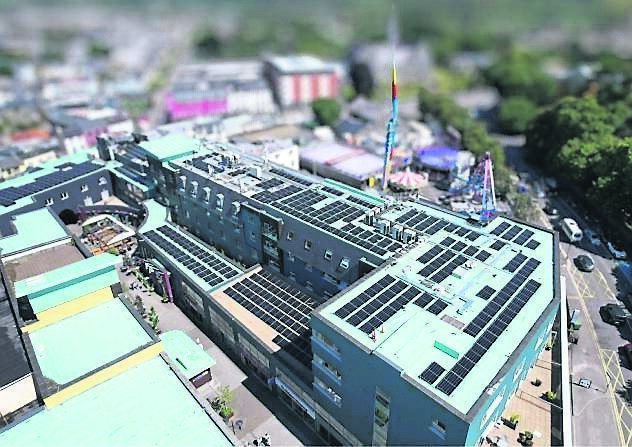
Energywise Ireland specialises in high-quality renewable energy solutions tailored to domestic, commercial, and agricultural markets.
Ireland’s 2030 renewable energy target is not a distant aspiration, it is a near-term engineering, regulatory, and investment challenge. And at the centre of that challenge sits the grid.
Renewable deployment is accelerating. Solar PV in particular has moved from a niche technology to a mainstream consideration for homes, farms, and commercial properties across the country. But deployment alone does not deliver a functioning energy system. The grid that carries, balances, and distributes that power must evolve in parallel and at pace.
The infrastructure gap
Ireland’s electricity network was designed for a different era — one of large, centralised generation feeding out to passive consumers. Today’s demands on that network are fundamentally different. Distributed renewable sources feed in from thousands of points. Demand patterns are shifting as heat pumps and electric vehicles draw on the network in new ways. Storage technologies are beginning to reshape when and how energy is used. Managing all of this in real time, reliably and efficiently, requires a grid that is smarter, more flexible, and significantly better funded than the one we have today.

The priorities are clear: network reinforcement in areas where renewable generation is concentrated, expanded interconnection to allow Ireland to import and export power across European markets, and the deployment of smart metering infrastructure that allows the system to respond dynamically to supply and demand. Progress is being made on each of these fronts — but the pace and scale of investment required remains a significant policy challenge.
Where distributed energy fits
One of the less visible but increasingly important dimensions of grid modernisation is the role of distributed energy — solar installations, heat pumps, batteries, and community generation projects that sit at the edge of the network rather than its centre.
At Energywise, we see this playing out directly. A commercial solar installation feeding surplus generation back to the grid, a community sports club reducing its peak electricity draw through on-site renewable power, a household with solar and battery storage that relies less on the network during high-demand periods — individually these are modest contributions. Collectively, and managed intelligently, they represent a meaningful source of flexibility for a grid that needs exactly that.

The SEAI’s grant-supported upgrade programmes — including the One Stop Shop whole-house retrofit model — are accelerating the adoption of heat pumps and solar PV at domestic level. The grid implications of this are significant: a large-scale shift to heat pump heating changes how and when electricity is consumed, and the network must be ready to accommodate it. The opportunity, however, is equally significant. Homes with smart controls, storage, and renewable generation are assets to the grid, not simply loads on it.
The regulatory andcommercial framework
Technology and infrastructure investment alone will not deliver the grid Ireland needs. The regulatory and commercial frameworks that govern how energy is generated, traded, and consumed must keep pace.
Export tariffs for domestic and commercial solar generators are a step in the right direction, allowing those who invest in renewable generation to receive a return on what they contribute to the network. Community energy schemes, mechanisms that reward flexible energy use, and the emerging framework for local energy communities all point toward a more participative model — one in which the relationship between the grid and its users is genuinely two-way.
Getting these frameworks right, and getting them in place quickly enough to match the pace of technological change, is one of the defining policy tasks of the decade.
The road ahead
Ireland has the renewable resources, the industrial capability, and the policy ambition to build an energy system that is cleaner, more resilient, and more cost-effective than the one it is replacing. What is required now is the investment, coordination, and regulatory clarity to make it happen — at the network level, at the community level, and in the homes and businesses that will ultimately power it.

The grid is not a passive backdrop to the energy transition. It is the transition.
Energywise Ireland is a Cork-headquartered renewable energy company specialising in solar PV, heat pumps, and full energy retrofit for domestic and commercial clients across Ireland.
LinkedIn — Energywise Ireland

Facebook & Instagram — @energywiseireland