Five technology trends changing how Irish businesses operate
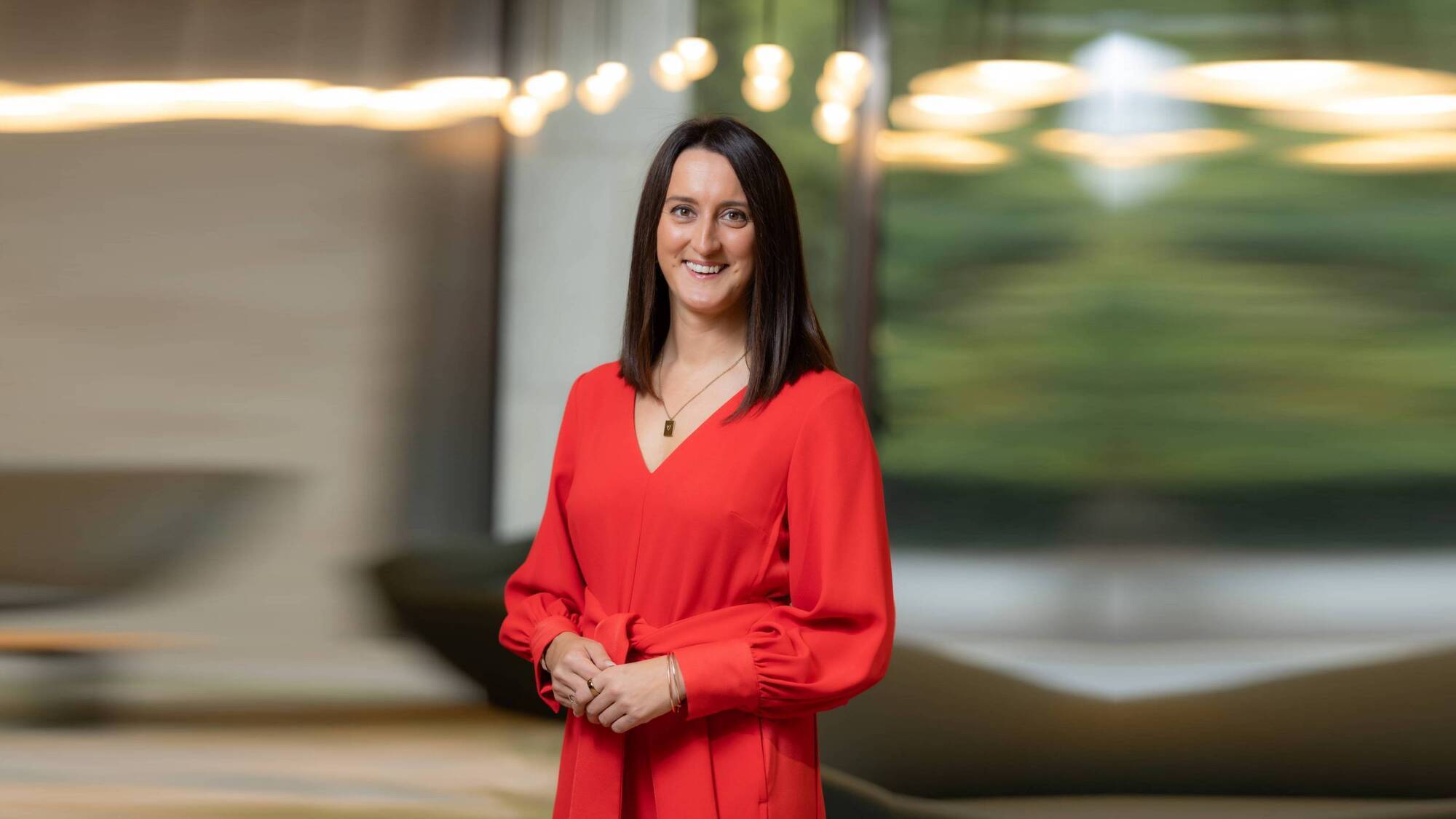
Gemma Barsby, head of SMB and business marketing at Vodafone Ireland.
For Gemma Barsby, head of SMB and business marketing at Vodafone Ireland, the focus on outcomes is one of the most significant business changes taking place.
“What’s interesting is that businesses are becoming much more outcome-focused,” she says. “The conversation has shifted from ‘what technology should I buy?’ to ‘how can technology help me grow, improve efficiency or reduce risk’?” Barsby identifies five technology trends likely to have a significant impact on Irish businesses over the next two years: practical applications of AI and automation; cybersecurity; rising customer expectations; the combination of people and technology to drive productivity; and increasingly resilient connectivity.
The common thread, she says, is that technology must deliver a tangible benefit. “For SMEs in particular, that means helping people work more productively, protecting the business, improving the experience for customers and ultimately helping them grow.”
AI remains top of the list, but the emphasis is shifting from experimentation towards practical applications. Barsby sees opportunities for SMEs in reducing administration, supporting sales and marketing, analysing information, and responding to customers more quickly. “For a small business, even saving a few hours a week can make a real difference,” she says.
Research published by the Small Firms Association (SFA) in August found that the majority of small firms using AI rely on generic tools such as ChatGPT or Microsoft Copilot, while 30 per cent use customised AI models. Among small firms using AI more strategically, 65 per cent reported an immediate improvement in efficiency.
“The opportunity now is to move beyond experimentation and focus on specific use cases that improve productivity, strengthen customer experience or support better decision making,” Barsby says.
The second trend is the growing importance of cybersecurity as companies become more dependent on AI, cloud services and connected technologies. AI is adding another dimension to the challenge with phishing, impersonation and voice-cloning attacks becoming increasingly sophisticated. According to Vodafone’s 2025 Business Cybersecurity Threat Report, 94 per cent of Irish SMEs surveyed felt unprepared to defend against advanced AI-powered cyber threats, while 28 per cent said a ransomware attack could put their business at risk of shutting down.
“For me, the answer isn’t to slow down technology adoption. It’s to make security part of that journey from the outset,” Barsby says. For SMEs without the dedicated security resources of larger organisations, relatively basic measures remain important, including keeping systems updated, backing up data and ensuring employees understand the risks.
Technology is also influencing what customers expect from businesses. Barsby says customers increasingly expect companies of all sizes to be responsive, digitally enabled and easy to deal with. For SMEs, the challenge is to provide that convenience without sacrificing the personal relationships that can distinguish them from larger competitors. “For me, it’s about giving customers that choice rather than assuming one model works for everyone,” she says.
The fourth trend is closely related to productivity. Technology can automate repetitive work and free employees to concentrate on more valuable activities, but Barsby cautions that technology on its own does not transform a business; people also need the skills and confidence to use it effectively.
This is particularly relevant for SMEs where limited time and specialist expertise can restrict adoption. Barsby says the difficulty is increasingly deciding where to invest rather than gaining access to technology. “What many smaller businesses don’t have is the time or specialist expertise to evaluate all the options available to them,” she says.
The businesses gaining most are not necessarily those spending most, she says. “They’re often using technology consistently to save time, understand customers better, improve productivity and make more informed decisions.”
The fifth trend is less novel but increasingly important: resilient connectivity. As more day-to-day business functions move online, connectivity underpins everything from payments and customer communications to cloud applications and distributed workforces.
For many small businesses, Barsby says, the mobile phone has become a central business tool. Reliability and continuity of service can therefore matter as much as speed. The next generation of connectivity will expand what businesses can do. Barsby points to 5G network slicing, which can provide dedicated network performance for specific business needs, as well as the future potential of direct-to-device satellite connectivity to give businesses greater reach and resilience in how they operate.
IoT is another area where improved connectivity can translate into practical applications for SMEs. Barsby cites Irish company Dairyglen, which uses remote connectivity in its ice-cream machines to enable problems to be diagnosed without an engineer necessarily having to visit the machine.
“It’s a good reminder that innovation doesn’t have to be complex,” she says. “The most successful IoT applications are often invisible to the customer but highly valuable to the business.”
For businesses considering what comes next, Barsby’s advice is to begin not with the latest technology but with their own priorities. “Look at the biggest challenges or opportunities in your business today. Where are you losing time? What frustrates your customers? Where are your people tied up in manual processes? Where are you exposed to risk? And where is the opportunity for growth?”
From there, businesses can identify where technology can make a measurable difference rather than trying to adopt everything at once. “Ultimately, the focus should always be on outcomes, not technology itself,” she says.