Talkin’ about a revolution
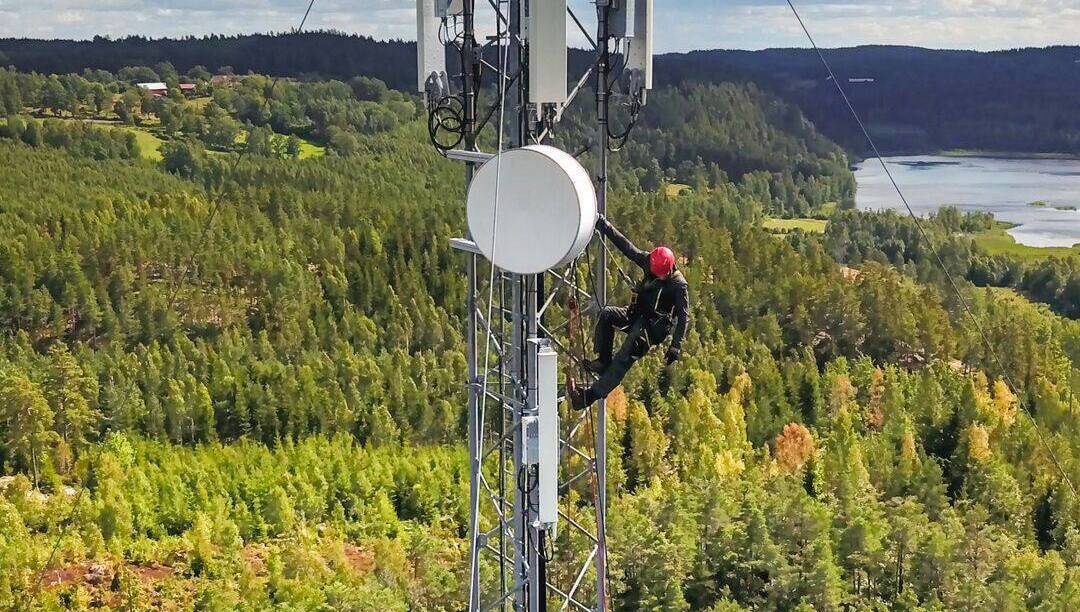
Connectivity supports everything from remote monitoring and automation to AI and health records.
Twenty-five years ago, the mobile phone was primarily a way to make a call on the move. Today, connectivity allows farmers to monitor machinery without travelling out to a field. It also underpins digital healthcare systems through which patients can manage appointments, referrals and test results.
It shows how deeply digital technology has become embedded in Irish businesses and services. Connectivity is increasingly the infrastructure supporting everything from remote monitoring and automation to artificial intelligence and electronic health records.
For Paul Flynn, Dublin chairman of the Irish Farmers’ Association (IFA), the transformation is evident in almost every part of running a farm. Administration that was once paper-based can now be recorded digitally, while the phone has become an essential working tool for farmers who spend much of their day away from an office. Reliable connectivity is vital when farmers are constantly organising work across different fields, co-ordinating deliveries and collections and dealing with the decisions involved in running a farm.
“It’s really impossible” without the technology, Flynn says. But the bigger change is what can now be monitored and controlled remotely. On many farms, connected cameras and electric gates use SIM cards, while diesel-powered generators can be monitored remotely. Equipment can send information to a farmer’s phone, allowing them to check whether a machine is operating and alerting them when something goes wrong.
Previously, someone might have had to drive to a field to check whether a generator was running. Now it can be monitored around the clock, with alerts flagging problems such as low diesel or coolant levels. “We can recognise that there’s a problem straight away, just getting a text message from the machine to the phone,” Flynn says.
This has implications not only for convenience but for productivity and cost. Real-time information can allow a farmer to identify a developing problem before it causes a breakdown, potentially avoiding costly machinery downtime. Technology is changing the machinery itself. Flynn, who grows potatoes, is evangelical about optical grading technology, which is capable of identifying and sorting unsuitable produce. He expects this type of automation to become increasingly important as farmers struggle to recruit people for repetitive physical jobs.
Flynn is also seeing greater automation in farm machinery. He describes technology on newer equipment that allows machinery working alongside a tractor to synchronise and take over elements of steering and control as it moves through a field. That can reduce the demands placed on a less experienced operator – something Flynn considers particularly useful when skilled labour is difficult to find. It is an indication, he believes, of where agricultural technology is heading, with more tasks likely to be automated as machinery becomes increasingly sophisticated and farms look for ways to operate with fewer available workers.
Artificial intelligence is beginning to find a place too. When a problem arises with machinery or crops, Flynn says AI tools can help farmers find information quickly rather than waiting to locate someone with the relevant expertise.
There are obstacles to adoption, though. Advanced agricultural equipment can be expensive and confidence in technology can vary between generations. Younger farmers may be more comfortable allowing technology to perform or monitor tasks automatically, while some older farmers can be reluctant to depend on systems they fear may not work when needed.
“The biggest problem with all the technology is that it is very expensive,” Flynn says. However, where the investment produces a return over several years, he believes it can be worthwhile.
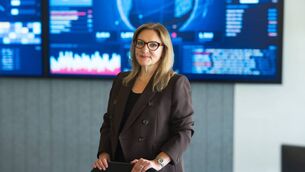
The importance of connectivity is just as pronounced in an entirely different environment. Caroline Whelan, group chief executive of Blackrock Healthcare Group, compares reliable connectivity in a modern hospital to electricity or water. “Almost every aspect of modern healthcare is really reliant on secure, resilient networks,” she says.
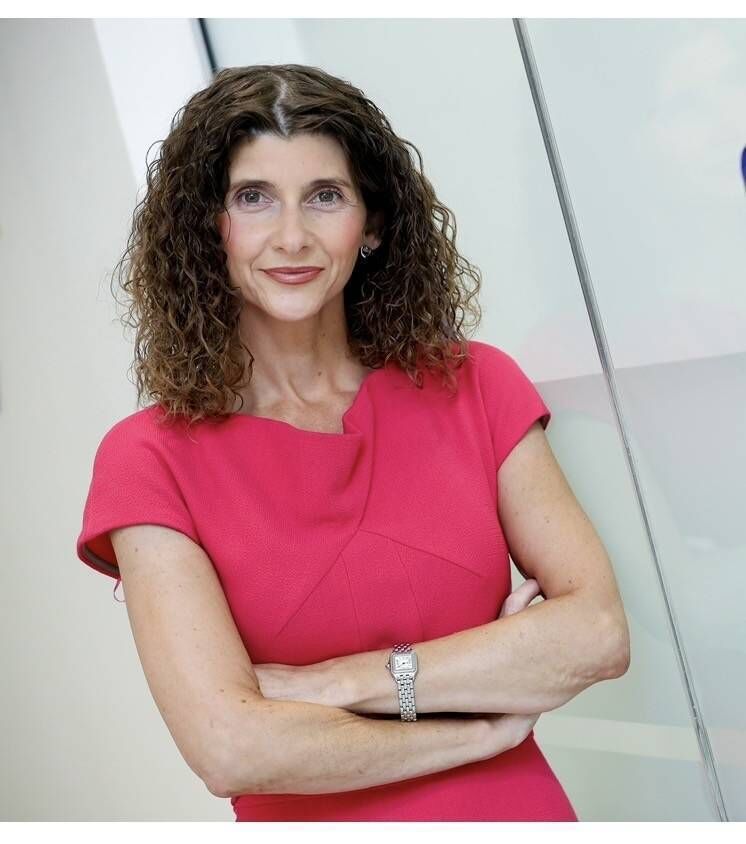
Healthcare interactions historically relied heavily on paper, manual communications and multiple systems. Blackrock Healthcare Group has been moving towards a more integrated digital model through a transformation programme that includes the MyBlackrockHealth app, common clinical systems across its facilities, and electronic health records (EHR). Those systems connect diagnostic imaging, laboratories, pharmacy and digital prescribing, while hospital operations including patient administration and communications also depend on underlying infrastructure.
“If that connectivity is not available, then our clinicians lose access to patient information, and obviously then they can’t make decisions,” Whelan says.
For patients, one of the most visible changes is MyBlackrockHealth, says Whelan. “It allows people to manage elements of their care online, including referrals and appointments, and to access results when they become available. Blackrock Healtcare Group has also developed an end-to-end digital radiology pathway integrating referrals, scheduling and results, designed to improve communication between patient, clinician and GP. For Whelan, the significance goes beyond efficiency. Giving patients greater visibility of their information can change their relationship with healthcare. “Digital technology really empowered us to empower patients,” she says.
Artificial intelligence is creating another shift. Blackrock Healthcare Group uses ambient AI technology to assist clinicians in capturing clinical conversations and producing draft documentation such as discharge summaries, care plans and follow-up correspondence. Whelan sees further potential in clinical documentation and administration, diagnostics and clinical decision support, and more personalised engagement with patients through digital platforms.
In areas such as radiology and pathology, large bodies of data might increasingly support specialists by directing their attention towards relevant information. But she stresses that technology should support rather than replace clinical judgment.
“It’s not about replacing humans in healthcare − it’s about enhancing the human experience, not replacing the human experience,” she says. If technology reduces the amount of time a doctor or nurse spends on administration, the objective is to create more time for patients.
“It should remove friction,” says Whelan. “It’s not digital for digital sake.” Greater dependence on digital systems creates risks too. Cybersecurity is one of Blackrock Healthcare Group’s most significant concerns because healthcare organisations simultaneously hold highly sensitive information and depend on digital systems to deliver care. The group’s approach includes secure infrastructure, governance, monitoring, staff awareness and training, and data-protection practices. But Whelan argues that cybersecurity should not be regarded simply as the responsibility of an IT department.
“Cybersecurity isn’t an IT issue; cybersecurity is a patient safety issue and so it’s an ‘everybody’ issue.”
Over the next five years, she expects electronic health records and interoperable clinical systems, AI, patient-facing digital platforms, advanced data analytics and resilient digital infrastructure to have some of the greatest effects on Irish healthcare.
One of the biggest opportunities, she believes, lies beyond individual organisations. Having worked in Ireland’s public health system and overseas, Whelan would like to see greater interoperability between public and private healthcare, allowing information to move more easily with patients as they travel between different parts of the system. “We should be thinking about what the citizen wants, and how we make the journey for them,” she says.
Farming and healthcare may seem far removed from each other, but they reveal the same underlying shift. Connectivity is no longer simply about making a call or accessing the internet. It sits behind machinery, sensors, clinical records, apps, automation and AI. For a farmer, that can mean knowing immediately that a generator located miles away has developed a problem. For a clinician, it can mean having the information needed to make a decision. For a patient, it can mean greater access to, and control over, their own healthcare.