The IT department question now addressed in the boardroom
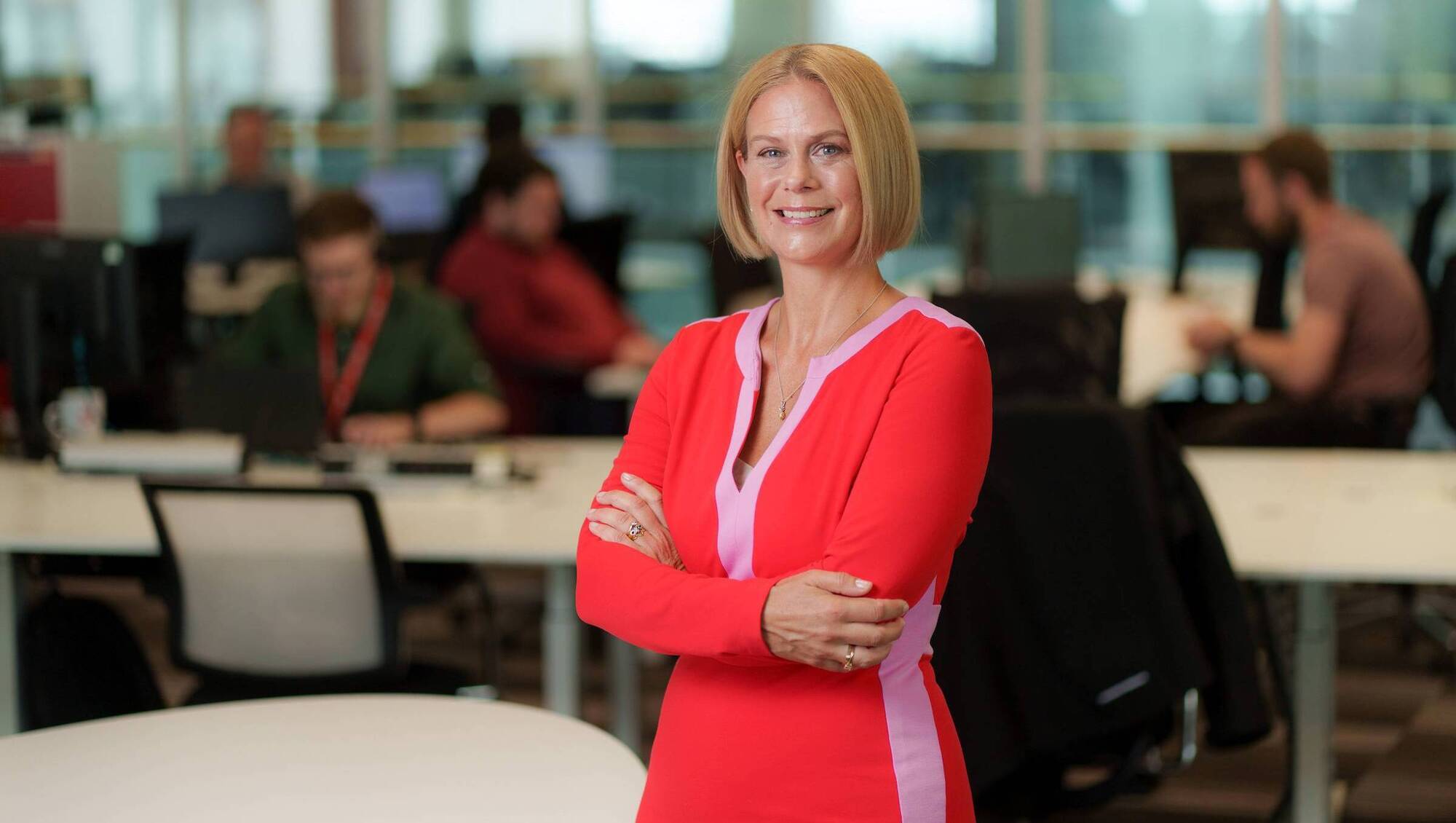
Jo Gilfoy, business director, Vodafone Ireland.
Digital transformation is no longer simply an IT issue for Irish businesses. As companies grapple with artificial intelligence, cloud computing, cybersecurity, data and increasingly sophisticated connectivity, technology decisions are moving higher up the corporate agenda.
“Digital transformation used to be something the CIO [chief information officer] talked to us about,” says Jo Gilfoy, business director at Vodafone Ireland. “What we’re seeing now is that digital transformation has moved from being a CIO or IT conversation to a boardroom conversation.”
Vodafone says many Irish businesses are customers, ranging from smaller companies to large corporates and multinationals. That gives the company exposure to businesses with very different technological requirements. Gilfoy points to two customers she has spent time with recently: Cork seafood business Glenmar Shellfish and Ryanair. Seafood in one case; aircraft in the other: “The digital transformation and the insights which matter to them are very, very different.”
Gilfoy identifies efficiency, productivity and growth among the most frequent drivers of digital transformation. Companies are also looking at how they can understand their customers better and use data to inform the way they target products and services.
Knowledge is data “Data underpins the digital transformation journey. It absolutely does,” she says. Businesses must consider how information is gathered, where it is stored, how it is protected and increasingly how AI can be used to make sense of it. For Gilfoy, that means areas such as IoT, cloud, cybersecurity and AI are increasingly connected.
“It’s not just about having a conversation about how you keep companies safe, it’s about how do they grow safely as well,” she says of cybersecurity. She sees data as central to what comes next, particularly as businesses explore greater use of AI. “There’s so much data that we need to be able to make sure that it’s controlled, that it’s secure.”
A broad scope of application The practical application of technology varies considerably between industries. Gilfoy cites construction company Sisk, whose teams can arrive at large and sometimes remote construction sites where connectivity is needed for safety applications and to access current designs and drawings. Vodafone has developed a solution with the company that can use different forms of connectivity, depending on what is available.
“It doesn’t matter what’s available. Is it 5G? Is it 4G? Is it satellite? Is it fibre?” Gilfoy says. “It’s the ability for Sisk to turn up, plug in. They are connected, and they can get going, and they can start work as fast as they possibly can.”
Connecting networks at speed Connectivity remains particularly important for businesses operating outside Ireland’s main urban centres. Vodafone says it invests €100 million annually in its networks in Ireland. Gilfoy also points to its involvement with SIRO and National Broadband Ireland and investment in technologies including satellite connectivity and 5G. But infrastructure is only part of the challenge. For businesses trying to decide which technologies to adopt, the speed at which the market is developing can itself become a barrier.
“The pace of change, and the amount of change is really, really hard to keep up with,” Gilfoy says. For businesses, the challenge is not simply keeping pace with new technology but deciding which developments deserve attention and investment. With so many options emerging, prioritisation is becoming increasingly important.
Another difficulty is deciding where to concentrate resources. “Where do you choose to put your effort and your time?” she says. “Because it’s a big learning journey.” More tech = more problems?
With a proliferation of new technologies and products, companies have to decide where to begin and which tools are appropriate to their circumstances. For smaller companies with limited internal IT resources, Gilfoy says the key is to make the conversation about the business rather than the technology. “To demystify it, that’s the biggest thing,” she says.
She recalls her experience running IoT sales in a previous role. “Nobody ever came to me and said, ‘Jo, I’d like to buy some IoT today, please.’ It’s the same thing as AI. No one phones you up and says, ‘I’d like three AIs, please’.”
Instead, Vodafone starts with the problem or opportunity facing the customer. “We don’t start with the technology or the solution. We start with ‘What’s keeping you awake at night? What’s your biggest worry’?”
Technology evolution The expansion of companies’ technology requirements is also changing Vodafone’s own role. Gilfoy says managed services are becoming increasingly important, whether for a large corporation outsourcing an element of its operations or a smaller company without specialist expertise internally. The aim, she says, is to bring different technologies and partners together rather than requiring customers to manage numerous providers themselves.
Irish businesses are already relatively advanced in some areas of technology adoption. Gilfoy points to the proportion using paid cloud computing services – 73 per cent – which she says is the fourth highest in Europe.
As Vodafone marks 25 years in Ireland this year, Gilfoy sees its future business relationships extending further into areas including satellite, 5G, IoT and managed services.
“Our business strategy is not just technology, it’s not just solutions, it’s not just partners.”
Instead, she says, there is an opportunity to combine people, technology and services in ways that help customers grow, building on the connectivity relationships Vodafone has developed with Irish businesses for a quarter of a century.