Small businesses, big possibilities
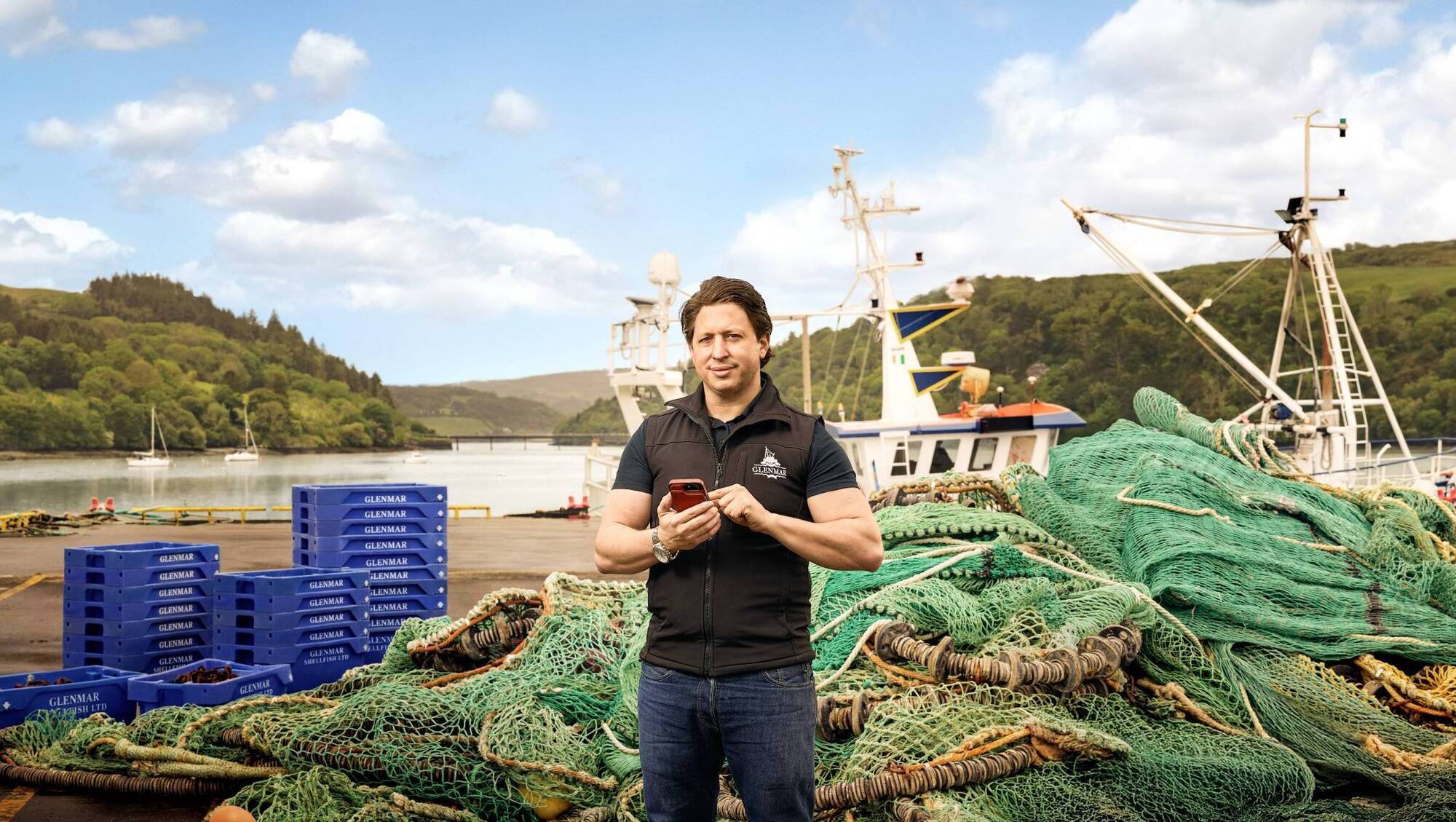
Juan Blanes, chief executive, Glenmar Shellfish.
For Ireland’s small- and medium-sized businesses, technology is increasingly about more than having a reliable phone or broadband connection. It can determine how efficiently a company operates, whether it can serve customers from anywhere and, ultimately, how far it can grow.
SMEs increasingly need sophisticated digital capabilities but rarely have the IT departments or specialist resources of larger organisations. Supporting them therefore requires technology that is practical, scalable and suited to the day-to-day reality of running a smaller business.
For Irish knitwear brand Urban Aran, that reality combines traditional craft with distinctly modern ways of working. The company reimagines traditional Aran stitch structures through contemporary jacquard knitting and influences from street art and graffiti. Its AW26 collection of fully fashioned fine-merino pieces is produced in Ireland and stocked by retailers including Brown Thomas, Avoca, and Adare Manor.
Behind the craftsmanship sits an increasingly digital operation. Urban Aran uses CLO 3D for digital sampling and grading and Create Plus for programming Stoll knitting machines, while much of the day-to-day business can be managed from a phone. As its network of stockists has expanded, Urban Aran’s Christine Murphy says digital tools have moved from being a “nice to have” to an important part of the company’s infrastructure. Vodafone mobile, wifi and broadband connectivity support activities from product imagery and retailer approvals to communications with stockists.
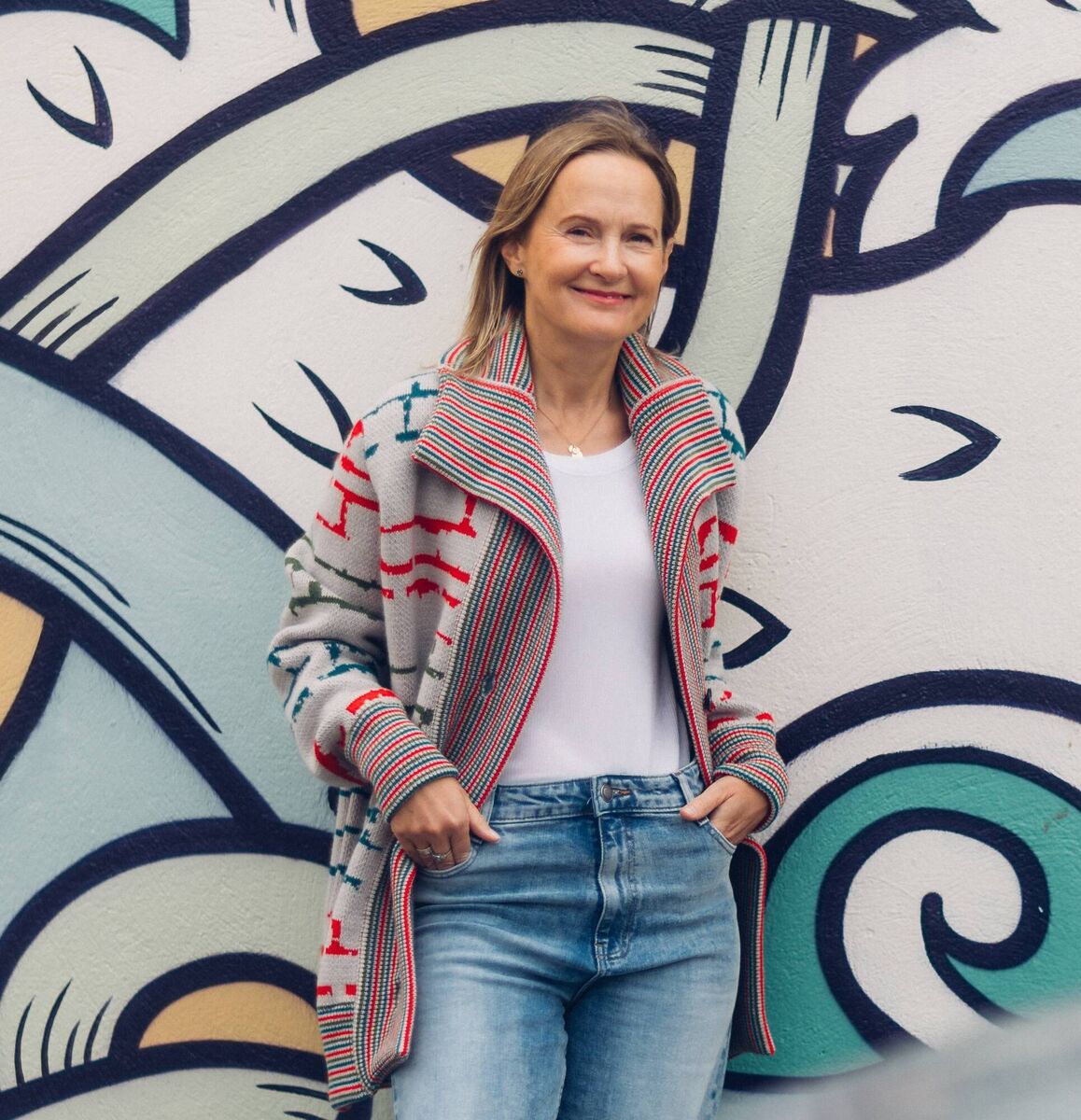
Murphy has undertaken two weeks of Stoll technology training in the Netherlands, while Shopify allows her to manage orders and stock reports from her iPhone when away from base. Much of Urban Aran’s social media activity is also managed from the device. For a largely one-person-led business, however, “technology has to earn its place without becoming a second job”, she says.
Vodafone has supported the company by giving it access to a much larger audience. Through Vodafone’s rugby advertising initiative, Urban Aran gained exposure at an Ireland Six Nations game. Vodafone’s Bring Your Business to the Big Screen competition gives winning small businesses access to pitch-side and digital advertising at Ireland home matches.
The initiative reflects a broader form of SME support: using the reach and resources of a large company to create opportunities that smaller businesses may struggle to access independently. For Urban Aran, that meant putting the brand in front of a big sporting audience. Alongside connectivity and digital tools, that kind of visibility can be particularly valuable for smaller companies trying to build recognition, reach new customers and establish themselves in increasingly competitive markets.
For Dairyglen, meanwhile, the evolution of technology can be traced across the company’s 30-year history. The Irish-owned company provides managed solutions across soft-serve ice cream, acai, milkshakes and frozen drinks. It began with a man in a van delivering consumables to customers, when the telephone and fax machine operated alongside what the company describes as a “Bic biro and carbon-copy paper”.
Today, Dairyglen has developed into an end-to-end service partner for the retail, forecourt, convenience and food-service sectors. Through its Smooch brand and Fully Managed Solutions model, it provides services ranging from installation and staff training to machine servicing, preventive maintenance and quality control. Connectivity has become an important part of making that model work.
Vodafone provides Dairyglen with IoT-enabled SIMs installed in connected machines, allowing them to communicate with its remote monitoring systems. Its technical team can monitor machines, review alerts and assess potential problems remotely. According to Dairyglen, the change has produced measurable results. Before implementing the Vodafone IoT solution, approximately half of its connected machine estate was consistently online. That figure has since increased to more than 90 per cent.
The impact became particularly apparent following the company’s expansion into Northern Ireland. In 2025, Dairyglen signed a contract with a large symbol group there, its first Fully Managed Solutions contract outside the Republic. Dairyglen says inconsistent machine connectivity contributed to 16 unscheduled service calls and approximately 32 cumulative days of machine downtime during the first year.
After the machines moved to Vodafone IoT SIMs in 2026, the company says this fell to one unscheduled service call outside routine cleaning visits, with virtually no machine downtime recorded. Improved remote visibility means technicians can assess more problems remotely. Where an engineer is required, they can often arrive with a better understanding of the problem and the likely parts or actions needed.
Dairyglen has also moved to pooled data. Rather than each SIM having an individual allowance, data is managed across its connected estate, allowing the company to monitor consumption and manage costs more predictably. The company’s next ambition is a wider roll-out of its managed-services model across the UK and, over time, selected European markets. Remote monitoring, connectivity and centralised data will form part of the infrastructure supporting that expansion.
For Dairyglen, this is particularly important as the business expands beyond Ireland. Its experience in Northern Ireland demonstrates how connectivity can support a managed-service model across a wider geographical area, without requiring every issue to be dealt with first through an engineer visiting the site. That ability to monitor equipment remotely and manage a growing connected estate centrally will also be important as the company pursues further expansion.
For seafood business Glenmar Shellfish, connectivity supports a very different kind of operation. The Irish seafood exporter, importer, processor and distributor receives hundreds of domestic and international orders through different platforms and at all hours. It also services fishing vessels around Ireland that can land their catch at any hour.
Glenmar uses Vodafone mobile and broadband services, with chief executive Juan Blanes pointing to coverage in rural Ireland as particularly valuable to a fast-moving business. Good connectivity, Blanes says, helps Glenmar reach domestic and international customers quickly and without interruption, supporting its sales activity. The company is also becoming increasingly digitalised as it seeks greater efficiency across its operations.
While Urban Aran, Dairyglen and Glenmar operate in very different sectors, their experiences point to common requirements among Irish SMEs. For Dairyglen, responsive support is particularly important. The company argues that SMEs can have many of the same technology requirements as larger enterprises while lacking their internal specialist teams. Transparent and predictable costs also matter.
Urban Aran similarly points to the value of low-friction, tailored support. Murphy also highlights access to structured learning, expertise and networks as areas where larger companies can help SMEs develop capabilities they may struggle to access alone. It is a theme that fits into a wider milestone for Vodafone in Ireland. The company is marking 25 years in the Irish market, with its Vodafone Business anniversary campaign highlighting relationships with businesses ranging from indigenous companies such as Glenmar Shellfish, Butlers Chocolates and Weir & Sons to larger organisations including Sisk and Ryanair.
Over that period, what businesses expect from connectivity has changed dramatically. Phones and broadband remain fundamental, but they increasingly sit alongside technologies such as IoT, remote monitoring and other digital tools. The experiences of Urban Aran, Dairyglen and Glenmar show how differently those technologies can be applied: allowing a small fashion brand to operate away from base, enabling technicians to monitor machines remotely or keeping a seafood company connected to customers and suppliers.
Support can also go beyond technology, providing access to expertise, networks or an advertising platform that would otherwise be difficult for a small company to reach. For Irish SMEs looking to grow, those advantages can provide something increasingly valuable: the reach and capabilities to compete on a much bigger stage.