The taste of Ireland today
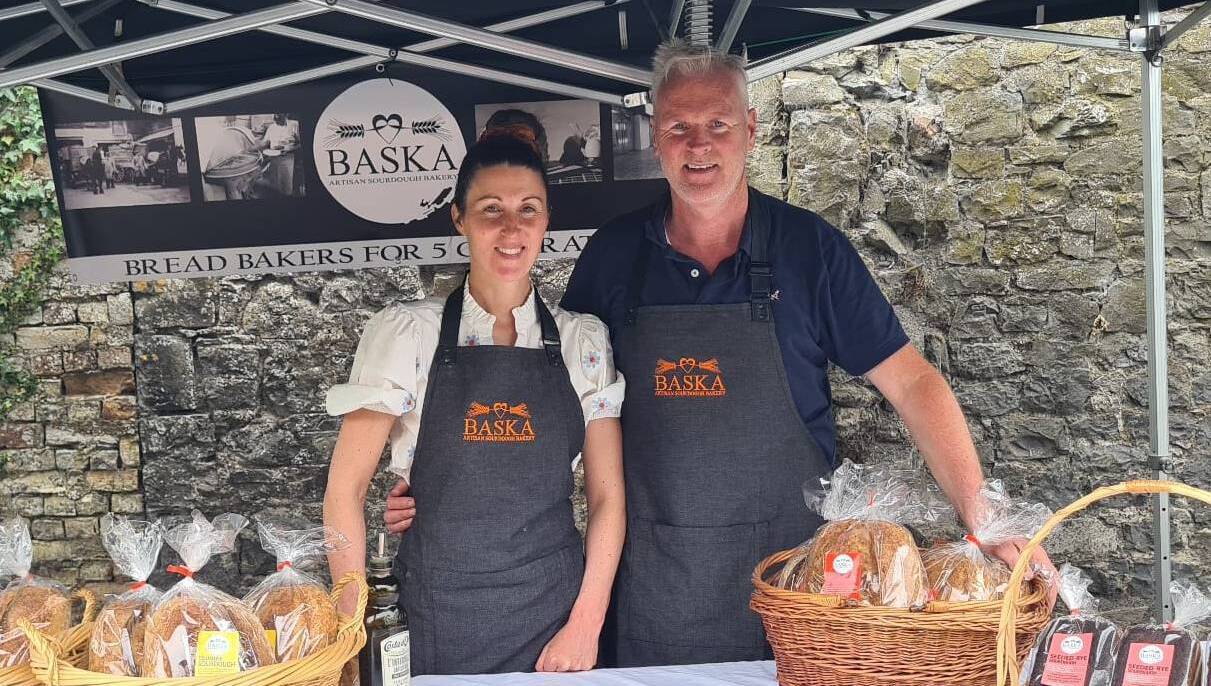
Sarah Steen and John Mallon of Baska Bakery.
Dingle is an excellent place to start if you want to know how Ireland is eating in 2026. Each autumn, Blas na hÉireann brings food and drink from across the island to the town, and after 19 years, the awards offer a fascinating snapshot of how our tastes have changed.
More than 3,000 products were entered for the Irish Food Awards this year. Alongside the dairy, meat and baking for which Ireland has long been known are fermented foods and hot sauces, exotic mushrooms, smoked salts and cheeses, artisan breads and a growing range of sauces, condiments and preserves.
Some of what feels current has deep roots. What has changed is the company those older foods and techniques now keep, as ingredients and flavours that would once have seemed unusual have become part of the everyday Irish larder.
Fallon Moore of Blas na hÉireann has watched that shift through the entries. “The Irish palate is more adventurous,” she says. “We are exposed to lots more global tastes and cultures that are coming here, but we’re not losing sight of the really good quality basics that make Irish food so special, which is things like our dairy, our meats, our small producer network.”
Bread is a case in point. Sourdough exploded during the pandemic and, while most of us have long since abandoned our sourdough starters, Moore believes it left us with higher expectations. “People might be buying a little bit less in terms of quantity but expecting more in terms of quality,” she says.
Blas judges even talk about their “weekend sourdough”: “They’re getting a really nice bread for the weekend. That’s what they’re going to enjoy, and they’re quite happy to pay for that.”
For Sarah Steen and John Mallon of Baska Bakery, sourdough changed rather more than their Saturday shopping habits. Steen was working from home in IT in 2021, while Mallon, a railway engineer, was no longer making his regular commute to the UK.
One of their outings was to the farmers’ market where a baker sold sourdough. The bread was so popular that they regularly arrived too late to get any. Then, one Saturday in December, there were two loaves left. They grabbed them, only to discover that the baker was winding up the business. A few conversations later, Steen and Mallon had bought it and, within a fortnight, they were baking.
“It all happened very fast,” says Mallon, while Steen remembers feeling that “it almost felt like it was sent to us”.
There was family history in the mix. Steen is the fifth generation of her family to go into baking; her grandfather ran McCann’s Bakery in Dundalk, a business that had originatedin Newry. Mallon also comes from a baking family, although neither had worked in the trade before. At Baska Bakery in Co Meath, a loaf takes three days to make and is produced largely by hand using organic, stone-ground flour.
The ingredient list is short: flour, water and salt. Steen has noticed customers taking a much keener interest in precisely that sort of detail.
“The general customer now is much more aware and focused on the small print on the label and what’s in their bread,” she says. “For us it’s very easy to sell flour, water and salt,” Mallon adds. That simplicity has also done well at Blas. In 2025, Baska took silver for its Organic Multiseed Sourdough and bronze for its Organic Large Sliced Sourdough, while its Organic Country White Sourdough was also a finalist.
The return to older ways of eating is not confined to bread. Moore, whose father Artie Clifford founded Blas in 2007, has recipes belonging to her great-grandmother and is struck by how many are vegetarian. Meat, she points out, was only eaten a couple of days a week. “I actually think we’re returning to a way that we would have eaten before,” she says. Blas is seeing vegetables and produce given greater weight on the plate, with diners quite happy for mushrooms, for example, to be the main event rather than a side dish.
Joe Gorman came to those mushrooms after 29 years growing white buttons, harvesting around 17 tonnes a week largely for export. Brexit and the movement of sterling made that business unviable, so he walked away and started again. Garryhinch Wood Exotic Mushrooms, on the Laois-Offaly border, now grows shiitake, king oyster, yellow and grey oyster, lion’s mane and maitake.
He knows some customers still need persuading. “They look at them and they look fancy and all that, but it’s literally, how do you cook them?” he says. “They’re just a bit afraid of something that they’re not used to.” Blas has been part of Garryhinch’s story almost from the beginning. Gorman says winning four awards after its first year in business was “massive”, giving the company “the boost to keep moving forward” and an icebreaker with prospective clients.
Irish Smoked Meats is new to Blas this year, although the Albrecht family’s history in food goes back much further. Andreas Albrecht’s father trained as a master butcher in Germany before coming to Ireland and setting up the business in Dundalk.
Andreas remembers smokehouses where sawdust was set alight on the floor. The process is computerised now, although the products are still hand-finished. Smoke is turning up across the Blas entries in salt, chicken and cheese, something Moore puts down to people being more interested in playing with flavour. Albrecht’s explanation is simple. “Smoking puts a lovely flavour to products,” he says. “You eat with your eyes and your nose.”
A taste for fermentation
Kimchi was a rarity among the Blas na hÉireann entries in the early years. Nearly two decades later, fermented foods are a much more familiar presence. “In the very early years, kimchis and fermented foods were kind of very unusual to have entered with us,” says Blas na hÉireann’s Fallon Moore.
Fermentation has long been part of foods such as bread, cheese and yoghurt, but the range now coming through Blas is considerably broader. Kimchi and other fermented foods sit alongside kombucha and alternative drinks, another area where Moore says the awards have seen considerable growth.
The change is apparent not only in what is being entered, but in how those products are received. Moore says there is now “much broader acceptance across the judging palate” for fermented foods, pickles and newer flavours.
“People are far more open to taste ingredients that maybe weren’t traditionally part of our larder, or flavours that we certainly wouldn’t have grown up with, but that we’re more than happy to have on the table regularly now.”