Age Friendly Ireland: Savings advice to fund your retirement years
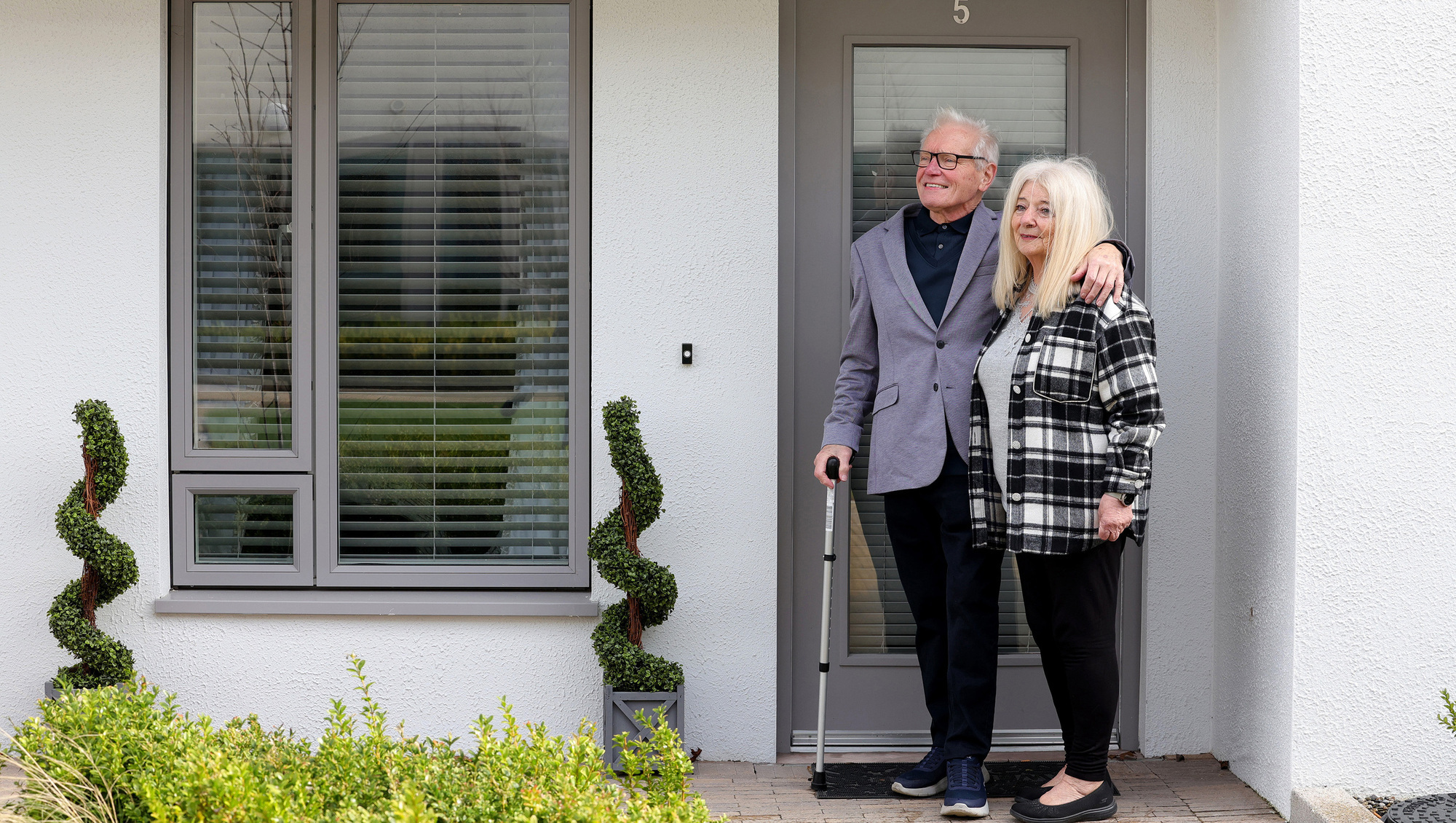
John and Teresa O'Reilly, residents in the Housing with Support scheme for older people in Inchicore, Dublin 8. The project was delivered through a partnership between Circle Voluntary Housing Association, Dublin City Council, ALONE, the HSE, the Department of Health, and the Department of Housing, Local Government and Heritage and Age Friendly Ireland. Picture: Jason Clarke
With longevity increasing, and a typical retirement often spanning 25 to 30 years, the traditional roadmap for retirement planning is being rewritten.
In this exclusive Q&A, Dr Emer Coveney, national programme manager at Age Friendly Ireland, talks protecting your wealth and maximising your financial and personal well-being in later life.
A private pension can give people greater choice. Longer lives do not necessarily mean everyone should have to work for longer. The objective should be to give people options about when and how they step back from work. Building additional retirement income can provide more flexibility, but we should think about retirement planning much more broadly. Financial security, suitable housing, health, social connection and access to services all influence whether someone can enjoy a good quality of life as they age.
We need to look at pension policy in the context of how dramatically later life is changing. For many people, retirement could now represent 25 or 30 years of their life. That requires us to think beyond a single retirement date and towards a much longer period in which people’s circumstances, health, housing and income needs may change considerably. Policy needs to reflect that diversity rather than assuming everybody will follow the same path from full-time employment into retirement at a particular age.
That is why accessible, trusted financial guidance is so important. People need to understand not simply what they have accumulated, but what that means for their day-to-day life over potentially several decades. Housing costs, inflation, healthcare, energy, transport and the possibility of needing additional support later in life all matter. We need to make long-term planning easier to understand so people can make informed decisions rather than discovering after retirement that their assumptions did not reflect their actual needs.
Absolutely. One of the most important questions is not simply, “Can I afford to retire?” but, “What do I want my later life to look like?” Where will I live? Is my home suitable for me as I get older? How will I stay active and connected? What role will work, volunteering, family, friends or community play? Financial planning should support the life someone wants to live. A good retirement is about independence, participation and quality of life, not simply income.
Housing and financial security are closely connected, but owning a valuable home does not necessarily mean someone has a high disposable income. A home also carries costs around maintenance, heating, insurance and adaptation as people age. We need better conversations about the full range of choices available, including adapting an existing home or right-sizing where somebody wants to do so. Crucially, those conversations should be about supporting choice and independence, rather than assuming that somebody’s home is simply a financial asset to be unlocked.
Ageing at home is only a genuine choice when the right supports exist around the person. We cannot build a system that assumes everybody has children, relatives or neighbours available to step in. Homes need to be safe and suitable, services need to be accessible, and people need to know where to turn for help. That is exactly the thinking behind programmes such as Healthy Age Friendly Homes, which connects older people with supports ranging from housing adaptations and energy efficiency to community and income supports. Independence should not depend on having family nearby.
There is progress, but there is still significant work to do. We need to move away from assumptions that reaching a certain age automatically means someone has less to contribute. Age Friendly Ireland’s Workplace Pathfinder found that among workers aged 45–65, flexible working was the single biggest support identified for remaining in employment longer, cited by 37% of respondents. Employers should be looking at flexibility, phased retirement, succession planning and how they retain valuable experience. Longer working lives should be enabled where people want them, rather than imposed or prevented because of age.
Caring is enormously valuable work, but stepping away from paid employment can have financial consequences that continue long after the caring role itself has ended. That cumulative impact is part of the conversation about retirement security. Through the work of the Commission on Care, we are looking at the provision of health and social care and how we can best support people in this area. We need to look at retirement policy through the lens of people’s entire lives and recognise that working lives are not always continuous or straightforward.
It is certainly something that deserves attention. Many household costs do not halve simply because only one person is paying them. Housing, heating, utilities, insurance and transport can place proportionately greater pressure on someone living alone. There is also a wider question about support networks: a partner will often provide practical or informal support as circumstances change. Planning for later life therefore needs to recognise different household types and be aware that not everybody will enter older age as part of a couple.
Digital services can bring enormous benefits, including convenience and greater independence, and many older people are enthusiastic technology users. But digitalisation must not create a new barrier to essential services. People have different levels of confidence, access and ability, at every age. We need digital services that are accessible and easy to use, alongside appropriate human assistance and alternative ways to access essential services. Inclusion means giving people choices rather than forcing everybody through the same channel.
First, plan for your life rather than simply your retirement date. Think about your finances, but also about what you want your work, home and everyday life to look like. Second, think about your home and health early. Small decisions now about accessibility, physical activity and maintaining independence can make a significant difference later. Third, invest in your connections. Stay involved in your community, maintain friendships and interests, and keep building networks around you. Financial security matters enormously, but a good later life also depends on having purpose, choice, independence and connection.