Graduate of 2027: Skills choices hold key to employability in the age of AI
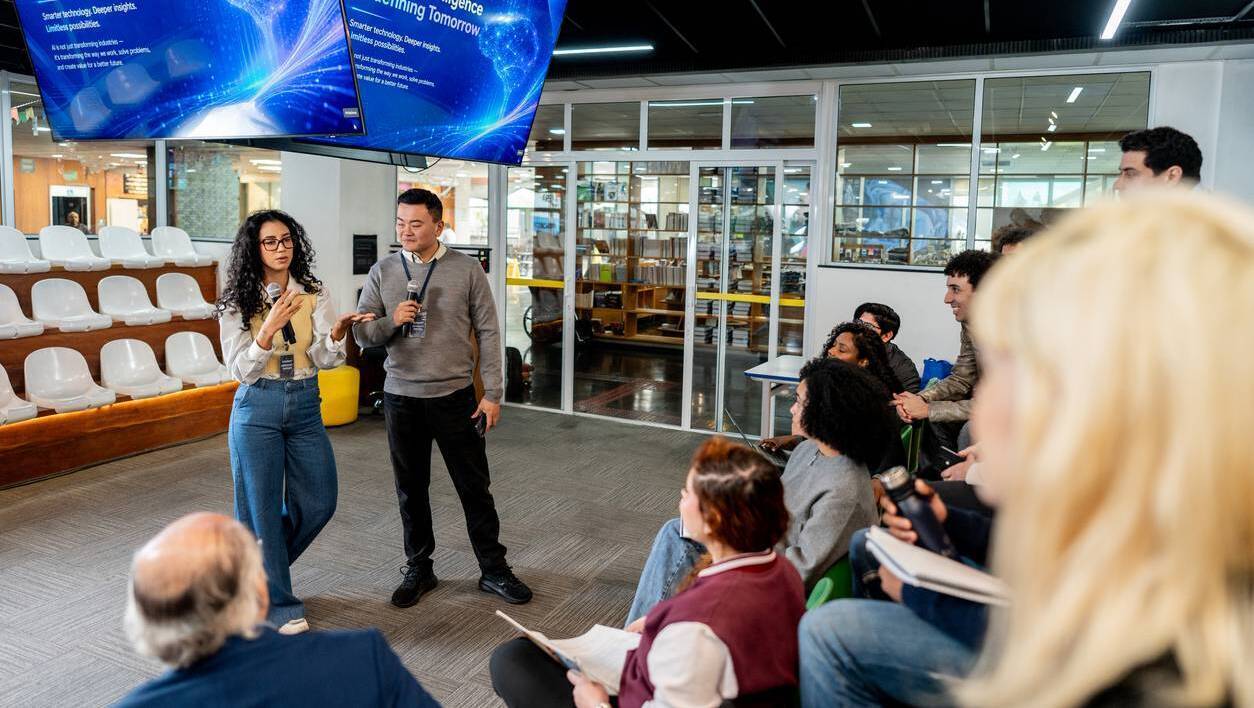
The entry level jobs market is not disappearing, but graduates are keenly aware that technology and AI skills are central to their long-term employability. Photo: iStock
A new academic year means the beginning of a new graduate recruitment cycle. For employers hiring the Class of 2027 and beyond, the rules are changing, according to Sinead D’Arcy, early talent strategist and founder of Future-Roots.
“Artificial intelligence is reshaping what employers need from new recruits, while recruitment is increasingly shifting from what qualifications someone holds to what they can actually do. For students and graduates, the challenge is increasingly clear: if AI can draft emails, summarise reports, analyse spreadsheets, write code and produce presentations in seconds, what will graduates and entry-level professionals be expected to contribute?” She adds that for employers, the challenge is equally significant.
“If AI takes on some of the traditional entry-level tasks through which young professionals developed their skills and experience, how do organisations develop the next generation of talent? AI is changing the nature of work and much is being written about its impact on early-career work in particular.”
Many tasks readily automated by AI such as research, documentation, data cleaning, basic coding, drafting and preliminary analysis have traditionally helped young professionals develop their skills and expertise. If technology does more of the entry-level work, how do young professionals develop judgement, professional confidence and an understanding of what good work looks like?
The University of Limerick’s 2026 Early Careers Employer Survey, based on 269 employers recruiting graduates or placement students, found that 66% were hiring graduates as planned, with a further 24% still hiring but more cautiously.

“The graduate jobs market is therefore not disappearing,” she explains. “However, among employers experiencing changes to entry-level roles, 28% identified increased productivity through technology or AI as a factor, while 57% described those changes as long-term or structural. This gets to the heart of the AI debate.
“The question for employers is not simply whether AI will reduce the number of graduate jobs, it is what a graduate job should look like when technology can already perform some of the tasks traditionally undertaken at entry level. To safeguard an organisation’s talent pipeline from graduate to manager to leader, employers will need to proactively redesign early-career roles so that graduates still have meaningful opportunities to solve problems, work with others, exercise judgement and learn from experienced colleagues.”
When considering the future of work a natural topic that arises is that of AI literacy, Sinead observes, with a a temptation to equate AI literacy with knowing how to use ChatGPT, Microsoft Copilot or another generative AI tool.
“That is too narrow. Being AI literate means understanding what AI can and cannot do, knowing when to use it, critically evaluating its output, recognising errors and bias, understanding data and privacy risks, and applying sound human judgement to decide when AI should, or should not, be trusted. This is becoming a mainstream workplace issue rather than simply a technological one.”
Under the EU AI Act, organisations using AI are required to take measures to develop appropriate AI literacy among relevant staff. Ireland’s own data illustrates why this matters. The CSO reports that 56% of people surveyed understand AI well enough to explain it to someone else, while among 18–29-year-olds the figure is more than 80%.
“However, familiarity is not the same as competence. Irish businesses are moving rapidly too. CSO data shows that 20.2% of enterprises used AI in 2025, up from 8.1% in 2023, with almost 58% of large enterprises using it. AI is already being applied to areas including data mining, natural-language generation, workflow automation and decision-making. The implication for graduates is that they don’t just need to be familiar with AI tools and platforms, they need to learn how to work effectively in an AI-enabled workplace. Being familiar with AI is no longer enough.”
This sits alongside another major shift in recruitment, the move towards skills-based hiring, she points out.
“Degrees remain important. They provide knowledge, disciplinary expertise and evidence of the ability to learn. In some professions, qualifications are essential. However, a qualification is increasingly only one part of the employability equation rather than the whole story. Employers want to know what candidates can actually do with what they have learned. For students, this means thinking beyond the qualification itself. A good graduate increasingly combines knowledge, skills and evidence. Employers want people who can think critically, communicate clearly, collaborate, solve problems and adapt.”
In her work as an early talent strategist Sinéad partners with organisations to define and refine their early talent strategy across the full 360 employee experience from attraction to selection, onboarding, ongoing development, retention and off- boarding.
With over 20-years’ experience establishing and leading award-winning graduate programmes across banking, telecommunications and FMCG sectors, she has developed unique experience in supporting organisations unlock the potential and power of its early talent strategy to have maximum organisational impact.
The World Economic Forum’s Future of Jobs Report 2025 identifies analytical thinking as the leading core skill, alongside resilience, flexibility, creative thinking, technological literacy and curiosity. It estimates that 39% of workers’ existing skill sets will be transformed or become outdated by 2030.
“The skills economy also means there are more ways to build those capabilities. Ireland had more than 31,000 apprentices in training across 78 programmes by November 2025, with newer apprenticeships extending into areas including business, operations, accounting and engineering. The Business and Operations Apprenticeship launched this year, which leads to a Level 6 qualification, is an example of initiatives combining paid employment with accredited education.”
What does this mean for the Class of 2027? Sinead suggests that firstly, through their college work, graduates have the opportunity to develop the skill of using AI without outsourcing their thinking.
“Where AI produces an answer, question it, check sources, identify assumptions and ask whether the output actually makes sense.”
Secondly, it is important to learn principles rather than platforms. “Tools will change quickly. The enduring skills are understanding prompting, verification, bias, privacy, confidentiality and responsible use.”
Finally, it is important to build evidence of what you can do - placements, part-time work, volunteering, projects and extracurricular activities can demonstrate communication, teamwork, initiative and problem-solving.
“The future graduate will not stand out in an AI-enabled workplace by simply knowing how to use ChatGPT. They will stand out because they know when to use AI, how to use it, when to question it and what to do with the answer.”