Sky's the limit: Ireland's best places to view the stars
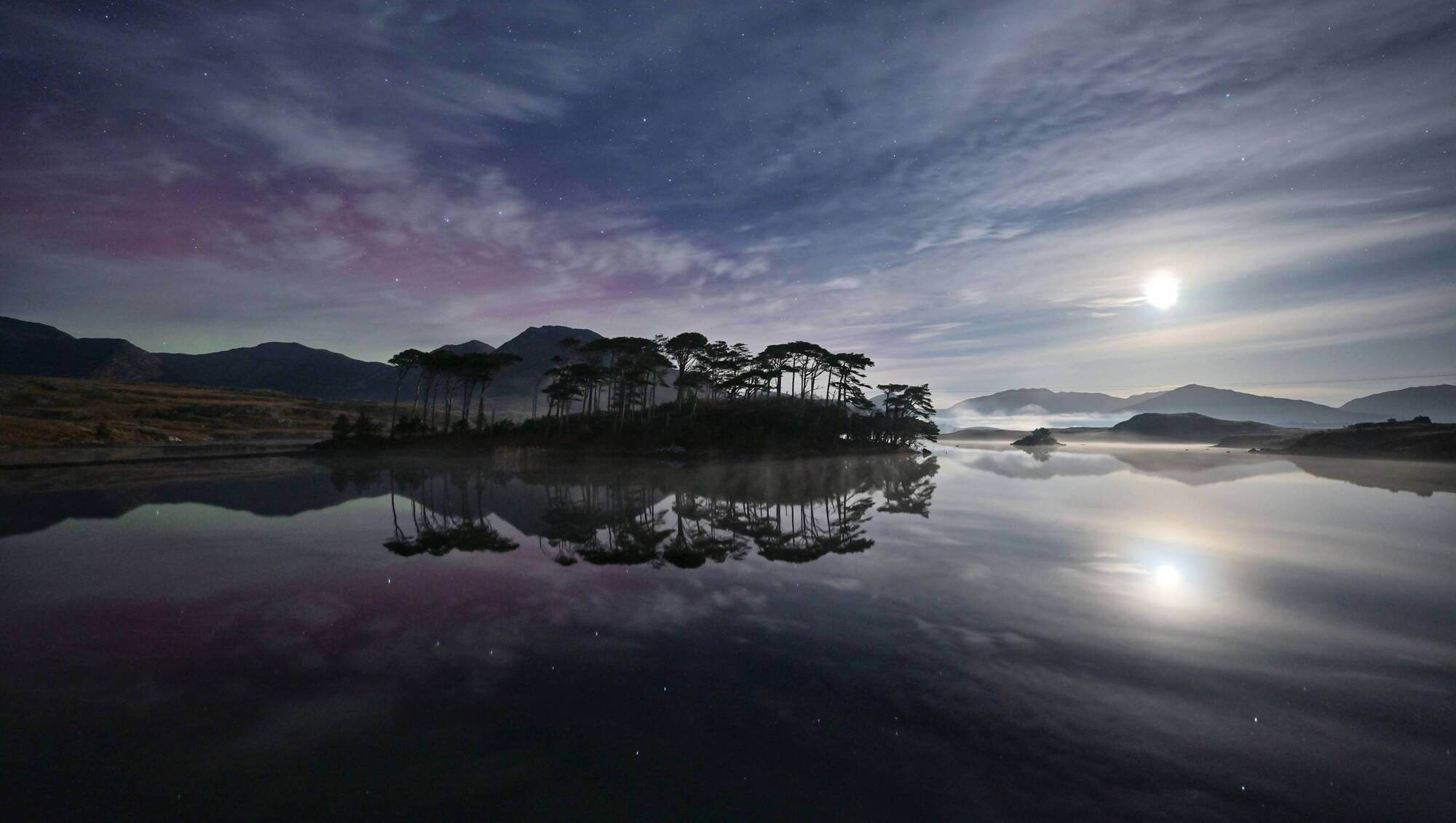
Aurora Borealis, Derryclare Lough, Connemara, Co Galway. Photo: Fáilte Ireland and Chaosheng Zhang
Oscar Wilde once mused that everyone was in the gutter, but the lucky among us had our gaze fixed firmly on the stars. And as an Irishman, the witty scribe knew a thing or two about the magnificence of our skyscape.
In fact, our Stone Age masterpiece, Newgrange, whose passage and chamber are aligned with the rising sun around the winter solstice, is one of many reminders that the Irish people have long maintained strong celestial connections.
Today, the island of Ireland holds a trio of Dark Sky accreditations: Kerry International Dark Sky Reserve, Mayo Dark Sky Park and Tyrone’s OM Dark Sky Park and Observatory. This coveted status, which recognises the absence of light pollution in their night skies, was achieved through years of careful monitoring.
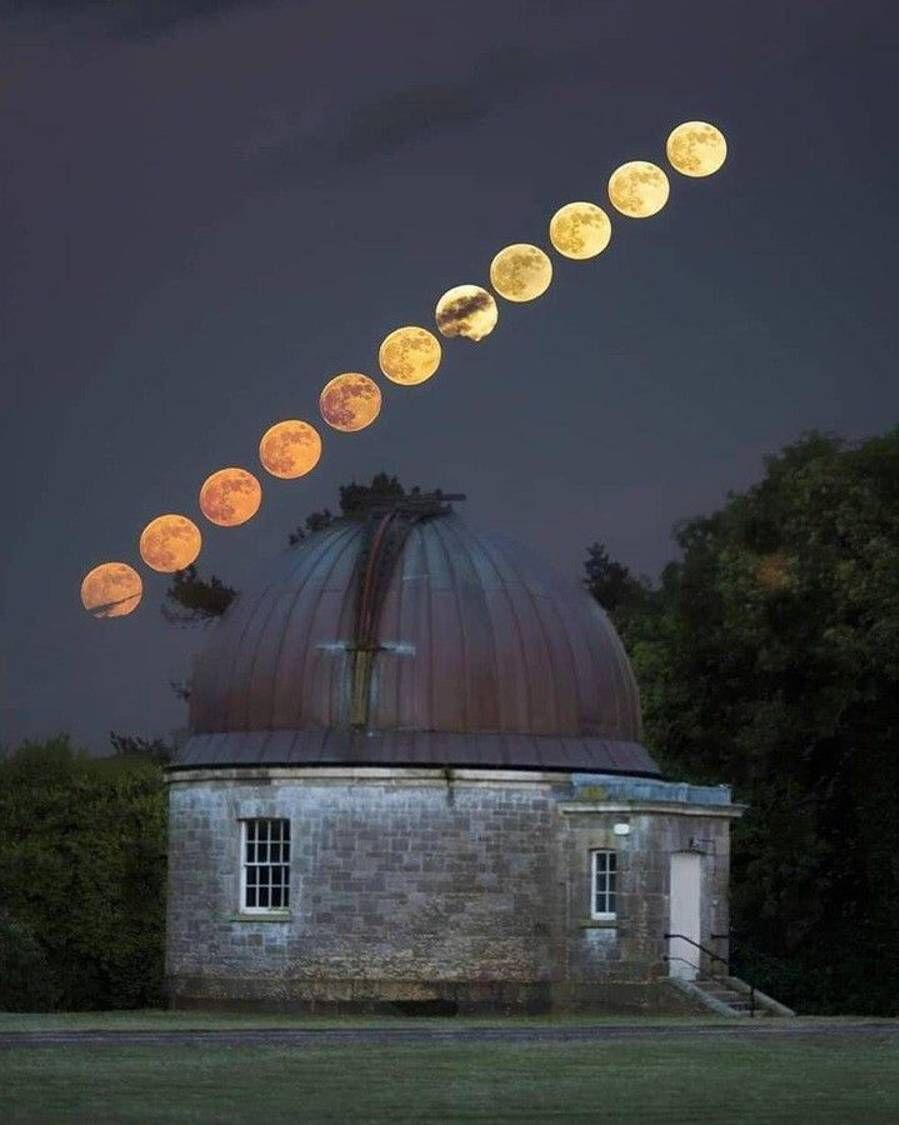
To the delight of rural communities, Ireland’s astro-tourism is seeing a surge in interest, not only at these three locations but also in remote spots across the island, especially between September and April when nights are longest and darkest. As a bonus, our northerly position means that during periods of strong solar activity, stargazers might even glimpse the aurora borealis.
“Plan your observing session because knowing which planets, meteor showers or nebulae are visible is key,” Caoimhe Lyons from Blackrock Castle Observatory suggests. She also recommends finding out “what the moon is up to”, as its light can obstruct your view of the stars and other objects in the sky.
“Software like Stellarium is brilliant for mapping what will be in the sky,” Caoimhe adds. “Binoculars and small telescopes can go a long way if you get your timing right. Also, being somewhere elevated or on a beach means it’s less likely that trees, buildings or other structures will obstruct your view.”
Whether you’re an expert stargazer or a novice, or are simply drawn to these sanctuaries of tranquillity to escape the chaos of modern life, this guide offers insights into the best places to witness the wonders overhead.
And despite Mr Wilde’s claims, none of them involves any gutters.
In 2014, South Kerry became the first place in the Northern Hemisphere to be designated a Gold Tier International Dark Sky Reserve. In addition to a coastline of cliffs, coves and beaches, the reserve extends inland to Ballaghisheen, with many archaeological sites scattered across the landscape. Standing alongside a Neolithic or Bronze Age site on a starry night offers the perfect way to connect with our ancestors.
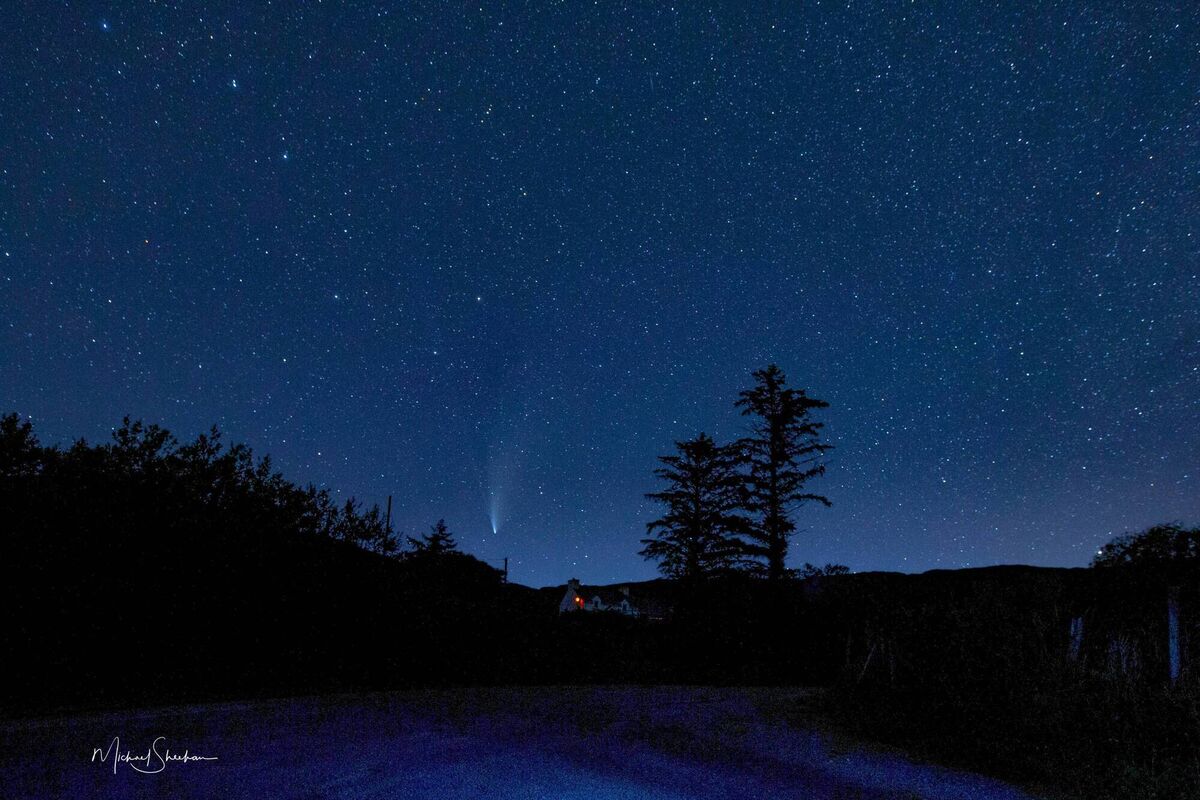
Constellations closest to the Pole Star, such as Ursa Major and its well-known asterism, the Plough, are visible all year round here. Orion, the iconic constellation, is visible from late September to April, and in the summer, the Milky Way dazzles.
Kerry Dark Sky Tourism participates in several events throughout the year, including the Skellig Coast Archaeology Festival in October and Heritage Week in August. kerrydarkskytourism.com
“The Kerry Dark Sky Reserve feels far from a city and closer to the stars,” says archaeologist Aoibheann Lambe, co-owner of Kerry Dark Sky Tourism, which offers stargazers immersive astronomy and heritage experiences.
“It reminds us that we are tiny and part of something greater than ourselves. We are, after all, made of stardust. The dark skies connect us to everyone, past and present, who has ever looked up.”
1. Derrynane Beach
2. Com an Chiste (Coomakista)
3. Castlecove
4. St Finian’s Bay
5. Staigue Fort
6. Valentia Island
The historic Royal Valentia hotel is a convenient base. Their Dark Skies Package runs on selected dates from October to March. royalvalentia.ie
For over 60 years, Waterville’s family-run Lobster Restaurant and Bar has been impressing travellers on the Ring of Kerry with award-winning seafood. thelobsterwaterville.com
Located on Valentia Island, the Skellig Experience Visitor Centre is dedicated to the Unesco World Heritage Site of Skellig Michael. Alongside boat tours (weather permitting), the centre brings the magic and mystery of these famous rocks to life through film presentations, reconstructions and soundscapes.
skelligexperience.com
As the sun fades, Wild Nephin National Park transforms into Mayo Dark Sky Park, where views of the Milky Way, meteor showers, planets, stars and, on occasion, the aurora borealis await. The site, named International Dark Sky Place of the Year in 2024, is free to access at any time. There are also exhibits to admire at the Ballycroy Visitor Centre.
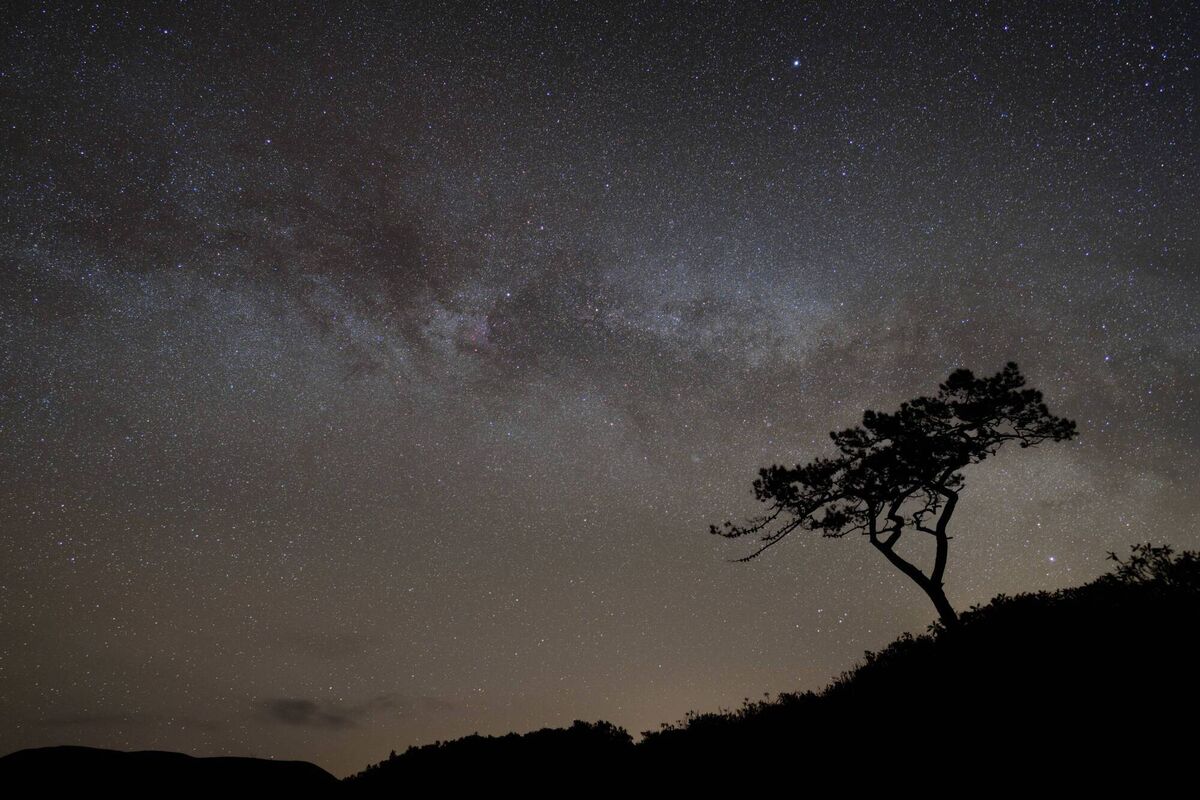
Wild Nephin National Park is twinned with Yosemite National Park, and they have extended this connection to protect their nocturnal nightscapes and biodiversity under the tagline, ‘Two parks, one sky’.
At different times throughout the year, the park hosts free events, including weekly walks. The annual Mayo Dark Sky Festival is soon to celebrate its tenth anniversary, with an exciting programme of events running on October 30th and November 1st. Other meteor showers include the Geminids in December and the Lyrids in April.
mayodarkskypark.ie
“Mayo is working towards becoming an International Dark Sky Reserve, which will encompass the whole county, further protecting the dark sky park as its core and darkest centre,” says Georgia MacMillan, Mayo Dark Sky Park development officer.
“The future reserve will provide further access to peripheral sites across the county, including the north coast of Mayo for the aurora views, and island communities such as Inishturk at the edge of the Atlantic.”
1. Ballycroy Visitor Centre
2. Claggan Mountain Coastal Trail car park
3. Letterkeen Trail Head
A short drive from Ballycroy Visitor Centre is the four-star Mulranny Park Hotel, a firm favourite with locals and tourists alike, thanks in part to its majestic views of Clew Bay. mulrannyparkhotel.ie
Ginger and Wild is a light and airy café next to the Ballycroy Visitor Centre. The homemade food is crafted from locally sourced produce and its gallery showcases Irish artwork. gingerandwild.com
The Céide Fields Neolithic Site contains the world’s oldest known stone-walled fields, dating back nearly 6,000 years.
OM Dark Sky Park and Observatory, the only one of its kind in Northern Ireland, is a truly special destination for stargazers. Its name honours the sound of the universe while also referencing Ogham, our ancient alphabet, both of which perfectly encapsulate a visit here; connections to our past and present abound.
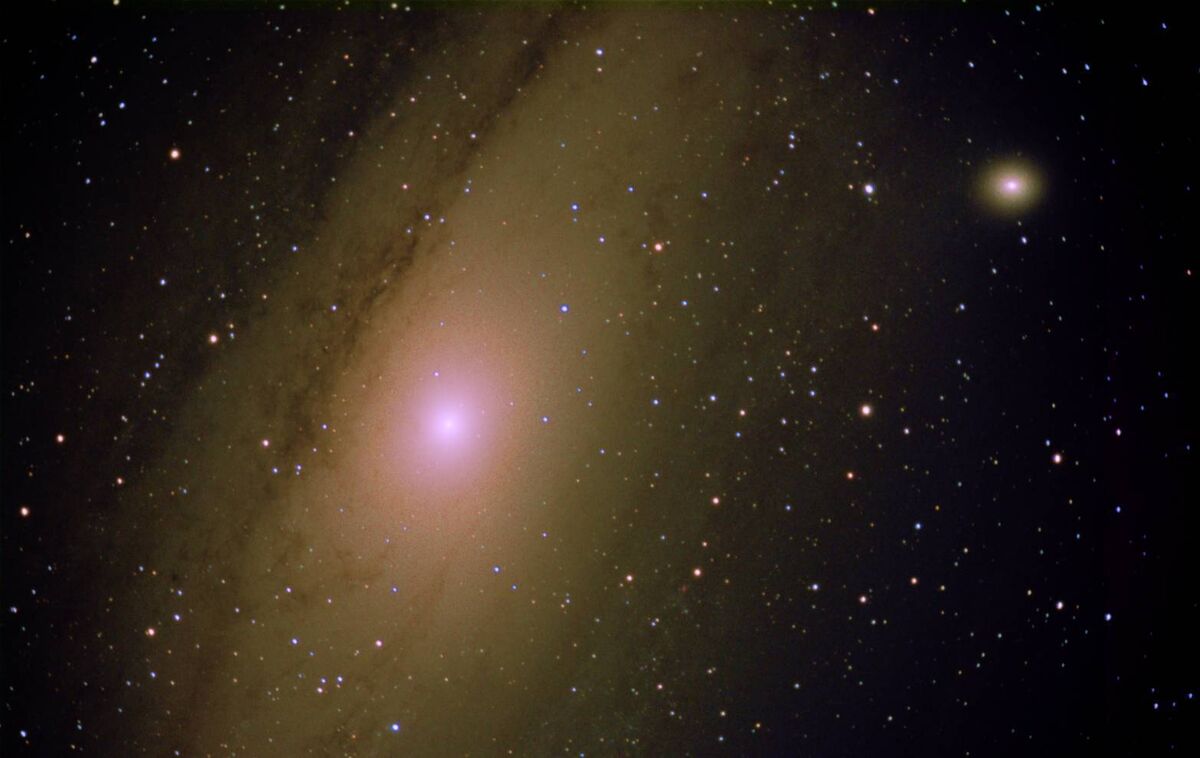
OM organises events all year round, depending on what the night sky reveals. They offer hands-on telescope sessions as well as naked-eye observing.
“We have a range of night-time experiences available to book if you would like to join us on one of our night-time adventures,” says Roisín Doyle, duty manager at OM Dark Sky Park and Observatory. “From the darker nights to the brighter days, our skies are always offering us something special to see.”
1. The on-site Ceoldán — an enormous statue imbued with celestial and mythical symbolism
2. The park has viewing platforms near the building with special red lighting
Ardtara Country House, a member of the prestigious Bluebook collection, is a 30-minute drive from the park in neighbouring Derry. ardtara.com
OM has an on-site grab-and-go café serving hot and cold drinks and snacks. For something more substantial, try Millwheel Bar & Restaurant in nearby Dunamore.
The Sperrin Mountains, particularly Davagh Forest, teem with surviving megalithic monuments, including the incredible Beaghmore Stone Circles, comprising seven mystical circles, 10 rows of stones and 12 cairns, all carefully arranged.
It may be known as the Forgotten County, but a stargazing experience in Donegal will surely be remembered long after your stay, thanks to its remote northwestern location, which brings clear skies and low light pollution. For those interested in the Northern Lights, winter and spring offer the best chance of seeing them. govisitdonegal.com
“When the aurora borealis is visible, the best place on the entire island to witness the phenomenon is undoubtedly Malin Head in Inishowen, Ireland’s most northerly point,” Shane Smyth from Donegal Tourism explains.
“However, in more recent displays, it has been visible in many parts of the county and as far south as Sliabh Liag, Ballyshannon and Bundoran.”
1. Malin Head
2. Dunree
3. Mamore Gap
4. Ballyliffin
5. Fanad Peninsula
The four-star Redcastle Hotel stands sentinel on the rugged Inishowen Peninsula. On-site leisure facilities include a swimming pool, gym, spa and a nine-hole parkland golf course.
redcastlehoteldonegal.com
Seaview Tavern is a firm favourite on Malin Head. The seafood is sourced from the local pier and from nearby Greencastle Harbour, while Ronald Boggs, a butcher in the town, supplies the meat.
seaviewtavern.ie
Rising 600m above the waves, Sliabh Liag is one of Europe’s highest sea cliffs and served as a Christian pilgrimage site for over 1,000 years.
With its limestone terrain, Co Clare’s Burren National Park is undoubtedly one of Europe’s most unique regions, and it also makes a perfect base for stargazing. In addition to its remote location, the rocky, expansive landscape contrasts beautifully with the sparkling skies, making it popular with photography enthusiasts. burren.ie
“The Burren is home to some of Ireland’s darkest and most pristine skies,” says Niamh Farren of the National Parks and Wildlife Service, which, together with its partners, including Clare County Council, is committed to keeping the skies above the Burren naturally dark for present and future generations to enjoy.
“Generally, the best viewpoints are at altitude, in areas free from or with little light pollution, and with good views of the southern sky.”
1. Mullaghmore
2. Slieve Carran
3. Poulnabrone Dolmen car park
4. Fanore Beach
5. Black Head
The four-star Doolin Inn blends the relaxed charm of a country house with the professional service of a hotel. The property’s staff are happy to share their knowledge of stargazing and other local experiences.
doolininn.ie
Housed in a charming Victorian property, The Wild Honey Inn is Ireland’s only Michelin-starred pub, specialising in bistro-style cooking with a twist. wildhoneyinn.com
After admiring the dark skies, turn your attention underground to Doolin Cave, home to the Great Stalactite, one of the world’s longest known free-hanging stalactites.
The many writers, poets and artists who have found inspiration here all agree that Connemara has something otherworldly about it. Maybe it’s the deep connections with the Irish language and culture. Or perhaps it’s the unique landscape that unfolds towards the dramatic coastline.
Whatever the reason, this undefinable energy enhances every stargazing experience. With its long, crisp nights, November to April is the best time to visit, and if the gods are on your side, you could spot shooting stars and even the northern lights.
connemara.ie
“I’m incredibly fortunate to call Connemara home, as it’s one of the best places to experience the magic of the night sky,” says TG4’s long-serving weather presenter Fiona Ní Fhlaithearta. “What’s more, the vast open horizons, framed by mountains, lakes and the rugged Atlantic landscape, create the perfect setting for creative photography.”
1. Connemara National Park (Diamond Hill)
2. Lough Inagh
3. Pine Island
4. Lettergesh Beach
The Connemara Coast Hotel is located at the gateway to Connemara, where the dark skies can be admired from the grounds. connemaracoasthotel.ie
Perched in the heart of the Ceardlann Craft Village, Spiddal’s Builín Blasta is many things at once — a café, bakery, gourmet grocer and takeaway. The queues outside at lunchtime attest to its enduring popularity. builinblasta.com
Nearby is the famous Standún Department Store, which serves hot refreshments and cakes in its café.
standun.com
Killary Fjord is the only one of its kind on the island. Killary Fjord Boat Tours offer a 90-minute trip departing from Leenane, with uninterrupted views of the spectacular scenery.
killaryfjord.ie
County Cork holds a special place in the hearts of astronomy enthusiasts interested in the planets, stars, the wider universe and space exploration. The region is home to many sites dedicated to or inspired by its dark skies. These include Blackrock Castle Observatory and the Wild Sky Dome in the Mealagh Valley, Europe’s first dark-sky-approved lodging. Elsewhere, at the Liss Ard Estate, is the Irish Sky Garden, created by the renowned American artist James Turrell.
purecork.ie
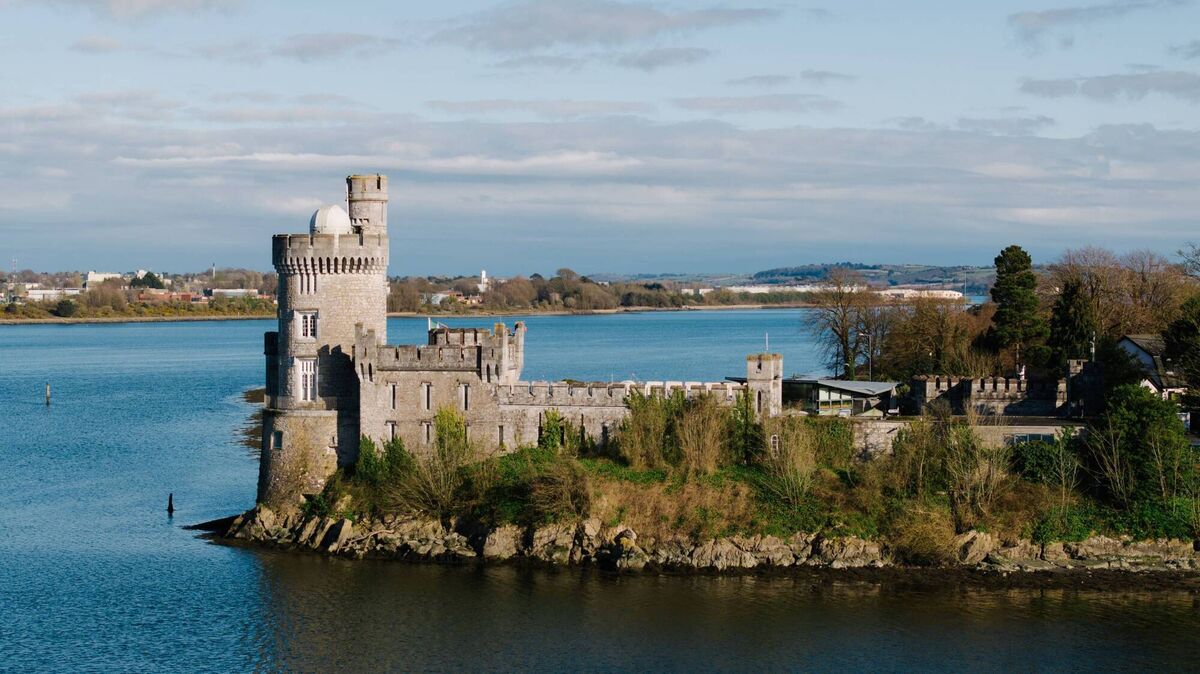
“While there are a few sites relatively close to Cork City, such as Rockey Bay, Nohoval Cove and Corrin Wood, for really dark skies you need to travel further from the city,” says Declan Foley, secretary of Cork Astronomy Club, which is set to celebrate its golden anniversary.
“The ideal places are by the coast, with any light pollution behind you. Looking out over the sea gives you a great southeasterly, southerly and southwesterly horizon.”
1. The Old Head of Kinsale
2. Ballycroneed Beach, Ballycotton
3. Long Strand, Beara Peninsula
4. Cape Clear, Sheep's Head
5. The Gearagh
6. Lough Hyne
Esk Mountain, a 270-acre nature restoration project near Glengarriff, offers unique studio apartments that blend indoor and outdoor living. eskmountain.com
The delightfully named Fishy Fishy Restaurant in Kinsale is an award-winning restaurant run by the husband-and-wife team Martin and Marie Shanahan. The kitchen follows an ethos of cooking local, fresh and seasonal fish, served in an informal setting.
fishyfishy.ie
While Gougane Barra is another favourite spot for stargazers, the glaciated mountain valley — home to the oft-photographed St Finbarr’s Oratory — is also popular with hikers.
Despite its proximity to Dublin, the Royal County of Meath offers some of the darkest skies in eastern Ireland, blending peaceful rural landscapes with Brú na Boinne’s ancient monuments, which have been linked to the night sky for millennia.
On the outskirts of Oldcastle, the mighty Loughcrew Cairns are widely regarded as the county’s best stargazing spot. At over 5,000 years old, Loughcrew is a focal point for visitors during the spring and autumn equinoxes, when the rising sun illuminates the inner chamber of the Cairn T passage tomb. Stargazers also plan their trips around meteor showers in August, October and December.
discoverboynevalley.ie
“Sitting atop the county’s highest point, Loughcrew offers panoramic views, dark skies and a unique connection to Ireland’s ancient astronomical heritage,” says Sarah Farrell from Loughcrew Cairns Megalithic Centre.
1. Loughcrew Cairns
2. Hill of Tara
3. Fourknocks Passage Tomb
4. Rathbeggan Lakes (a popular spot for the Meath Astronomy Group)
Open seasonally from March to October, Loughcrew Megalithic Centre invites visitors to bring their own campervan or tent, or to opt for glamping in one of the cosy yurt.
loughcrewmegalithiccentre.com
Nelly’s Café is the on-site tea rooms at the Loughcrew Megalithic Centre. It is open daily from 11am, serving a range of beverages alongside homemade cakes and treats.
Every stargazer visiting Meath should arrange a trip to the world-famous Neolithic monument of Newgrange, which, among other purposes, served as a scientific instrument, recording the solar year. It’s also an early example of a sundial and a calendar. The nearby sites of Knowth and Dowth are also worth a visit.
Birr Castle is home to the Great Telescope, once the world’s largest, which helped reveal the spiral nature of galaxies. Designed and built in the 1840s by the Third Earl of Rosse, the 72-foot-long feat of engineering drew visitors from around the world to observe the stars.
Today, the Great Telescope sits at the heart of the castle’s demesne, while the Historic Science Centre demonstrates how the extraordinary telescope was constructed. birrcastle.com
Dublin’s Dunsink Observatory has been a centre for astronomical research since 1785 and has been associated with many of our most renowned scientists, including Sir William Rowan Hamilton. The historic facility is open to the public for select, family-friendly events throughout the year, particularly during winter.
dunsinkdias.ie
Armagh Observatory and Planetarium is a leading centre for astronomical research and education. Its extensive grounds, which include Astro Park, offer opportunities to get closer to nature and space.
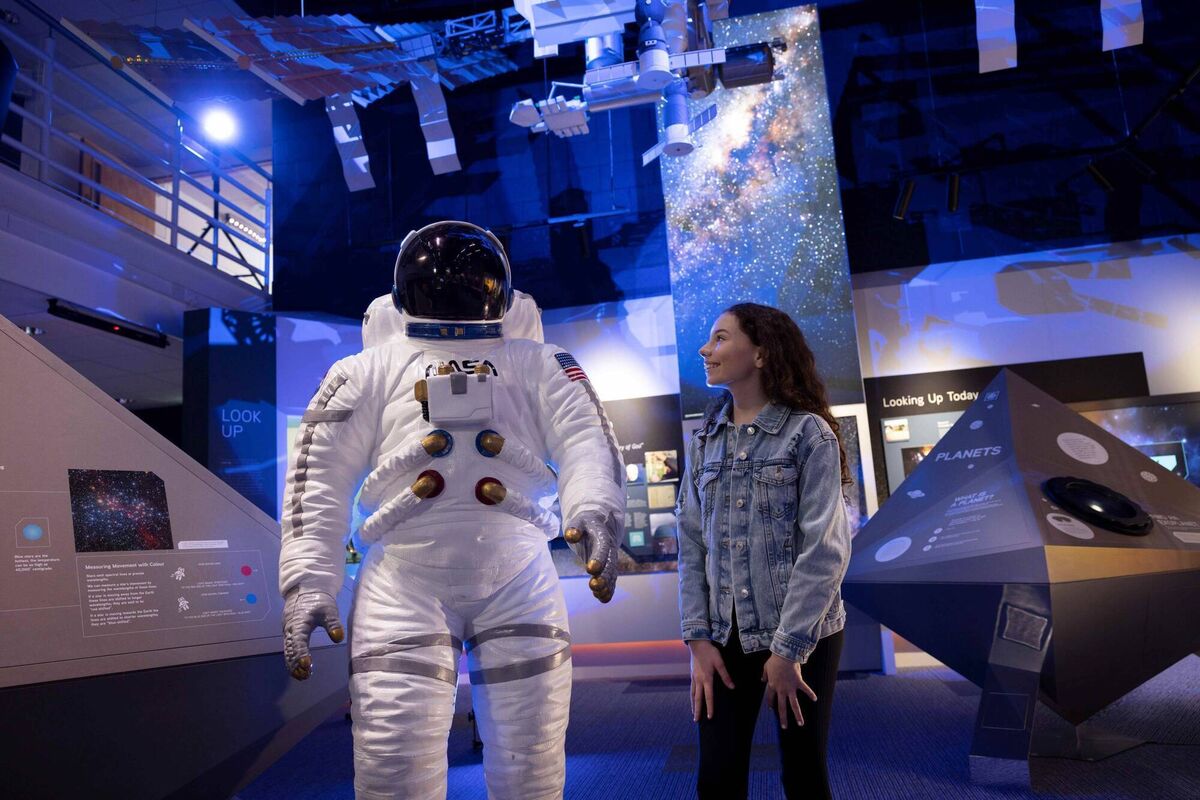
In the Planetarium’s dome theatre, visitors can explore the night sky, while the exhibition area celebrates the region’s rich celestial heritage. Ireland’s largest meteorite is also here. Elsewhere, the observatory features several historic telescopes and, although an active research facility, is open to the public for limited, scheduled tours.
armagh.space
On the outskirts of Cork stands the 16th-century Blackrock Castle. Its original role as a watchtower has evolved into a place for observing the wonders overhead, and it also serves as a science centre featuring the new Ireland in Space exhibit.
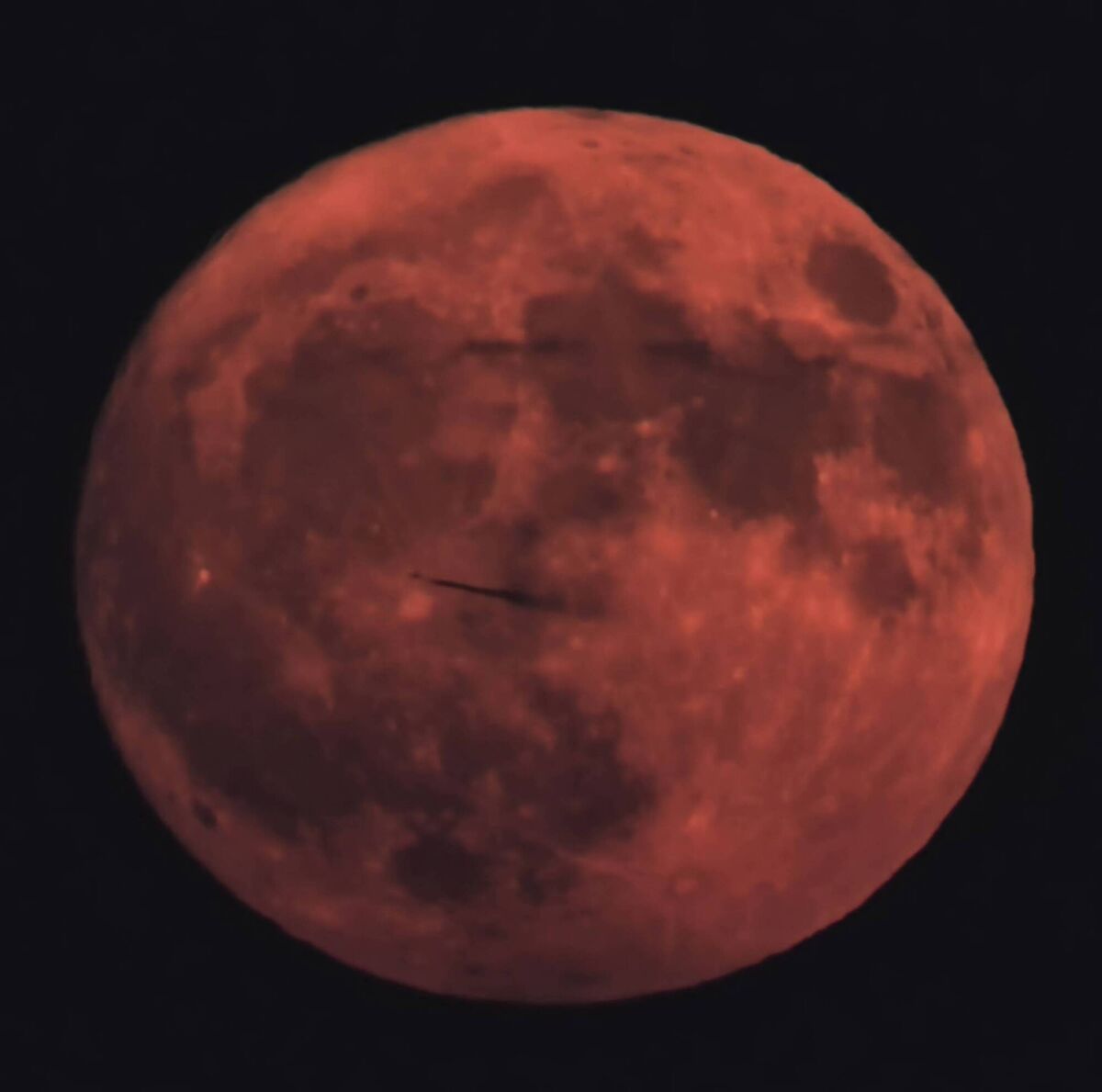
In the working observatory, a team from the Munster Technological University searches for new planets around distant stars using telescopes both within the castle and abroad. A ‘behind the scenes’ guided tour brings the past, present, and future together.
bco.ie
1. Binoculars or telescope
2. Phone, camera, tripod and portable charger
3. Red torch light (helps you see in the dark without spoiling night vision)
4. Charts, maps and apps like Stellarium, SkySafari and Mobile Observatory
5. Warm clothing, including a hat, thick socks, fingerless gloves and good, old-fashioned long johns
6. Blanket and reclining folding chair
7. Snacks and thermos with hot beverages
8. Insect repellent spray
1. Cloud coverage
2. High pressure is usually your friend
3. High humidity or sharp temperature changes can scatter light and affect how crisp your view of the sky is
4. There are plenty of websites that provide detailed weather forecasts for stargazers. For casual observers, something like AccuWeather is simple and reliable.